
Share This Article
The traditional car ownership model, finance a purchase, own for years, manage maintenance, absorb depreciation, eventually sell, no longer suits how modern drivers actually use vehicles. Your driving needs change. A compact sedan works for commuting, then you need an SUV for a growing family. Technology advances rapidly; cars become outdated while still financed. Maintenance becomes expensive as vehicles age. And depreciation risk hangs over the entire ownership period, you buy at one price, the market shifts, and you lose value. This friction has created space for a fundamentally different approach: car leasing. Rather than buying and holding, leasing separates transportation from ownership, letting you drive current vehicles without long-term commitment, maintenance burden, or depreciation risk. This shift is accelerating as electric vehicles become mainstream. Moneyshake electric car leasing options make this transition accessible to drivers who want modern vehicles without the complexity of ownership. Understanding why leasing makes sense, particularly for electric vehicles, changes how you think about what car ownership actually means in 2026.
The Hidden Costs of Car Ownership
When you buy a car, the purchase price is just the beginning. Ownership carries multiple ongoing costs that compound over years. Maintenance and repairs escalate as vehicles age, a car operating flawlessly at 20,000 miles might require substantial service by 100,000 miles. Tires wear out and cost hundreds to replace. Brake fluid, transmission fluid, coolant all require periodic service. Some repairs are catastrophic: a transmission failing at 80,000 miles costs thousands. You bear these costs entirely because the vehicle is yours. Insurance costs rise as vehicles age and safety features become outdated. Registration and taxes continue annually. Fuel costs fluctuate with market prices, sometimes dramatically. Beyond direct costs, ownership creates opportunity cost: your capital is tied up in depreciating metal. A car purchased for $35,000 might be worth $20,000 three years later. You absorbed a $15,000 loss simply by driving it. This depreciation risk is the silent killer of ownership economics, you accept unknowable future residual value when you buy. Moneyshake leasing programs eliminate these hidden costs by bundling them into a predictable monthly payment.
How Electric Vehicle Leasing Works Differently
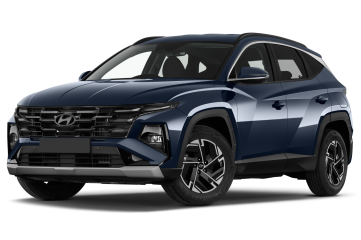
Traditional car leasing made sense for cost-conscious drivers, but it came with genuine trade-offs. Mileage limits restricted flexibility, go over limits and you paid substantial overage fees. Wear-and-tear assessments at lease end often resulted in surprise charges. And you drove older technology; if you leased a vehicle for three years, you drove that generation’s technology throughout, watching newer systems emerge in competitor vehicles. Electric vehicle leasing changes this calculus entirely. EV leasing is uniquely appealing because battery technology improves rapidly. A battery pack warranted for 150,000 miles today might degrade noticeably by year three. Rather than owning a degrading battery, leasing lets you drive current EV technology knowing battery capacity will be optimal for your contract term. You avoid the risk of battery replacement, one of the most expensive EV maintenance costs. Moneyshake EV lease options capitalize on this: lease terms align with battery warranties, ensuring you never pay for a battery failure.
Charging Infrastructure and Lease Flexibility

Electric vehicle adoption has accelerated because charging networks expanded dramatically. Public chargers proliferate in cities and along highways. Home charging installation has become standard for suburban drivers. Yet this infrastructure is still maturing, not everywhere has reliable access. If you own an EV and move to a location with poor charging coverage, you are stuck with a vehicle designed for conditions that do not exist locally. Leasing provides optionality you cannot achieve through ownership. If charging infrastructure in your city proves inadequate, you can lease a different vehicle class, a plug-in hybrid, a range-extended electric vehicle, or simply a traditional car until charging improves. Your needs change. A two-seat electric roadster is fun until you have children; you would have to sell at a loss and buy something else. With leasing, you simply lease a different vehicle when your needs evolve. Moneyshake leasing provides this flexibility by letting you change vehicles as your situation changes, without the financial friction of ownership transitions.
The Total Cost of Ownership Comparison
When you calculate true total cost of ownership, purchase price, interest on financing, insurance premiums, maintenance and repairs, registration, depreciation, car ownership typically costs 30-40% more than leasing equivalent vehicles over the same period. This gap widens for electric vehicles specifically. EV batteries degrade unpredictably; you might face $8,000-15,000 battery replacement costs in year 4 of ownership. Insurance for EVs tends toward premium pricing because repair costs are high and parts availability is limited. Fast-charging components wear out. Software updates and recalls sometimes require dealer visits. These costs compound in ways that make ownership economically questionable compared to leasing. A driver leasing an EV pays a bundled monthly fee that includes insurance, maintenance, roadside assistance, and concierge support. This predictability eliminates the surprise costs that plague ownership. Moneyshake calculates these costs transparently, showing drivers exactly what they will pay over the lease term without hidden escalations.
Environmental Impact and Vehicle Rotation
Electric vehicles represent a climate-conscious choice compared to internal combustion engines. But this advantage is most realized when vehicles are newer and driven efficiently. An older electric vehicle with degraded battery capacity, charging less efficiently due to age, provides diminishing environmental benefit. Leasing aligns environmental and economic incentives: you drive modern EVs with optimal battery efficiency, rotate to newer models as technology improves, and never hold aging vehicles that provide marginal benefits. This rotation also accelerates the transition to EVs across the entire fleet. When owners hold vehicles for 10-12 years, EV adoption remains constrained by purchase price and initial availability. When drivers lease and rotate every 2-4 years, manufacturers scale production to meet demand, prices drop, and adoption accelerates. Lease programs effectively subsidize EV adoption by distributing vehicles to drivers who might not purchase. From a climate perspective, this acceleration matters more than whether individuals personally own or lease, the faster the fleet transitions to electric, the greater the aggregate environmental benefit. Moneyshake supports this transition by making EV leasing accessible and affordable.
Key Factors in Choosing an EV Lease Program
- Monthly payment should bundle insurance, maintenance, roadside assistance, and customer support into one transparent figure.
- Mileage allowances should match your actual usage patterns; higher mileage limits exist for drivers who commute long distances.
- Vehicle selection should include multiple classes, sedans, SUVs, and crossovers, so you can lease appropriate vehicles as needs change.
- End-of-lease terms should be clear and fair, without surprise charges or excessive wear-and-tear assessments.
- Battery warranty coverage should extend for your full lease term, protecting you from degradation costs.
The Transition From Ownership Mindset to Flexibility Mindset
Car ownership carries psychological weight beyond economics. Owning vehicles is a cultural norm; many drivers derive satisfaction from vehicle selection, customization, and long-term relationship with specific cars. Leasing requires a mindset shift: you are renting transportation, not accumulating assets. This transition feels uncomfortable initially but liberating after the first lease expires. You stop thinking about resale value, the vehicle is not yours to sell, so depreciation becomes irrelevant. You stop deferring maintenance, every service is covered, so you maintain the vehicle at manufacturer standards without deciding whether repairs are worth the cost. You stop worrying about major failures, battery degradation, transmission issues, electrical problems; the lessor manages these risks. This freedom from ownership burden translates to practical benefits: better vehicle maintenance because you are not cost-optimizing repairs, lower stress because risk is transferred to the lessor, and greater flexibility because you can select different vehicles as preferences evolve. The paradigm shift from ownership to access represents how modern transportation is actually evolving.
Transportation is utility, not possession.