

Share This Article
Saturday morning used to mean pushing a heavy mower across the yard for ninety minutes, managing fuel, maintaining engines, and hoping the equipment does not break down mid-season. For millions of homeowners, this weekend ritual represents wasted time and frustration, a chore that never improves, only varies in how unpleasant it is depending on weather and the condition of aging equipment. Meanwhile, technology has transformed nearly every other aspect of home life. Your thermostat learns your preferences and adjusts automatically. Your security system monitors your property while you sleep. Your garden can be watered through connected irrigation systems. Yet lawn care remains stubbornly primitive, manual work, noisy engines, and no intelligence built in. This disconnect is becoming increasingly obvious to homeowners who have experienced what modern automation actually does. A cutting-edge lawn care solution exists that brings smart technology to an area that has not fundamentally changed in decades. Mowrator EU smart lawn system represents the future of how homeowners actually manage their properties, automated, efficient, and genuinely convenient. If you have spent years resigned to weekend lawn work as simply part of home ownership, understanding what is now possible changes how you think about yard maintenance entirely.
The Inefficiency Hidden in Traditional Lawn Care
Manual lawn mowing wastes extraordinary amounts of time when you calculate the full cost. A typical suburban yard requires ninety minutes to two hours weekly during growing season, thirty hours or more per year. That is not just weekend inconvenience; it is significant time that could go toward family, projects, or rest. Beyond time, traditional mowing carries constant operational costs: fuel, seasonal maintenance, repairs when equipment fails (which it inevitably does mid-summer), and the cognitive load of managing equipment. You must remember to fuel the mower before starting, service it before spring, sharpen blades, change oil, and eventually replace it when repairs exceed replacement cost. This maintenance burden falls entirely on the homeowner, not because it is necessary, but because the equipment itself is fundamentally dumb. A smart lawn mower system eliminates these inefficiencies by automating the entire process. Rather than manual operation weekly, the system understands your lawn growth rate, local weather patterns, and your yard specific needs. It operates on its own schedule, cutting when needed, not when you happen to have free time. The time savings compound, not just the ninety minutes weekly, but all the associated maintenance, planning, and mental overhead disappears. Over years of homeownership, the cumulative time freed is enormous.
How Smart Lawn Systems Understand Your Yard
Traditional mowers treat every yard identically: go forward, cut grass, repeat. Smart lawn systems learn. Advanced systems map yard topology, identify problem areas, understand soil conditions, and adjust cutting patterns based on actual growth rates. Your yard is not uniform, some sections are shadier and grow slower, some corners get more sun and need frequent cutting, some areas drain poorly or have different grass species. A dumb mower cannot account for any of this variation. It cuts everything on the same schedule regardless of conditions. A smart system does. Mowrator technology incorporates what the system learns about your specific lawn into ongoing cutting decisions. If one section of your yard typically grows faster due to better drainage and sun exposure, the system knows to cut that area more frequently. If another section stays shadier and grows slowly, cutting frequency adjusts automatically. This is not theoretical optimization, it is practical adaptation that results in your lawn looking healthier and more uniform throughout the season. Rather than the patchy appearance that results from fixed-schedule cutting, the lawn maintains consistent height and health because cutting adapts to actual growth patterns. Mowrator intelligent system uses real-time data to optimize cutting patterns, meaning less work for you and better results.
The Environmental Case for Smart Mowing

Conventional lawn mowers burn fossil fuel to cut grass. A typical gasoline-powered mower produces emissions equivalent to driving a car for several hours during a single weekly session. Across a mowing season, a homeowner lawn equipment contributes meaningful carbon emissions, not massive in isolation, but significant when multiplied across millions of homes. More significantly, traditional mowers are inefficient: they burn fuel to move their own weight plus a human operator to accomplish a task that requires far less energy. A small robotic system can do the same work using a fraction of the energy. Beyond emissions, fuel-powered mowers create noise pollution and require regular maintenance involving spare parts, lubricants, and disposal of used fuel and oil. Smart systems powered by renewable energy (solar charging in many models) eliminate these externalities entirely. For environmentally conscious homeowners, this represents a genuine upgrade in lifestyle, maintaining a healthy lawn without the guilt of weekly fossil fuel consumption. Mowrator EU systems prioritize this efficiency, offering both environmental and economic benefits through smart energy management.
Safety and Reliability: Why Smart Systems Do Not Fail

Manual mowers are mechanical devices with engines, moving parts, and fuel systems, everything that can fail. Blade dulling, oil degradation, spark plug fouling, fuel contamination, and simple wear-and-tear mean a mower that works perfectly in spring often requires maintenance by mid-summer. These failures happen at the worst possible times, right before company visits or after a week of rain when the lawn is overgrown. A broken mower means waiting for repair service or attempting troubleshooting in frustration. Smart systems are far simpler mechanically: they have no engines, no fuel systems, and far fewer moving parts. A blade cuts when it should and does not degrade unpredictably because the system knows when replacement is needed. Software handles all the complexity, optimizing patterns, learning your yard, coordinating movement, not fragile mechanical systems prone to failure. This reliability translates to consistent lawn care regardless of season. You do not have to manage equipment failure or scramble for repairs. The system simply operates as designed. Mowrator engineering prioritizes reliability through intelligent design that eliminates the moving-part failures that plague traditional equipment.
Integration With Your Smart Home Ecosystem

Modern homes increasingly connect to smart hubs, platforms that coordinate everything from security to climate control. A smart lawn system integrates naturally into this ecosystem. Want the mower to operate only when motion sensors indicate nobody is in the yard? The system can coordinate with your security setup. Want weather data to inform mowing schedules, skipping cuts immediately after heavy rain when the lawn is soggy? The system can integrate with weather APIs. Want to monitor your lawn health through the same app that controls your irrigation and thermostat? That is possible when your lawn care is connected rather than isolated. This integration does not require all systems to come from the same manufacturer, modern smart systems speak standard protocols that enable inter-device communication. As smart home adoption grows, lawn care naturally incorporates into the broader automation ecosystem. This compatibility matters because it means you are not locked into proprietary solutions or forced to manage lawn care completely separately from everything else in your connected home. Mowrator systems are designed to work within the broader smart home landscape.
Making the Transition From Traditional to Smart Lawn Care
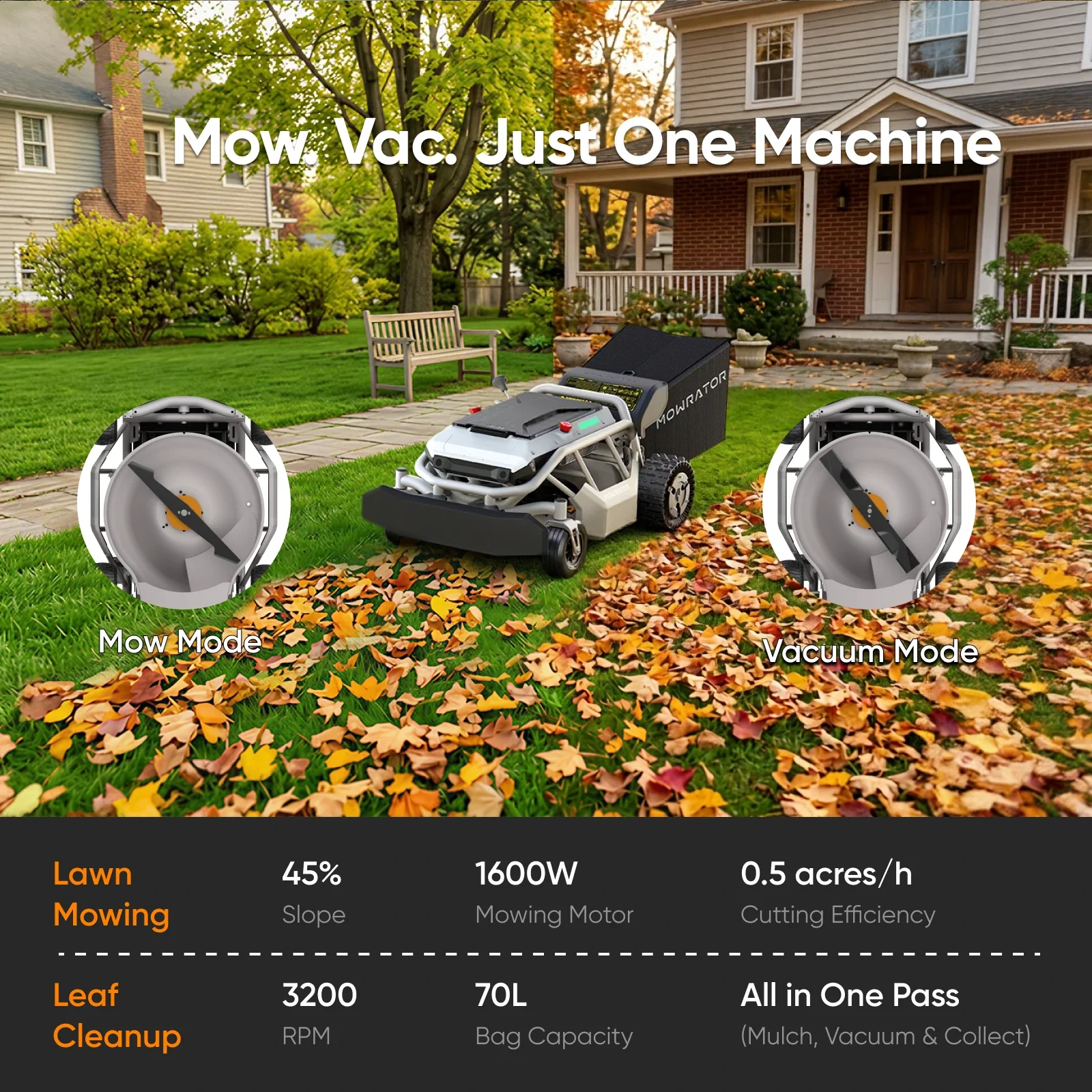
- Assess your lawn size and terrain, smart systems work best on properties where they can operate unsupervised, typically residential yards up to several thousand square meters.
- Understand the learning period, the system optimizes over several weeks as it gathers data about your specific lawn characteristics.
- Plan boundary definition, most systems require initial setup to establish yard boundaries, typically done through cable or app-based mapping.
- Consider supplementary care, while smart systems handle routine mowing, occasional fertilization or weed management might still require manual attention.
- Integrate with your home system, determine how you want the mower to coordinate with other smart devices, if at all.
The Future of Residential Yard Work
Lawn care has resisted automation for decades simply because the technical barriers were high and the return on investment was not obvious when homeowners were accustomed to doing the work themselves. But technology matured, costs dropped, and suddenly the calculus changed. The time investment ceased being acceptable, environmental awareness increased, and the capability to automate became genuinely reliable. What was previously a fringe luxury is becoming standard equipment for homeowners who have recognized that their time and stress are worth more than the cost of automation. This shift mirrors transitions in other domains, dishwashers replacing hand-washing, clothes dryers replacing clotheslines, irrigation replacing manual watering. Each transition faced resistance until the benefits became obvious. Smart lawn care is at the inflection point of this transition. Early adopters are discovering what is possible, and the momentum is shifting toward asking not why automate but why would you not? As more homeowners experience genuinely automated lawn care, the question of whether manual mowing is necessary becomes increasingly absurd. Your time is finite. Your yard grass will grow regardless of your effort. A system that handles this routine without your involvement is not a luxury, it is a restoration of time to activities that actually matter to you.
Smart homes start by freeing you from the routines that waste your life.