
Share This Article
Turnout blanket denier weight and polyfill grams decide how a blanket holds up against a fence line, how warm a horse stays overnight, and how long the fabric lasts across seasons. Riders shopping for new turnout gear often focus on color and fit, but the numbers printed on the label matter more. Denier counts and fill weights tell a more honest story about durability and warmth than marketing copy ever could. This guide breaks down what those numbers mean and how statelinetack‘s selection reflects the range available to buyers.
Denier Ratings: What 600D, 1200D, and 1680D Mean for Durability
Denier measures the thickness of the fibers woven into a blanket’s outer shell, and higher numbers generally point to a sturdier fabric. A 600 denier shell uses thinner thread than a 1200 denier shell, while 1680 denier fabric sits at the heavier end of what statelinetack lists in its turnout category. These ratings matter most for horses that spend long hours outside, since rubbing against fences, trees, or herd mates puts repeated stress on the outer layer.
Ripstop weaves add another layer of reinforcement regardless of the base denier. Several products across statelinetack‘s catalog, including Amigo Ripstop 900 Plus and Gatsby Premium ripstop polyester sheets, combine a denier rating with a ripstop pattern. That pairing is meant to resist tearing even when the fabric itself is lighter than a 1200D or 1680D option.
Understanding Polyfill Weight and Insulation Levels
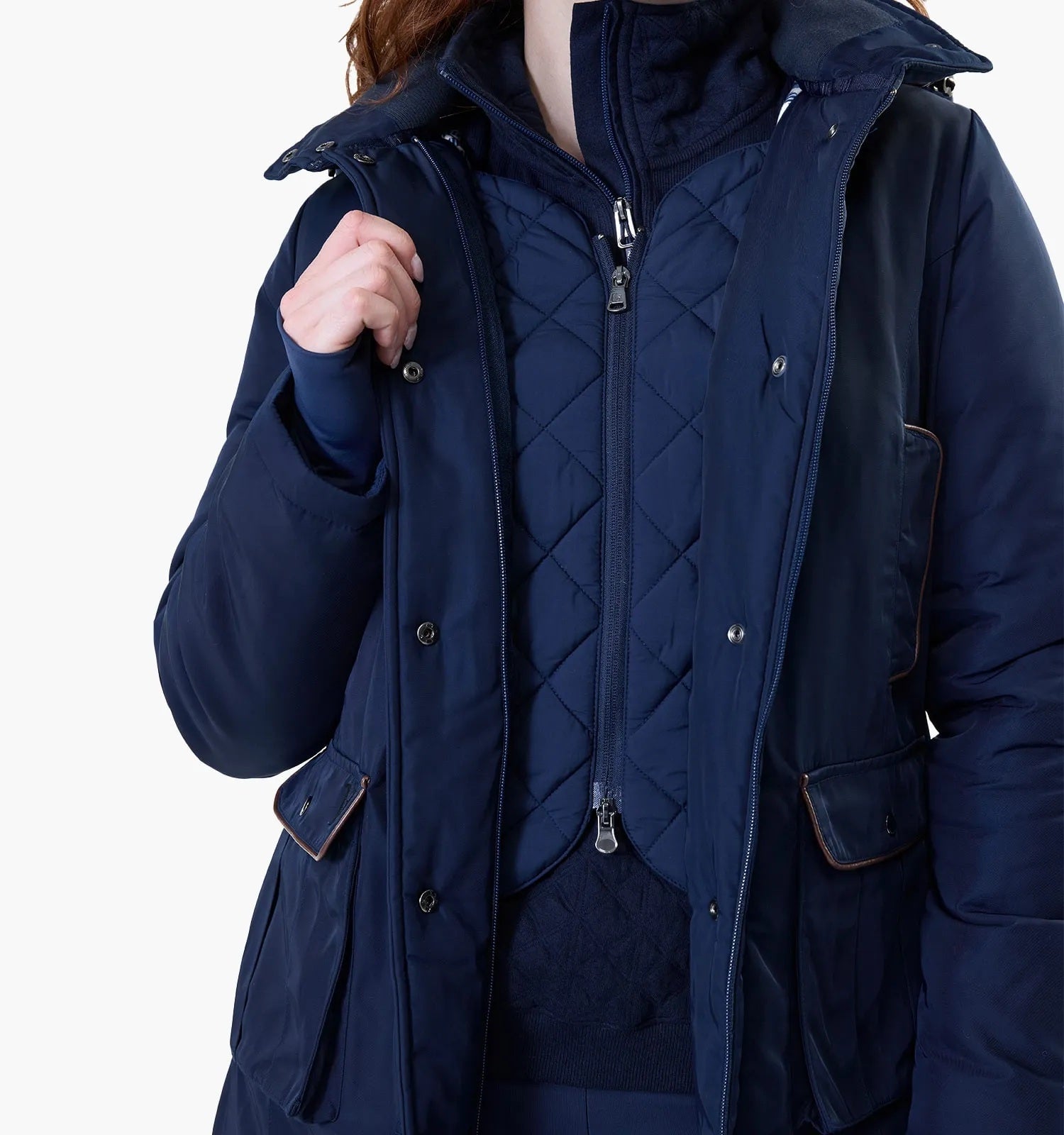
Polyfill grams measure the amount of insulation stitched inside a blanket, separate from the denier rating of the outer shell. A sheet with 0g polyfill has no insulation at all and works as a layer against wind or light rain. Blankets move up from there, with options like 100g, 200g, and 300g polyfill appearing throughout statelinetack’s turnout selection depending on the product.
The Mio Turnout Blanket Medium illustrates how this pairing works in practice. It combines a 600 denier polyester outer with 200 grams of polyfill, a middle-weight combination suited to transitional weather. Heavier fill counts, such as the 300g options found in the Tough1 Snuggit Turnout products, target colder conditions where more insulation is wanted under the shell.
Horseware Mio Turnout Series: 600 Denier Construction and Value Performance

The Horseware Mio products carried by it use a 600 denier polyester shell across sheets and blankets. The Mio Turnout Sheet Lite has no polyfill and is described as breathable to the point of dripstrip, a trait shared with the insulated Mio Medium blanket. Both pieces share the same outer fabric weight, with the difference coming entirely from the added polyfill in the insulated version.
This shared construction gives the Mio products a straightforward identity within the broader selection. The shine-enhancing polyester lining on the Mio Medium blanket pairs with its 200g fill to support longer-lasting heat retention, according to the product description. Riders comparing turnout blanket denier weight options across sheets and blankets can use the Mio products as a reference point for what a 600D build looks like at both ends, insulated and uninsulated.
Gatsby Premium and Defender Titanium: Higher Denier Options for Maximum Protection
Moving up in denier, statelinetack also stocks the Gatsby Premium 1200D Waterproof Turnout Sheet, built from durable 1200D ripstop polyester with fully adjustable Quick Clip chest closures, and a companion Gatsby Premium 1680D Waterproof Turnout Blanket with 250 grams of polyfill for a heavier shell paired with moderate insulation. Both pieces are described as waterproof and breathable, which matters when a horse is turned out for extended periods. The Defender Titanium 1200D High-Neck Sheet adds extended neck coverage designed to reduce heat loss and pressure on the withers, along with twin surcingles and a wipe-clean tail cord.
The Defender Platinum 1200D Turnout Sheet rounds out this part of the selection, giving buyers more than one 1200D option depending on closure style and neck coverage preferences. None of these heavier shells are marketed as a step above another within statelinetack‘s range, they simply represent different fabric and fill combinations for colder or wetter conditions.
Choosing Between Sheet and Blanket Configurations
The distinction between a turnout sheet and a turnout blanket comes down to polyfill, not denier. Sheets, like the Mio Turnout Sheet Lite or the Gatsby Premium 1200D Waterproof Turnout Sheet, carry no insulation and rely on the outer shell alone for protection from wind and precipitation. Blankets add polyfill in varying weights, turning the same denier categories into warmer options for cooler conditions.
Tough1’s 1200D Snuggit Turnout products, available through statelinetack in both 200g and 300g fill options, show how one denier rating can support multiple fill choices within a single product family. The Tough1 1200D Combo Turnout Blanket with 300g fill adds further variety for buyers comparing combo-style designs against standard turnout cuts. Matching a sheet or blanket configuration to a given climate pattern depends on both the shell rating and the fill grams together, not either figure alone.
Maintenance and Longevity Across Denier and Fill Variations
Heavier denier shells, such as the 1200D and 1680D options from Gatsby Premium and Defender, are built for repeated exposure to rough outdoor conditions. Lighter shells, like the 600D Mio products, are described as durable and breathable within their own category, though they occupy a different weight class than the 1200D and 1680D products. Keeping track of which denier and fill combination a blanket uses helps when comparing wear patterns across a herd or a tack room full of mixed brands.
Closure systems also factor into how a blanket holds up over repeated use. Quick Clip chest closures on the Gatsby Premium sheet and v-front quick-clip designs on the Defender Titanium High-Neck Sheet are both built into statelinetack‘s heavier denier pieces, while twin surcingles and a wipe-clean tail cord keep the Defender Titanium in place through daily turnout. Lighter 600D pieces in the Mio series rely on simpler closures suited to their lower fill weight and milder use case.
- Denier strength indicates the thickness of the outer shell fabric, ranging from 600D up to 1680D across statelinetack’s turnout selection.
- Polyfill grams indicate insulation level, with options spanning 0g sheets up to 300g blankets depending on the product.
- Waterproofing and breathability are listed features on sheets and blankets alike, including the Mio, Gatsby Premium, and Defender products.
- Closure systems vary by product, with Quick Clip chest fasteners, v-front quick-clip designs, and twin surcingles appearing across different models.
Comparing turnout blanket denier weight against polyfill grams gives a clearer picture than either figure alone. The right combination still depends on the specific horse, climate, and turnout schedule involved, but knowing how these numbers interact makes that comparison easier to work through.
