
Share This Article
Smart glasses owners often repeat charging advice picked up secondhand, and much of it turns out to be wrong. Ray-Ban Meta charging myths spread quickly because the accessories look simple but behave differently than a standard phone charger. This article walks through the most common misunderstandings and compares them against what the actual hardware specifications state.
The Charging Dock vs. Charging Port Confusion
One frequent mix-up involves treating a charging dock and a charging port as interchangeable terms. theXuit (US) sells both as separate products, and they serve different purposes. The Charging Dock for Meta Ray-Ban with Built in Batteries is a standalone power bank built from precision-molded polymer and stainless steel, while the Charging Port PRO and Charging Port for Ray-Ban Meta 1.0 are smaller connectors that attach directly to the frame.
Because the names sound similar, some buyers expect the port alone to hold a reserve charge. It does not work that way. The port is a connection piece, while the dock is the component that actually stores power for later use.
Battery Capacity and Real-World Charge Cycles: Separating Myth from Reality
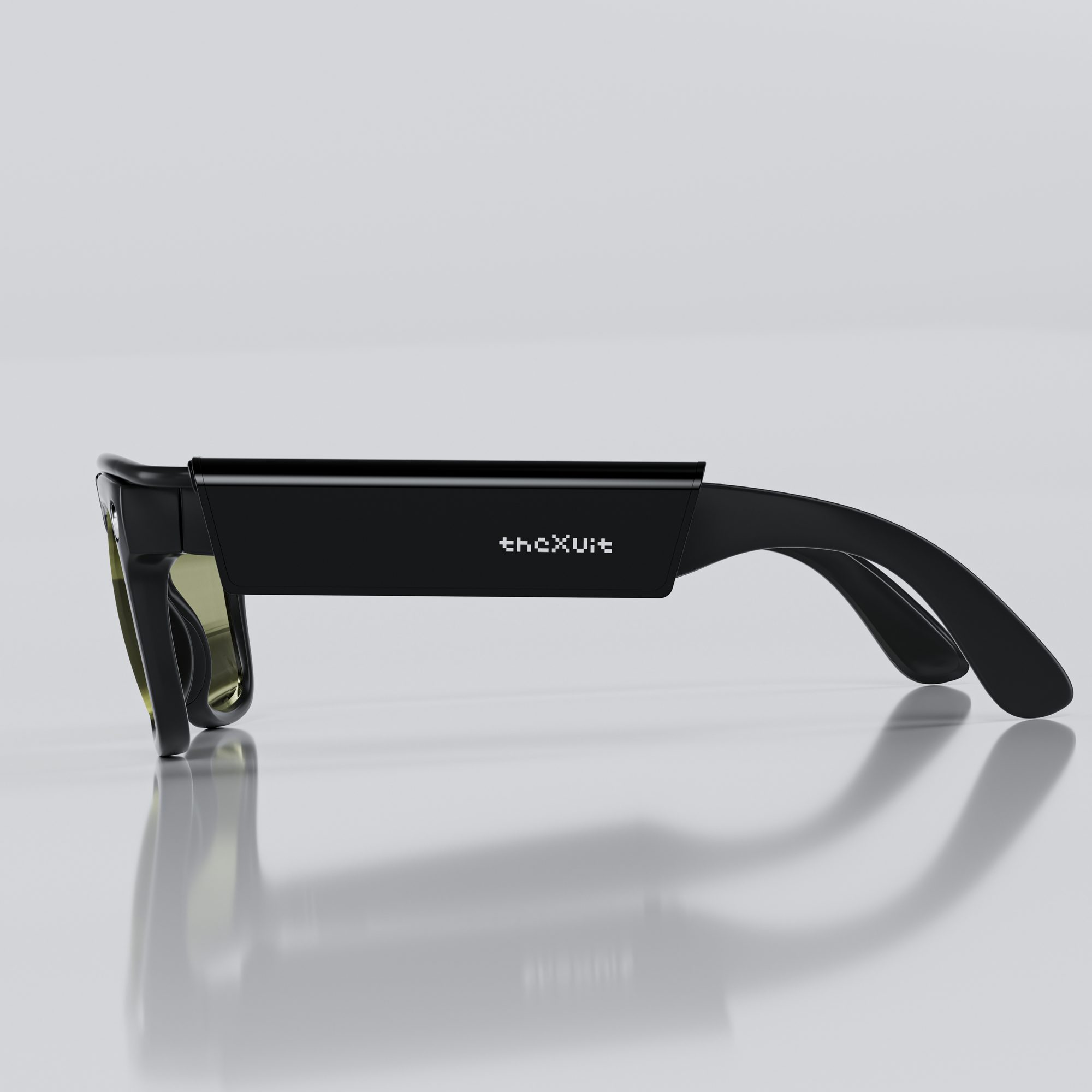
A persistent assumption is that any portable charger for smart glasses lasts for a long stretch without attention. The Charging Dock from theXuit (US) carries a 650mAh lithium-ion polymer battery, and the brand states it provides approximately 4 full charges for the glasses. That is a specific figure rather than an open-ended claim, and it helps explain why expectations sometimes run ahead of the hardware.
Some users also assume charge cycles stay constant no matter how the dock is used, but the listed approximation of 4 full charges is the number to reference rather than rounding it upward. Reading the stated capacity in mAh alongside the number of charges gives a clearer picture than guessing from general power bank experience. The dock itself is built from Martensitic Stainless Steel and ABS Plastic, materials that house the 650mAh cell without changing the stated charge count.
Weight and Portability Myths About the Charging Dock

There is a common belief that any device holding a built-in battery must add noticeable bulk to a pocket or bag. The Charging Dock weighs only 28 grams, with dimensions of 164mm x 12mm x 19mm. That is a slim profile for something housing a lithium-ion polymer cell and a stainless steel structure.
Separately, the Charging Port PRO and the Charging Port for Ray-Ban Meta 1.0 weigh only 9 grams each, since they attach to the frame itself rather than being carried independently. Confusing the dock’s weight with the port’s weight is one of the smaller but persistent misconceptions circulating among new smart glasses owners.
Cable-Free Charging Doesn’t Mean Wireless: Understanding theXuit’s Design
Another misconception treats cable-free charging as a synonym for wireless charging. The Charging Dock from theXuit (US) is cable-free in the sense that no loose cord needs to be carried or plugged in during use. However, the glasses still connect to the dock through a direct physical link at the frame, not through an induction pad or wireless coil.
That distinction matters because wireless charging, in the conventional sense, relies on contactless transfer over a short gap. theXuit (US) instead routes power through the discreetly placed charging port, which keeps the cable hidden rather than removing a physical connection altogether. As a result, the glasses still need to sit directly against the dock or port to draw power, even though no external cable is visible during the process.
Rapid-Boost Charging Speed: What 30-Minute Charging Actually Means
Rapid-Boost charging is one of the more misunderstood features tied to the Charging Dock. According to the listed specifications, the dock moves the glasses from 10% to 80% in approximately 30 minutes, and from 10% to 100% in approximately 50 minutes. That is a meaningful difference, since the last portion of a charge cycle takes longer than the initial boost.
Some buyers assume a 30-minute charge means a full battery, which is not what the specification states. In addition, the figures apply specifically to the Charging Dock model, not to the Charging Port PRO or Charging Port 1.0, which serve a different function. Keeping these two figures, the 30-minute partial charge and the 50-minute full charge, attached to the correct product remains one of the clearer ways to avoid Ray-Ban Meta charging myths about charging speed.
Compatibility Across Ray-Ban Meta Models: Wayfarer and Headliner Differences
Compatibility is another area where assumptions run ahead of the facts. The Charging Dock, the Charging Port PRO, and the Charging Port for Ray-Ban Meta 1.0 are each listed as compatible with both the Wayfarer and Headliner models. That means the same accessory line covers both frame styles rather than requiring a separate purchase for each.
Color options also extend across the range, with Black and Orange listed for the ports. theXuit (US) notes that the charging cable on the ports is routed discreetly to avoid interfering with the camera or frame comfort. Below are some of the most common misconceptions users hold about these accessories before checking the actual specifications.
- Some assume the charging port itself stores power, when only the Charging Dock contains a built-in battery.
- Some expect a 30-minute charge to mean a full battery, when the 30-minute mark only reaches 10% to 80%.
- Some believe the Charging Dock and Charging Port PRO weigh the same amount, when the dock is 28 grams and the port is 9 grams.
- Some think cable-free charging means wireless induction charging, when the connection is still a direct physical link.
- Some assume accessories are limited to one frame style, when the Wayfarer and Headliner models are both supported.
Charging habits for smart glasses are still new territory for most owners, which is why assumptions carried over from phone chargers do not always hold. Checking the specific capacity, weight, and compatibility details tied to each product is the clearest way to quiet remaining Ray-Ban Meta charging myths.
