
Share This Article
A pocket-sized gadget that reads RFID cards, captures radio signals, and stores remote codes sounds like a lot to ask from one device. The Flipper Zero multi-tool was built around exactly that idea, bundling hardware exploration tools that would otherwise mean carrying several separate gadgets. What follows is a closer look at what the device actually includes and how its components work together.
What Flipper Zero Is: A Portable Multi-Tool for Hardware Exploration
Flipper Zero is described by its maker as a portable multi-tool for pen-testers and geeks, built into a toy-like body. It researches radio protocols, access control systems, and general hardware, and it does so without requiring a laptop nearby. The unit runs on an ultra-low power STM32 MCU and ships with a 1.4 inch monochrome LCD screen that stays readable in direct sunlight. A 5-button directional pad and a back button handle navigation, so the main menu stays accessible without any companion app.
The device can also connect over USB and Bluetooth for extra control, though it functions on its own. Its casing is robust rather than a bare circuit board, which the maker points to as a deliberate break from typical DIY hacking boards. A status LED, microSD card slot, and lanyard loop round out the physical design.
Core Hardware Capabilities: Radio Protocols, RFID, and Access Control Systems
At the center of the Flipper Zero multi-tool is a Sub-1 GHz transceiver built around a CC1101 chip and an integrated multi-band antenna, giving it a transceiver range of up to 50 meters. That range covers a wide class of wireless devices, including garage door remotes, boom barriers, IoT sensors, and remote keyless systems. Additional apps can be installed to pull data from other equipment, such as weather stations, extending what the radio hardware can read.
Beyond radio work, the device includes an infrared transceiver, 1-Wire pogo pins, and GPIO pins running at 3.3V logic levels that tolerate 5V input. This combination lets it read NFC tags and RFID cards, capture and replay wireless signals, and carry out hardware experiments directly through the pins. For anyone studying how access control systems or everyday wireless devices actually communicate, this is the functional core of the Flipper Zero multi-tool.
Replacing a Remote Collection: Everyday Home Use Cases
Outside of lab-style testing, the device gets pitched at ordinary household clutter. A typical home can have a separate remote for the television, the air conditioner, the garage door, a projector, and a sound system. According to the brand, the Flipper Zero multi-tool stores and replaces all of them, putting every captured signal into one pocket-sized unit.
- A single device can store television, projector, and stereo control signals that would otherwise need three separate remotes.
- Air conditioner and smart lighting controls can be captured and reused from the same unit.
- Garage door and gate remotes can be consolidated instead of hanging separately on a keychain or shelf.
- A spare key fob for a building’s access system can be carried digitally rather than as an extra physical token.
- NFC and RFID access cards for various entry points can be stored together rather than spread across a wallet.
The Open-Source Advantage: Customization and Extensibility

The firmware behind Flipper Zero is stated to be 100% open-source, and the project has gathered more than 50,000 GitHub stars. That openness means the device can be extended in whatever direction a given project calls for, rather than staying locked to a fixed feature set. The brand notes it was inspired by the pwnagotchi project, though it was designed from the start for everyday handling rather than as a bare prototype board.
This extensibility matters for both casual and technical use. Someone reading NFC tags out of curiosity and someone building a custom RF scanning script are working with the same open firmware base. The result is a single hardware platform that keeps adapting as community contributions and personal projects accumulate.
Adding Functionality with Official Accessories: WiFi Devboard and Video Game Module
Official accessories extend what the base unit can do. The Video Game Module, for instance, is powered by a Raspberry Pi RP2040 microcontroller, which makes it compatible with a wide range of existing Raspberry Pi Pico projects. It adds a video out option for displaying output on a television, a motion sensor with an open API, and a 14-pin GPIO port for further DIY expansion.
The module also includes a USB-C port for communication with a computer and for firmware updates, and it can run in a standalone mode without being attached to the main unit at all. Like the core firmware, it ships with open-source firmware and schematics, so its internals are not locked away. Alongside it, a 16GB microSD card is offered separately, since the main device requires one to operate.
From Enthusiasts to Developers: Scaling Projects with Flipper Zero
The brand frames its audience in three loose groups rather than a fixed ladder of skill levels. There is everyday home use, there is curiosity about how NFC, RFID, and radio signals actually work, and there is deeper tinkering that involves scripting and protocol analysis. All three groups work with the same physical unit and the same open firmware, scaling involvement up or down as interest grows.
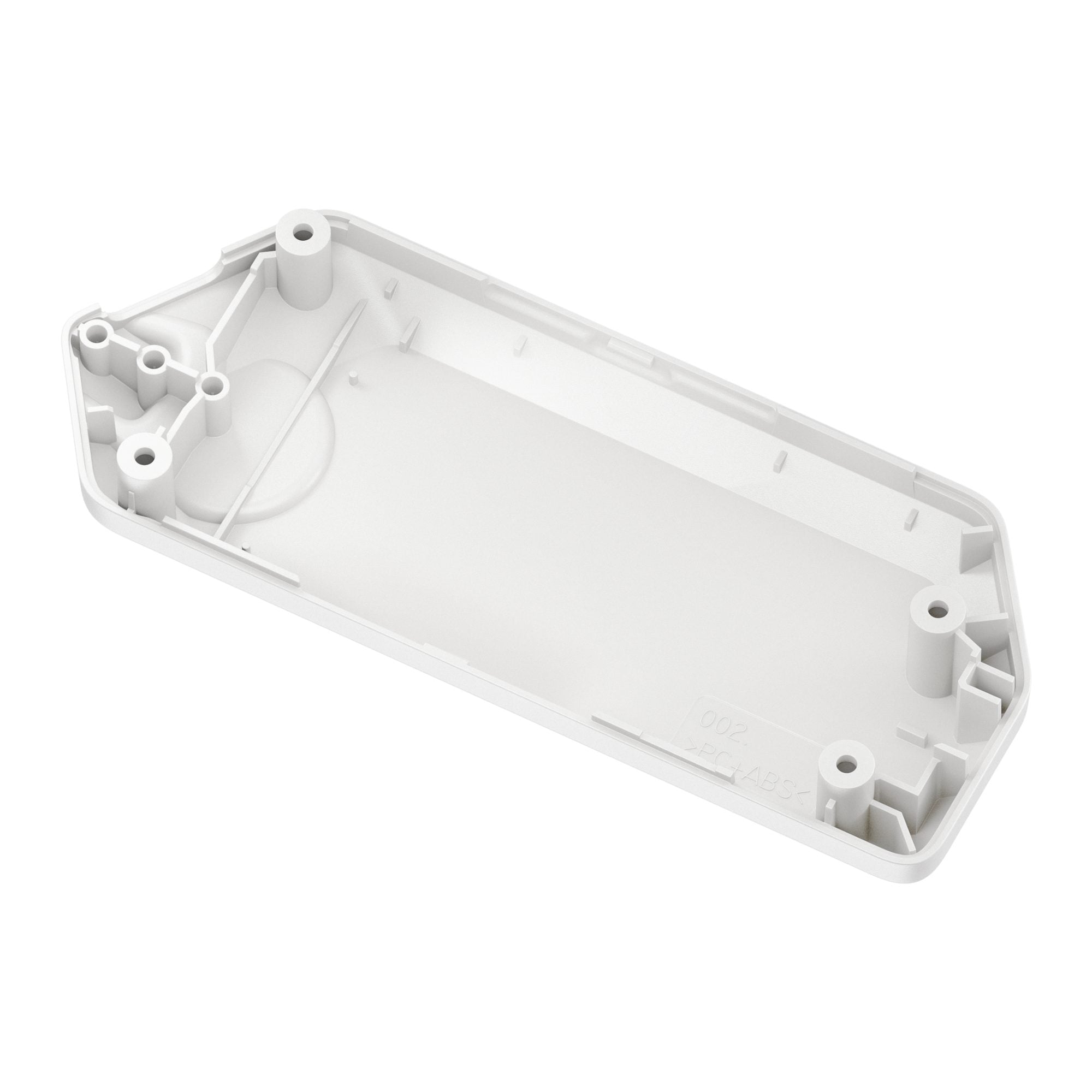
For tinkerers and developers specifically, the listed capabilities include Sub-GHz signal capture and replay, RFID badge cloning for access control testing, hardware experiments through the GPIO pins, and broader protocol analysis or RF signal mapping. The device reports over 1 million units shipped worldwide and raised a notable sum on Kickstarter, figures the brand cites as evidence of a wide user base across these different levels of involvement. Repair parts, including top case, bottom case, and display module replacements, are also sold separately for longer-term upkeep of the hardware.
What stands out about the Flipper Zero multi-tool is less any single feature than the range of tasks one unit can cover. It asks fewer compromises from anyone curious about the hardware running quietly around them.
