
Share This Article
Silk bedding carries a reputation for luxury, but the claims around it often blur together. The comparison between bamboo silk vs mulberry silk is one of the most common points of confusion for shoppers browsing pillowcases and duvet sets. This article looks at what each material actually is, what the research supports, and where marketing language tends to stretch beyond the evidence.
Fibre Origins: Bamboo Silk and Mulberry Silk Explained
Mulberry silk comes from the cocoons of silkworms that feed exclusively on mulberry leaves. It is a natural protein fibre, woven into a fabric with a smooth, slightly cool surface. Bamboo silk, by contrast, is not silk at all in the traditional sense. It is a fabric spun from bamboo-derived fibres into a fine, silky weave that mimics the hand-feel of real silk without using any silkworm fibre.
That distinction matters because the two materials are produced through entirely different processes, even though they end up marketed alongside each other. Laud Sleep stocks both, which makes it a useful reference point for seeing how the two fabrics are actually positioned side by side. Understanding this split is the first step before weighing any bamboo silk vs mulberry silk decision for a bedroom.
The Real Difference Between Luff Sleep’s Bamboo Silk and Silky Silks Mulberry Silk Pillowcases
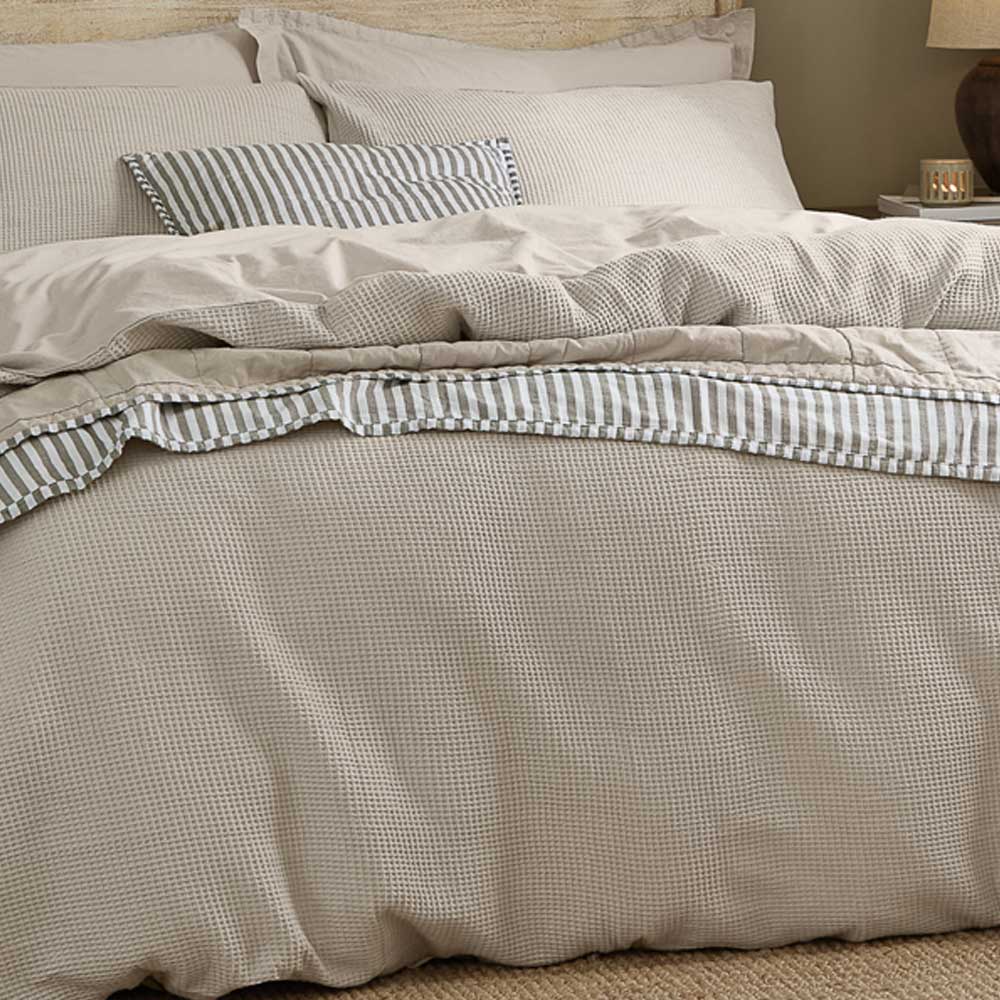
Within the Laud Sleep range, bamboo silk pieces are sold under the Luff Sleep name, including the Luff SilverLining organic bamboo silk duvet sets and matching deep fitted sheets, and the lineup also spans bundles that combine a duvet set with an extra pair of pillowcases for dressing a whole bed in one cohesive set. These are described as breathable and moisture-wicking, aimed at sleepers who run warm overnight. Luff Sleep bamboo silk pillowcases are also sold in a two-pack format, offered in shades such as white and light grey.
Mulberry silk, on the other hand, appears under the Silky Silks label, with pillowcases crafted from 19 momme Grade A mulberry silk in colours including beige, sage green, and white, and the line also includes a gift set pairing a 16 momme mulberry silk pillowcase with a matching eye mask for a smaller, more targeted purchase. Momme is simply the unit used to measure silk fabric density, and the two product lines use different momme weights, so a direct one-to-one comparison needs to account for which specific piece is being discussed rather than treating all silk pillowcases as identical.
Myth: Silk Pillowcases Prevent All Wrinkles and Hair Damage

One of the most repeated claims in bedding marketing is that a silk pillowcase will stop wrinkles and hair breakage outright. That is an overstatement. What is actually documented is a smoother fabric surface that creates less friction than coarser materials like standard cotton, not a guarantee against skin or hair changes over time.
Laud Sleep’s own product descriptions are comparatively restrained on this point. The Silky Silks pillowcases are described as helping reduce friction against the skin and hair, rather than promising to eliminate creasing or hair damage entirely. That wording lines up with what the research actually supports, which is a reduction in surface friction rather than a transformation of skin or hair condition.
How Friction Reduction Works: What the Research Actually Shows
Friction between a pillowcase and skin or hair happens constantly during sleep, as a head moves across the fabric through the night. Rougher, more absorbent materials like cotton tend to grip hair and skin more than a smoother, finer weave. A tighter, smoother weave, which is a trait shared by both bamboo and mulberry silk, allows the head to glide with less drag.
This is the mechanism behind most of the legitimate claims made about silk and bamboo silk bedding. It is a difference in surface texture and weave density, not a difference tied to one fibre type having a special property the other lacks entirely. When comparing bamboo silk vs mulberry silk on this specific point, both fabrics are generally described as smooth and gentle against skin and hair, according to Laud Sleep‘s own bamboo bedding collection description.
Cooling and Breathability Claims: Separating Fact from Marketing
Temperature regulation is another area where language gets stretched. Laud Sleep describes its bamboo bedding as naturally breathable and moisture-wicking, drawing warmth and humidity away so the bed stays fresher overnight. That is a specific claim about airflow and moisture handling, not a claim that the fabric actively cools a room or lowers body temperature.
The same caution applies to mulberry silk. Descriptions note that the Silky Silks pillowcases feel cool and smooth against the skin, which refers to the initial touch sensation of a fine, tightly woven fabric. It does not mean the pillowcase changes the temperature of a bedroom. Shoppers weighing bamboo silk vs mulberry silk on breathability should treat these as descriptions of feel and moisture behaviour, not climate control.
- Silk and bamboo silk pillowcases reduce surface friction, but they do not guarantee an end to wrinkles or hair breakage.
- Cooling language generally refers to a fabric’s initial cool-to-the-touch feel and its moisture-wicking behaviour, not active temperature regulation.
- Momme weight varies between products, so a 19 momme mulberry silk pillowcase is not automatically identical in feel to a 16 momme version from the same brand.
- Bamboo silk and mulberry silk come from entirely different sources, one from bamboo-derived fibre and one from silkworm cocoons, despite sharing a similar name and finish.
- Durability claims should be checked against the specific product line, since a duvet set, a fitted sheet, and a pillowcase are not woven or constructed in the same way.
Making the Right Choice Between Bamboo and Mulberry Sleep Setups
Choosing between the two often comes down to which product format suits a given bedroom rather than a single fabric being universally superior. Luff Sleep’s bamboo silk pieces work as a full set, while the Silky Silks mulberry silk line suits a smaller, targeted addition to an existing bed.
Colour and finish also factor into the decision, since the Luff SilverLining bamboo silk sets come in shades like white, grey, and champagne, while Silky Silks mulberry silk pillowcases are offered in tones including beige, sage green, white, pink, and charcoal grey. Laud Sleep lists both ranges within its wider bedding collection, alongside bamboo pillows and linen sheets from Lazy Linen, so the bamboo silk vs mulberry silk question does not have to be answered in isolation from the rest of a bedroom setup.
Ultimately, the evidence supports smoother friction and moisture-wicking comfort from both materials, not miracle transformations. That distinction is worth keeping in mind past the marketing copy and into the actual shopping decision.
