Share This Article
Kitchen cookware seems simple until you stand in front of a wall of options. Stainless steel pans promise durability but stick stubbornly. Non-stick pans release food easily but wear out within years. Cast iron requires maintenance but lasts generations. Carbon steel sits mysteriously between categories. Dutch ovens cost hundreds but transform cooking. Budget pans are tempting until they warp on the stove. The reality is that cookware performance directly affects cooking success and kitchen enjoyment. A poorly performing pan frustrates daily, while quality cookware becomes almost invisible, it simply works exactly as expected. The difference between reaching for a favorite pan and avoiding one because it’s unreliable determines how often you actually cook. Understanding what separates quality cookware from mediocre options saves money long-term by eliminating repeat purchases of disappointing pans. Good cookware should last decades; mediocre cookware needs replacing every few years. The investment in quality is paid back repeatedly through reliability and ease.
How Pan Quality Shows Up During Cooking
Poor cookware announces itself immediately. The pan heats unevenly, creating hot spots where food burns while other areas remain cool. This forces constant attention and adjustment. Thin pans warp on high heat, developing a curve that prevents even contact with the burner. Flimsy handles get too hot to touch despite not being in direct flame. Lids don’t seal properly or don’t fit at all. Non-stick coating degrades after a few months, flaking into food. Stainless steel stick aggressively, ruining delicate foods like fish. Riveted handles loosen after months of use. The frustration accumulates, cooking becomes a battle with equipment rather than a pleasure. Quality cookware eliminates these problems. Heat distributes evenly across the pan bottom because the base is thick enough to conduct heat uniformly. Handles are engineered for comfort and durability, staying cool during cooking. Non-stick coatings maintain effectiveness after hundreds of uses because they’re applied properly and protected by construction. Stainless steel surfaces develop seasoning from use, becoming naturally non-stick. Lids fit precisely and seal properly. Quality cookware from Moss & Stone is constructed with these details built in, making cooking intuitive rather than frustrating.
Understanding Pan Materials and Their Trade-offs
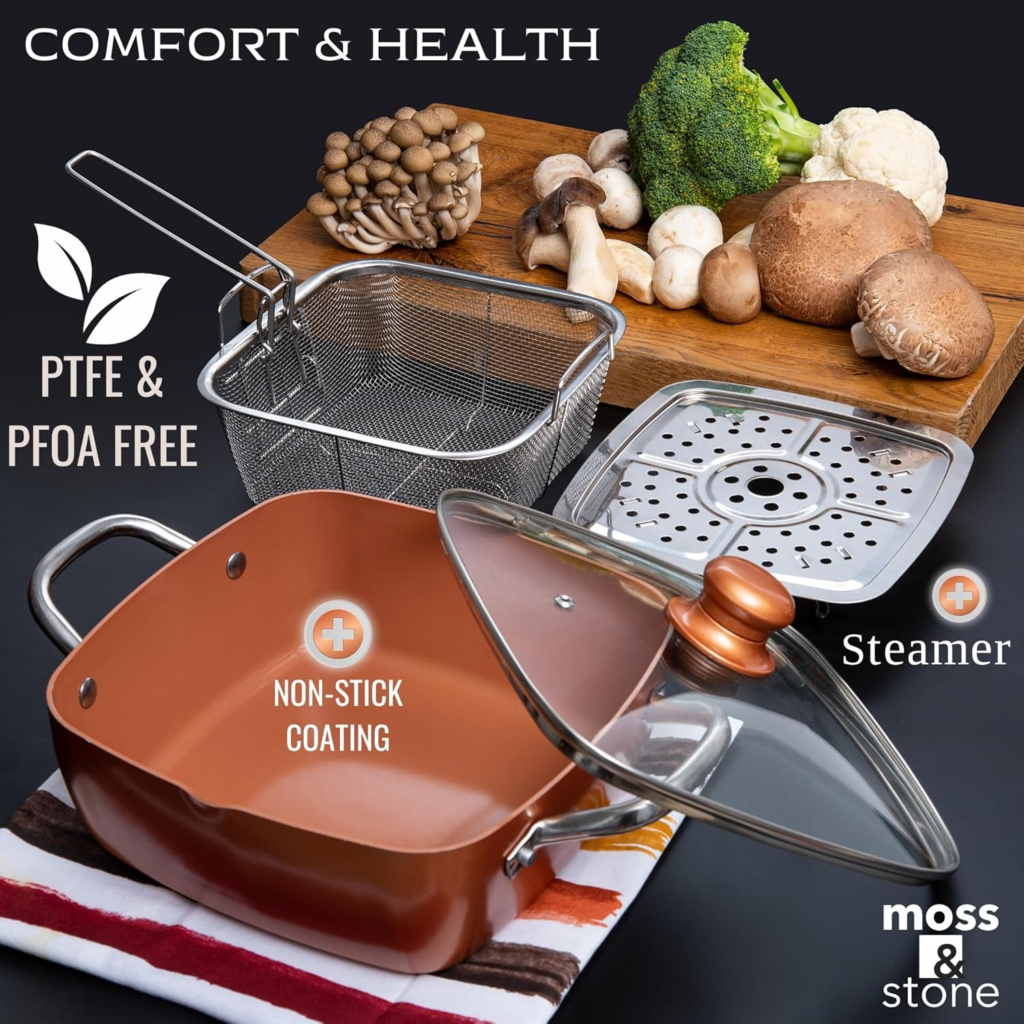
Cookware materials each have distinct characteristics that determine when they’re ideal. Stainless steel is durable, dishwasher-safe, and unaffected by acidic foods, but it doesn’t conduct heat evenly and sticks without proper technique or oil. The solution is thick stainless steel with an aluminum or copper core that distributes heat, creating both durability and conductivity. Non-stick coatings provide genuine convenience, food slides off with minimal oil, making healthier cooking easier and cleanup faster. The trade-off is that non-stick pans can’t withstand high heat and won’t develop the flavorful brown crust (fond) that makes pan sauces possible. Quality non-stick pans use robust coatings that survive years of use and dishwashing. Cheap non-stick degrades within months. Cast iron is the ancient technology that still outperforms modern materials for certain tasks. It holds heat exceptionally well, develops natural seasoning over time, goes directly from stovetop to oven to table, and lasts generations. The cost is weight and maintenance, cast iron requires occasional seasoning and shouldn’t sit wet. Carbon steel offers most of cast iron’s benefits (high heat tolerance, oven-safe, longevity) with less weight and easier maintenance. Copper conducts heat better than aluminum but is expensive and requires maintenance. Moss & Stone cookware includes multiple material options, each matched to specific cooking purposes rather than claiming one material does everything.
Matching Pan Types to Actual Cooking Needs
The difference between cookware collections that work and ones that frustrate is matching each pan to actual cooking purposes. A sauté pan (straight sides) handles everything from sautéing vegetables to browning meat to boiling pasta. One quality 12-inch sauté pan does most cooking tasks in a home kitchen. A separate non-stick skillet (8-10 inches) is ideal for delicate foods like fish or omelets where sticking would ruin the dish. A small saucepan (2-3 quart capacity) handles heating milk, cooking small portions, or making sauces. A larger pot (6-8 quart) is essential for cooking pasta, soup, or stock. A Dutch oven (4-6 quart) handles braises, stews, and whole-bird roasting, its heavy construction and tight lid create the moist heat necessary for these techniques. Specialty pieces like woks, griddles, or fish pans are genuinely useful only if you actually cook those foods regularly. A five-piece starter set is often more useful than a 15-piece set because the five pieces actually get used while the specialty items sit unused. The best collection is built gradually around actual cooking habits rather than purchased all at once. Someone who rarely makes pasta doesn’t need a massive pasta pot, while someone cooking for a large family needs multiple sizes. Choosing from Moss & Stone’s cookware selection means identifying which pieces match your cooking style rather than trying to own everything.
Construction Details That Signal Quality

Several specific construction details separate quality cookware from mediocre options. The bottom should be thick and ideally encapsulated (bonded to stainless steel for even heating). Thin bottoms warp easily and heat poorly. The handle should be firmly attached and balance well, you should be able to hold the pan comfortably when it’s full. Handles attached with rivets (permanent) are preferable to those that are welded, since riveted connections don’t loosen. The lid should fit snugly enough to maintain steam but not so tight it’s impossible to remove. Tempered glass lids let you monitor cooking without lifting; metal lids work better for high-heat cooking. Non-stick surfaces should show no visible imperfections and should feel smooth, not grainy. The weight should feel substantial, light pans are either too thin or too small to be useful. Cost is a factor but not the only one: a $60 quality pan lasts 20 years (3 dollars yearly), while a $20 low-quality pan needs replacing every 2-3 years (7-10 dollars yearly). The long-term cost of quality is lower than the cost of repeated replacement. Moss & Stone cookware is constructed with these quality details visible in material thickness, handle design, and finishing.
Caring for Cookware to Extend Lifespan
How you treat cookware dramatically affects how long it lasts. Hand washing stainless steel and cast iron extends their life far beyond dishwasher cycling, heat in dishwashers can loosen handles and degrade finishes over time. Non-stick cookware should never go in dishwashers either, as the harsh environment damages coatings. Storing pans carefully prevents damage, hanging them on hooks rather than stacking prevents dents and protects non-stick surfaces. Using appropriate heat levels for each pan matters: non-stick shouldn’t exceed medium-high heat, while cast iron and carbon steel handle extremely high heat. Using wooden or silicone utensils rather than metal utensils prevents scratching non-stick surfaces. Proper seasoning maintains cast iron and carbon steel, preventing rust and developing the naturally non-stick surface. Wiping non-stick pans dry immediately after washing prevents water spots and extends coating life. Avoiding thermal shock (placing hot pans in cold water) prevents warping. These maintenance practices aren’t complicated, they simply require understanding how materials behave. Someone who maintains their cookware keeps quality pans for decades. Someone who tosses expensive pans in the dishwasher and uses metal utensils destroys them within years. Investing in quality cookware only makes sense if accompanied by appropriate care.
Building a Functional Cookware Collection
- Start with one quality all-purpose sauté pan—you’ll use it more than any other piece.
- Add a small saucepan and a large pot to handle the full range of cooking tasks.
- Include a non-stick skillet only if you regularly cook delicate foods that require it.
- Add specialty pieces (Dutch oven, wok, griddle) only when you’ve established that you actually cook that style regularly.
- Prefer materials matched to your cooking habits over trying to own every material type.
Cooking With Confidence
Good cookware is almost invisible, it simply works. Heat distributes evenly, food cooks properly, and cleanup is straightforward. You reach for favorite pans without hesitation because they perform reliably. This consistency makes cooking more enjoyable and more successful. The difference between cooking on quality cookware and cooking on mediocre pans is dramatic and noticeable every single use. The investment pays dividends through reliable performance and durability that outlasts poor cookware by decades.