
Share This Article
Your eyes weren’t designed for screens. Humans spent hundreds of thousands of years reading ambient light reflected off surfaces, trees, water, animals, the sky. Screen light is different. Digital displays emit concentrated blue wavelengths that penetrate deep into the eye and affect the systems controlling sleep and focus. An average person now spends 7-10 hours daily looking at screens, from work monitors to phones to televisions. This isn’t occasional exposure; it’s the baseline reality of modern life. The cumulative effect shows up as eye strain, disrupted sleep, and difficulty focusing. Blue light glasses interrupt this pattern by filtering some of that wavelength before it reaches sensitive eye tissues. But not all blue light glasses are equal, not everyone benefits equally, and the science is more nuanced than marketing suggests. Understanding blue light, how it affects different people, and which glasses actually help separates genuine solutions from hype.
What Blue Light Actually Is and How It Affects Your Eyes
Visible light spans wavelengths from about 380 nanometers (violet) to 700 nanometers (red). Blue light occupies the high-energy end of the visible spectrum, between 380-500 nanometers. It has shorter wavelengths and higher energy than red or yellow light. During daylight, blue wavelengths trigger alertness, they’re part of the natural cue that tells your body it’s daytime. Your eyes contain photoreceptors that respond specifically to blue light and signal your brain to suppress melatonin (the sleep hormone), keeping you alert and focused. This system evolved because daylight is naturally rich in blue wavelengths. At night, when blue light disappears, melatonin rises and you feel sleepy. The problem: screens emit intense blue light at times your body expects darkness. When you look at a bright phone at 10 PM, you’re sending your eyes and brain a signal that it’s actually midday. Melatonin production stops, your mind stays alert, and sleep becomes difficult. Over weeks and months, this misalignment between circadian rhythm and actual sleep schedule accumulates into chronic sleep disruption. The eye strain component is separate, blue light doesn’t damage the retina at normal screen levels, but the visual characteristics of digital displays (contrast, flicker, focus distance) create fatigue. Blue light glasses from mooglasses address both the circadian disruption and the visual fatigue by filtering blue wavelengths before they reach your photoreceptors.
The Circadian Rhythm Connection to Sleep Quality
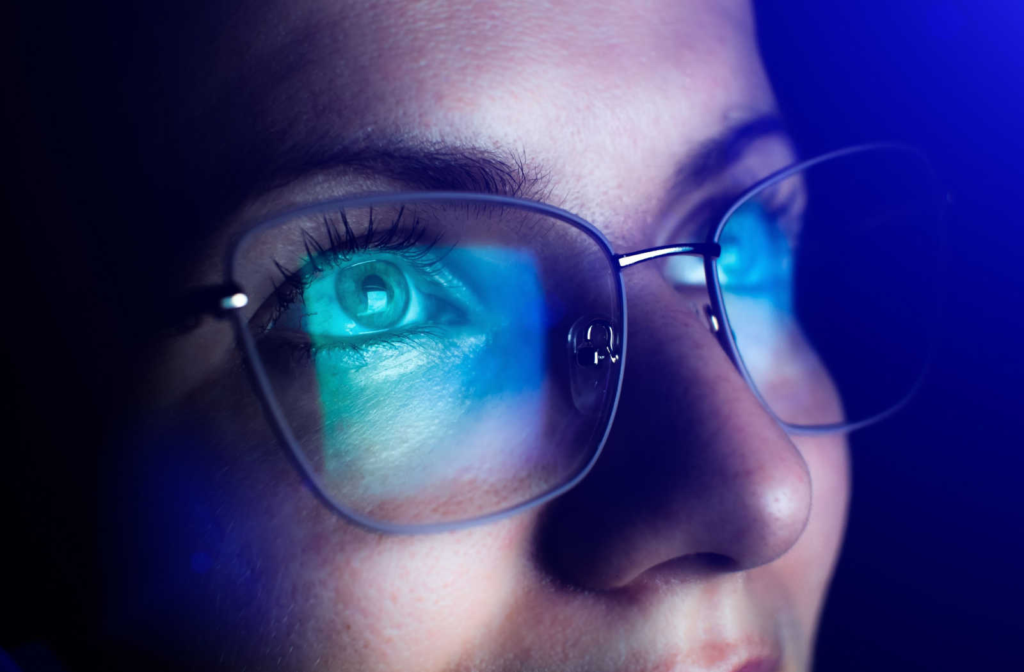
Your circadian rhythm is a 24-hour biological clock that regulates sleep, hormone release, digestion, and body temperature. This system synchronizes to external time cues, the strongest being light. When light enters your eyes, specialized cells called intrinsically photosensitive retinal ganglion cells (ipRGCs) detect it and send signals to your brain’s suprachiasmatic nucleus, the master clock. These cells are exquisitely sensitive to blue light, which is why afternoon sunlight resets your clock but warm evening light doesn’t. Your body interprets blue light as evidence that it’s daytime, suppresses melatonin, and keeps you awake. This system worked perfectly when humans experienced blue light only from the sun, lots in the morning, fading as the day progressed, completely gone at night. Modern screens invert this. You might be indoors under artificial light all day, then stare at a phone (which is literally a concentrated blue light source) an hour before bed. Your body receives contradictory signals: your eyes see daylight-spectrum blue light, but your circadian system knows it’s supposed to be nighttime. Melatonin doesn’t rise. Your body temperature doesn’t drop. You lie in bed alert despite being physically tired. Studies show that people who use screens before bed take 10-30 minutes longer to fall asleep and sleep less deeply. Wearing blue light glasses in the evening prevents this disruption by blocking the wavelengths your ipRGCs respond to, allowing normal melatonin production.
Different Types of Blue Light Glasses and Their Approaches
Blue light glasses come in several categories, each with different filtering effectiveness. Standard blue light glasses filter 50-90% of blue light in the most harmful range (around 400-450 nanometers). These are suitable for evening wear and moderate screen use. Sleep-specific blue light glasses filter 95%+ of blue light and sometimes add an amber or orange tint to make the filtering visible. The stronger filtering is especially useful for people who must look at screens within an hour of bedtime. Computer glasses or gaming glasses filter moderate amounts of blue light while prioritizing visual clarity for extended screen focus. Some include anti-reflective coatings that reduce glare, a major source of eye strain independent of blue light. Prescription blue light glasses integrate blue light filtering into prescription lenses for people who need vision correction. Some people also benefit from computer-specific lens coatings that reduce contrast and flicker. The best choice depends on your specific situation: evening phone use requires only moderate filtering and can use subtle amber tint. Work at a computer all day with poor sleep suggests stronger filtering. Professional contexts where appearance matters might call for clear lenses with subtle blue light filtering rather than visibly amber glasses. Mooglasses offers multiple styles of blue light glasses designed for different situations and preferences.
Who Actually Benefits Most From Blue Light Glasses
Not everyone benefits equally from blue light glasses. People with significant evening screen use get the most benefit, especially those with documented sleep problems. If you work a desk job, then spend evenings on your phone, your eyes receive blue light stimulus for 12+ hours daily. This chronically disrupts sleep timing. Wearing blue light glasses in the evening restores normal melatonin cycles and usually improves sleep onset and depth noticeably. People with existing sleep disorders often see dramatic improvements because their circadian systems are already compromised. Shift workers who need to stay alert at unusual hours sometimes use blue light glasses in reverse, wearing them during night shifts to maintain alertness, then wearing clear glasses during daytime sleep. People with digital eye strain (dry, fatigued eyes after screen time) benefit from the reduced visual contrast and potential glare reduction of blue light glasses, though the blue light filtering itself isn’t the primary benefit. People who spend minimal time on screens see minimal benefit, if you work outdoors and barely use screens, your natural circadian rhythm is already aligned. Older adults sometimes report greater benefit because age affects lens clarity and circadian sensitivity. Children and teenagers benefit significantly because their circadian systems are still developing and are more sensitive to light cues. Young children shouldn’t wear screen time-related blue light glasses casually; instead, limiting screen exposure is more effective. Blue light glasses work best for people with substantial evening screen exposure or sleep disruption.
Choosing the Right Blue Light Glasses for Your Needs

Several factors determine which blue light glasses will actually help you. First, estimate your screen exposure timing. Early morning and afternoon screen use has minimal impact on sleep because blue light doesn’t disrupt your circadian rhythm when melatonin levels are naturally low. Evening screen use within 2-3 hours of bedtime is where blue light glasses help most. If most of your screen time is during the day, you might benefit more from anti-glare coatings or proper monitor distance than from blue light filtering. Second, consider the filtering level. Subtle 50% filtering works for casual evening phone use. Strong 95%+ filtering works better if you must work on screens an hour before bed. Prescription needs matter, if you need vision correction, blue light filtering integrated into prescription lenses is more convenient than separate glasses. Third, assess your sleep quality honestly. If you sleep well despite evening screen use, blue light glasses won’t help much, your circadian system is resilient. If you take 30+ minutes to fall asleep or wake multiple times despite being physically tired, blue light glasses often help noticeably. Fourth, consider aesthetics and practicality. Strongly tinted amber glasses are very effective but obvious and not suitable for video calls. Clear or subtly tinted lenses are less noticeable but slightly less effective. Finding the right mooglasses style matches your actual lifestyle rather than assuming all blue light glasses work identically.
Maximizing Blue Light Glasses Effectiveness
- Wear them during the last 2-3 hours before bed, when blue light most disrupts melatonin, daytime wearing is ineffective for sleep.
- Combine glasses with practical habits: dim room lighting, reduce screen brightness, use your phone’s night mode, and maintain consistent sleep schedules.
- Give blue light glasses at least one week of consistent use before evaluating effectiveness, circadian rhythms adjust gradually, not immediately.
- Position screens at arm’s length distance to reduce eye strain regardless of blue light filtering, screen distance matters as much as blue light filtering for visual fatigue.
Modern Screen Life Without Sleep Disruption
Screens are permanent now. The solution isn’t eliminating them, it’s managing how they interact with your biology. Blue light glasses are one practical tool for people whose evening screen use genuinely disrupts their sleep. They’re not a magic solution for everyone, and they’re not necessary for daytime use. But for someone working until 6 PM, then scrolling social media until 11 PM, blue light glasses make a measurable difference in sleep quality, next-day alertness, and overall well-being.