Share This Article
Remote work has transformed from a rare benefit into a fundamental shift in how jobs operate. What started as emergency work-from-home during a global crisis revealed something surprising: many jobs work better remotely. Teams span continents, productivity metrics reveal which work actually matters, and commute time disappears. But remote work isn’t identical to in-office work with a longer pajama-wearing period. It requires different skills, intentional communication, and strategies to build a real career rather than just a paycheck. The professionals thriving remotely aren’t simply doing their old jobs in new locations they’re working differently and thinking differently about professional development.
The ones struggling are often repeating office-era habits that don’t translate. Understanding what truly works in remote environments separates those who build careers from those who simply collect paychecks.
FlexJobs offers unprecedented flexibility, but that flexibility is worthless without strategy. The freedom to work from anywhere only benefits you if you build sustainable routines, maintain genuine connections with colleagues, and make yourself visible for opportunities.
Structuring Your Remote Day for Sustainable Productivity
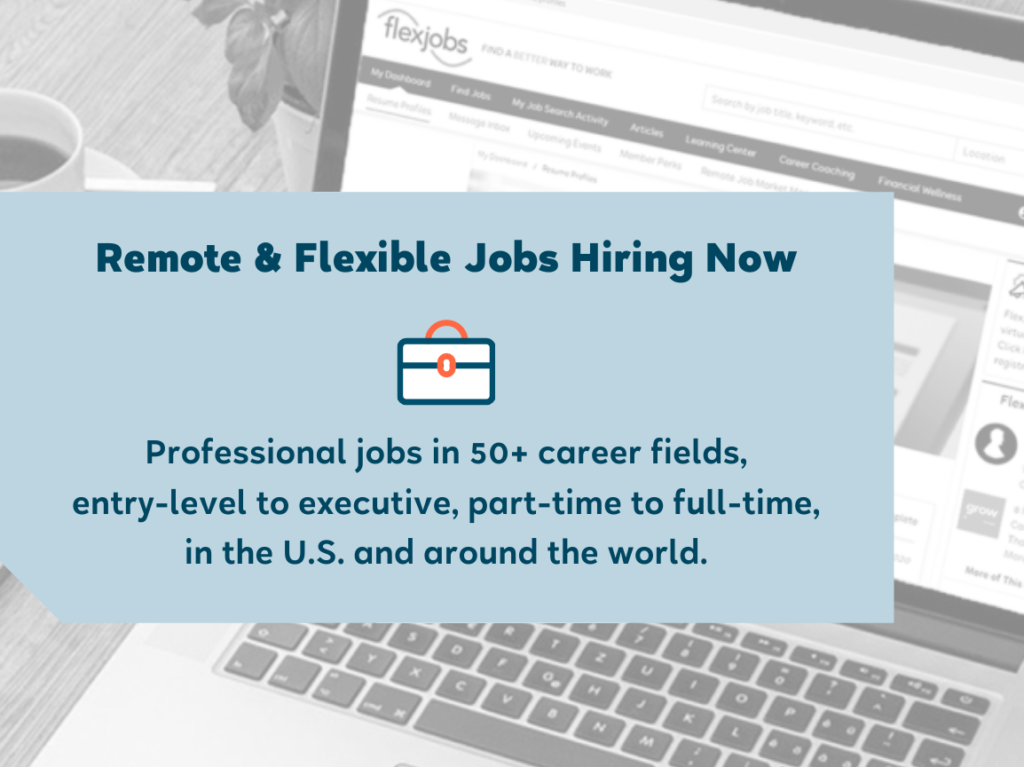
The biggest myth about remote work is that you need more discipline to stay productive. The opposite is often true: remote workers need better structure precisely because distractions are different. In an office, your environment creates structure you arrive at a desk, colleagues are present, a meeting room is booked. At home, you must create that structure intentionally. This starts with dedicated workspace. Not “I’ll work from my couch” but an actual desk, separate from where you relax. Your brain needs the signal that this space means work. Hours matter more than location. Starting at 8 AM and stopping at 5 PM creates a psychological boundary between work and personal time. Remote workers who blur these lines working until midnight, then working again at 6 AM burn out faster than anyone. Transitions matter. A 20-minute walk instead of a commute creates the mental shift from home-mode to work-mode. Getting fully dressed (not pajamas) signals to your brain that you’re working, not lounging. These seem small, but they’re the difference between exhaustion and sustainable productivity. Finding a role on FlexJobs that matches your preferred work style accelerates the entire process. You’re not fighting your job structure; your job is built for remote work from day one.
Communication That Replaces Water Cooler Conversations

Offices have accidental collaboration. You overhear conversations at the coffee machine, bump into colleagues in hallways, and learn context just by being present. Remote work eliminates these accidental interactions, which means deliberate communication becomes essential. This isn’t just more meetings; it’s smarter communication. Asynchronous work (email, documents, recorded videos) should be the default. Synchronous meetings (live calls) should have specific purposes: decisions that require real-time discussion, relationship-building, or brainstorming that benefits from live interaction. Too many meetings actually destroy remote productivity.
Clear written communication prevents misunderstandings that spiral in remote environments where you can’t clarify instantly. A 5-minute phone call is often better than 10 emails, but a well-written document shared in advance and discussed asynchronously is often better than a meeting. The skill is knowing which situation calls for which medium. Remote work visibility is also different. In an office, your manager sees you working. Remotely, you must proactively communicate progress. Updating your team asynchronously, sharing completed work visibly, and summarizing accomplishments in writing ensures people know you’re contributing. Remote positions on FlexJobs typically attract managers who understand these dynamics because remote-first companies have refined how distributed teams communicate.
The Loneliness Factor and Building Remote Community
Remote work’s most underestimated challenge is loneliness. Not everyone experiences it equally some people thrive in solitude, others wilt. The key is recognizing whether you’re someone who needs social connection and building it intentionally rather than hoping it happens. Video calls feel more connected than voice calls, which feel more connected than text. Scheduling regular 1-on-1s with colleagues, even brief ones, maintains relationships that would happen naturally in offices. Participating in optional team social calls (even if they feel awkward) creates informal bonding. In-person gatherings, even quarterly, can revitalize remote relationships that strain over time. For some people, working from cafés instead of home offices provides ambient social connection. For others, joining coworking spaces provides structure and colleague proximity. Some remote workers build entire communities around shared interests fitness groups, book clubs, volunteer organizations that substitute for the social aspect of offices. The professionals who thrive remotely are intentional about this. They don’t wait for loneliness to become a problem; they design social connection into their lives. Seeking community through FlexJobs means looking for companies that emphasize culture and connection, not just job flexibility. Remote companies that invest in team building understand the loneliness factor and account for it.
Career Visibility and Professional Development Remotely
In-office environments, visibility happens passively. Your manager sees you arrive early, stay late, handle crises. Remotely, you must make your work visible actively. This requires different strategies than what works in offices. Documenting your accomplishments in writing creates a record you can reference during reviews. Volunteering for high-visibility projects, even when remote, builds credibility.
Mentoring junior team members or contributing to company-wide initiatives keeps you connected to the broader organization. For career advancement, remote workers sometimes face the bias that they’re less committed or less visible than office workers. Overcoming this requires both doing excellent work and ensuring that excellence is visible. Regular communication about your accomplishments, asking for feedback, and seeking new responsibilities keeps you top-of-mind for promotions and opportunities. Professional development is also different remotely. Learning happens less through osmosis and more through intentional seeking. Online courses, certifications, webinars, and self-directed learning become more important. Building a peer network across companies (through professional groups, online communities, conferences) becomes more critical for career growth. Remote career advancement through FlexJobs often means being more intentional about professional development than you would in a physical office.
Managing Isolation and Burnout Risks
- Set work hours and stick to them remote blurs work-life boundaries; you must create separation intentionally.
- Create physical workspace distinct from relaxation space your brain uses environment as a context cue.
- Schedule social interaction deliberately don’t expect relationships to happen automatically in remote settings.
- Communicate progress visibly write updates, share accomplishments, ensure managers know your contribution.
- Maintain professional development separate from your job online courses, communities, and networks sustain career growth.
The Future Is Remote-Ready
FlexJob is no longer an experiment, it’s how many organizations operate. The professionals succeeding in this environment aren’t necessarily the most disciplined or the most introverted. They’re the ones who understand what remote work requires: intentional structure, deliberate communication, visible accomplishments, and proactive relationship-building. These skills create careers that are more flexible, more sustainable, and ultimately more fulfilling than the traditional office model. The flexibility remote work offers is only valuable if you build the systems to use it well.