
Share This Article
Cold mornings make every fumble at the dashboard worse. A frozen cable connector, stiff fingers, and a dark parking lot are not the conditions for digging around a center console before pulling onto a snowy highway. A wireless CarPlay adapter removes that step entirely, letting a phone connect the moment the engine starts, which matters most when daylight is short and road conditions are unpredictable.
Why Winter Driving Demands Wireless CarPlay Connectivity
Winter trips often mean gloves, stiff hands, and less patience for small tasks like plugging in a charging cable. Icy door handles and freezing temperatures make anyone want to get moving as fast as possible once inside the car. A dangling USB cable becomes an annoyance at best and a hazard at worst if it catches on a gearshift or a boot while driving.
Ottocast builds its lineup around solving exactly that friction point. Its adapters convert a factory-wired CarPlay or Android Auto connection into a wireless one, so the phone can stay in a pocket, cupholder, or mount without a cord running to the dashboard. That shift matters more in winter, when every extra manual step at the start of a drive competes with the urge to just get the heater running and go.
The U2Air Edge and Mini Series: Ottocast’s Wireless Solutions for Wired Systems
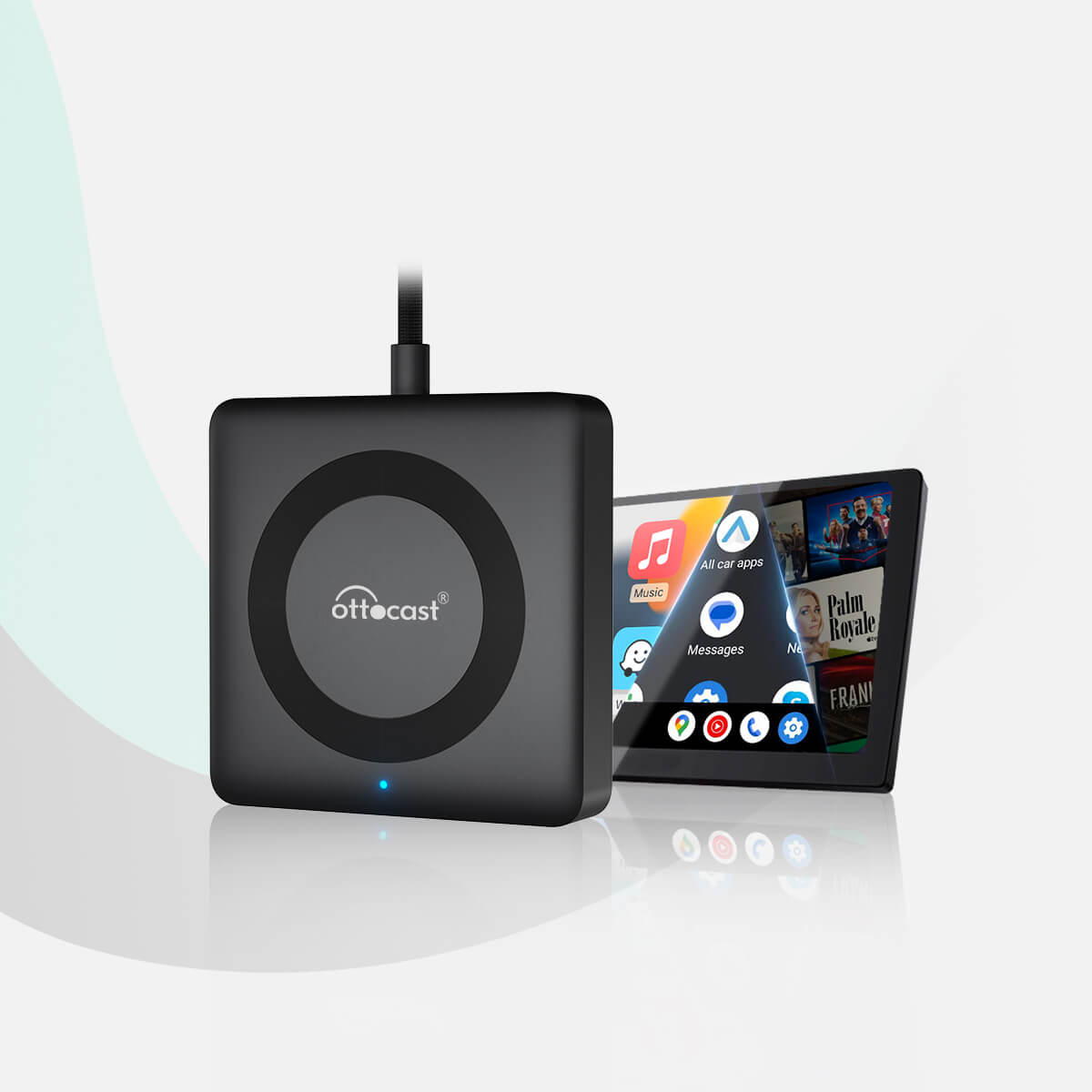
The U2Air Edge targets vehicles from the 2016 model year onward that already run factory wired CarPlay or wired Android Auto, while vehicles with factory wireless CarPlay already built in, such as some BMW models, are directed instead toward the separate OttoAibox i3. Ottocast also lists the Mini Cube 3.0, Mini NOVA, and Mini Pico as part of the same wireless conversion category, each aimed at compact, plug-and-play setups that avoid any app installation.
The Mini Pico in particular is built around a small physical footprint, something that matters in vehicles where console space is already tight with winter gear, cables, or phone mounts. The Mini Cube 3.0 adds a 90-degree USB connector designed to keep the housing low-profile and out of the way. Neither requires extra wiring behind the dashboard, since both rely on the vehicle’s existing wired CarPlay or Android Auto hardware.
Fast Auto-Reconnection Features for Cold-Start Reliability

One detail stands out for winter use specifically, which is fast auto-reconnection. The U2Air Edge is described as remembering a paired device and reconnecting automatically every time the vehicle starts, without any manual re-pairing. The Mini Cube 3.0 is also built around this same reconnection behavior, cutting out the step of reopening an app or re-tapping a Bluetooth menu while sitting in a freezing car.
That kind of automatic reconnection becomes more noticeable in cold weather, when batteries drain faster and drivers want the cabin warm as quickly as possible. Rather than waiting for a phone to be dug out and plugged in, a wireless CarPlay adapter picks the connection back up as soon as the ignition turns over. Ottocast also offers firmware-over-the-air updates on some models, which keep the hardware current without a dealership visit or a shop appointment.
Seamless Integration with iPhone and Android Devices
A wireless CarPlay adapter only earns its place in a car if it works with the phone already in someone’s pocket. The U2Air Edge supports iPhone running iOS 10 or newer, along with Android devices on Android 11 or newer, with select Samsung and Google phones also supported on Android 9. That breadth means a shared vehicle, or a household switching between iPhone and Android, does not need two separate accessories.
Wireless Android Auto depends on the vehicle already having factory wired Android Auto, just as wireless CarPlay depends on factory wired CarPlay, and that shared requirement is also why Sony aftermarket head units are listed as incompatible while Mitsubishi vehicles need a note left at checkout before ordering. Confirming which wired protocol a dashboard already supports is therefore the real starting point before picking any adapter from the Ottocast lineup.
The Play2Video X All-in-One Alternative for Winter Entertainment
Long winter drives, whether stuck in traffic behind a plow or waiting out a delay at a rest stop, often call for more than navigation and calls. The Play2Video X and the related Play2Video Pro sit in a separate all-in-one adapter category, combining wireless CarPlay and Android Auto with a built-in streaming box running a closed Android system, and the line is also offered in a two-car bundle option for households running more than one vehicle. That setup allows pre-installed apps such as Netflix and YouTube to run directly through the car’s existing screen.
This differs from the Mini series and the U2Air Edge, which focus purely on converting a wired connection to wireless. Ottocast positions the Play2Video line as an entertainment layer for passengers during stops, without needing a separate tablet or phone passed around the car. For families on longer winter routes, that distinction between a pure connectivity adapter and an all-in-one entertainment unit is a meaningful one when deciding what to install.
- Phone placement becomes more flexible since nothing has to stay tethered to a port near the dashboard.
- Cold weather makes stiff, tangled cables harder to manage, and going wireless removes that obstacle completely.
- Automatic reconnection after the car starts means no re-pairing is needed even on the coldest mornings.
- A cleaner interior setup results from removing a visible cable running across the console.
- Navigation can start immediately after ignition, without pausing to plug anything in first.
Winter road trips reward anything that cuts down on fumbling in the cold, and a wireless CarPlay adapter fits squarely into that category. The choice between a pure connectivity piece and an all-in-one streaming unit still shapes how much friction remains once the engine turns over.
