
Share This Article
Cookware affects more than the final appearance of a meal. It influences heat control, cleanup, storage and the amount of attention a home cook gives to the pan instead of the food. Interest in titanium cookware has grown because the material is light, resistant to corrosion and suited to repeated kitchen use. Taima Titanium approaches that category with pans and related kitchen tools built around pure titanium rather than a conventional nonstick coating.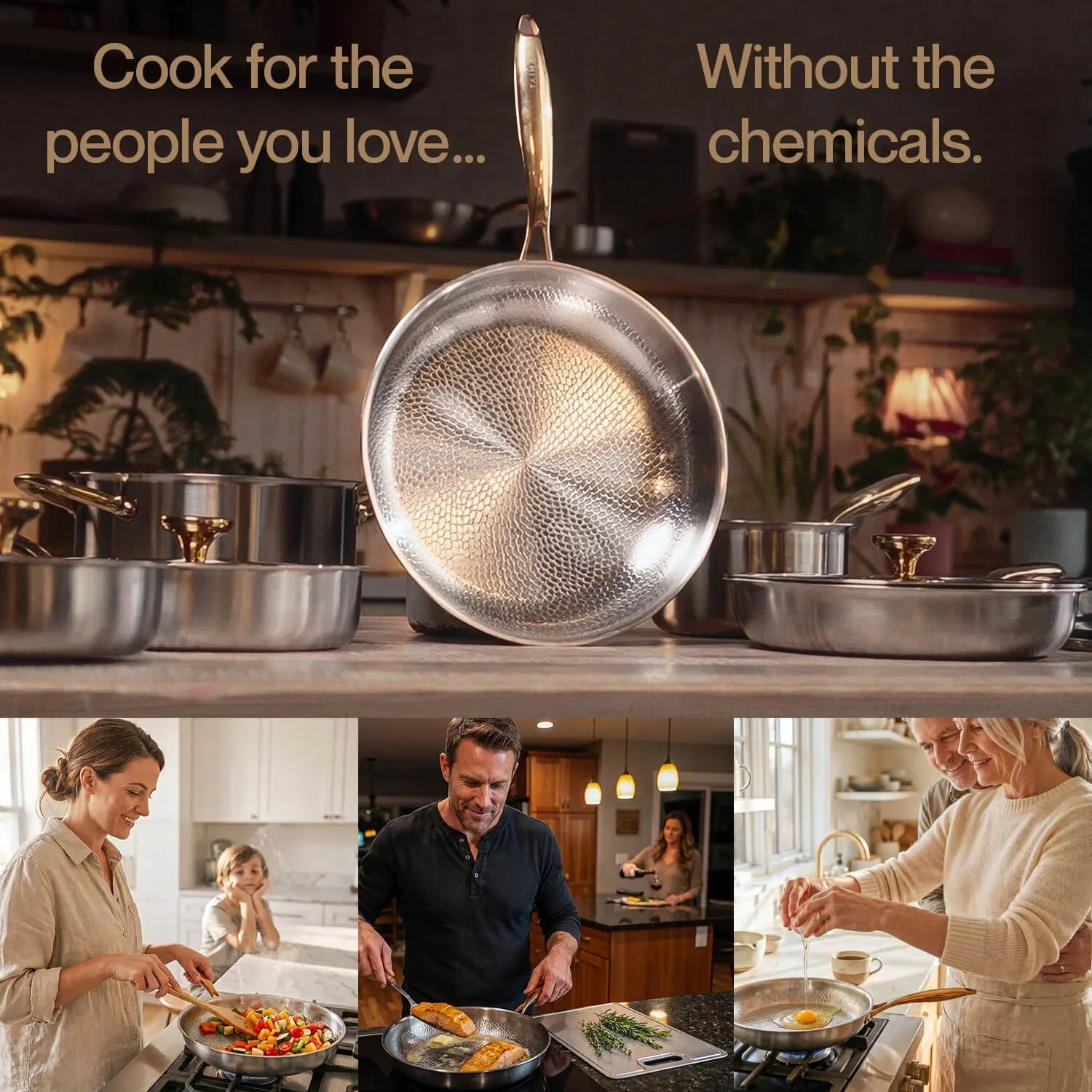
Why Material Choice Matters More Than It Looks
Most cookware comparisons begin with shape and price, yet material is usually the more important starting point. Stainless steel can be durable but often demands careful preheating and enough fat to prevent sticking. Cast iron holds heat well but is heavy and needs ongoing seasoning. Traditional coated pans can feel easy at first, though the coating itself eventually becomes the part that determines how long the pan remains useful. Titanium offers a different balance because the metal is naturally corrosion resistant and notably light for its strength.
That difference becomes relevant in ordinary routines. A pan that feels manageable is easier to lift, tilt, transfer and wash. A surface that does not rely on a fragile applied coating can also change how a household thinks about scratches and long-term wear. Taima Titanium lists its cookware as pure titanium and describes the cooking surface as a textured SlipScale design intended to improve food release without PFAS, PTFE or PFOA coatings. That distinction is central to the brand’s positioning and gives shoppers a clear point to compare with other cookware systems.
Material choice also affects how people build a kitchen. Some households collect several specialized pans because each material solves a different problem. Others prefer fewer pieces that can handle a broad mix of tasks. Titanium cookware is interesting to that group because a frying pan can move between eggs, vegetables, fish, meat and sauces without being treated as a single-purpose tool. It can reduce the amount of equipment needed for meals.
What Pure Titanium Changes in Daily Cooking
A responsive pan changes the pace of cooking. Food can be added, moved and removed with less waiting when heat adjustments register quickly. The product pages for Taima Titanium also state that the pans are compatible with induction and conventional stovetops, are oven safe and can be placed in a dishwasher. Those features matter because modern kitchens rarely use one cooking method all the time. A pan that can start on a burner and finish in an oven gives a cook more flexibility without creating another dish to wash.
The absence of a conventional coating also changes maintenance habits. Coated cookware is often paired with strict instructions about utensils, stacking and abrasive cleaning. Titanium is valued partly because the metal itself is the working surface. That does not mean technique stops mattering. Protein can still stick if a pan is too cold, sugary sauces can still burn and oil can still polymerize when overheated. The advantage is that the cook can focus on temperature and timing rather than protecting a delicate top layer.
The brand’s range also shows how a material can be extended across a kitchen. Alongside frying pans, the site presents wok-style pans, deeper pans, cutting boards, utensils and drinkware. For a household that likes a consistent material story, that creates the option to build gradually rather than replace everything at once. A single pan can serve as the test piece before a larger set becomes relevant.
Practical Habits That Help It Perform Well
Even highly durable cookware benefits from sensible technique. Taima Titanium provides product guidance, but the most useful habits are simple and familiar to experienced cooks.
- A moderate preheat gives the cooking surface time to reach an even working temperature before food is added.
- A small amount of cooking fat can still improve browning, flavor and release even when the surface is designed to reduce sticking.
- Food should be allowed to sear before it is moved because many proteins release more easily after a crust has formed.
- Heat can be reduced after the pan is hot since responsive cookware often needs less aggressive burner settings than expected.
- Cleaning soon after the pan cools helps prevent cooked-on residue from becoming a separate maintenance problem.
A Better Way to Think About Long-Term Cookware
The strongest reason to consider titanium is not novelty. It is the possibility of buying cookware around the material itself instead of around a temporary finish. That can make the purchase easier to evaluate. Shoppers can compare weight, handle comfort, pan depth, stove compatibility and care requirements without making coating longevity the only question.
Price still matters, especially when premium cookware is being considered. A higher initial cost makes the most sense when the pan is expected to be used often and for many types of meals. The practical calculation is therefore based on frequency rather than prestige. A person who cooks several times a week may value a versatile pan differently from someone who prepares food only occasionally.
For households trying to simplify their kitchen, Taima Titanium represents a clear version of the titanium cookware idea. Its collection focuses on pure titanium pieces, broad stove compatibility and a surface designed for everyday cooking without a traditional nonstick coating. The useful takeaway is not that one material automatically suits every cook. It is that cookware can be chosen more deliberately when the buyer understands what the material changes in daily use. A pan that feels good in the hand, responds predictably to heat and is straightforward to maintain is more likely to become part of regular cooking rather than another item stored at the back of a cabinet.
