
Share This Article
Plant-based skincare supplements have moved well beyond vague wellness claims, and a vegan collagen supplement now has to justify itself with real data rather than good intentions. The category is crowded with extracts borrowed from algae, bamboo, or citrus pectin, each marketed as a stand-in for animal collagen without much explanation of how. This article looks at what separates a genuine collagen-support formula from a loosely defined plant blend, using Arella Beauty‘s VeCollal-based product as the reference point.
Understanding How Vegan Collagen Actually Works
Animal collagen, whether marine or bovine, supplies the body with amino acids similar to those found in human Type I collagen. Because no plant produces actual collagen protein, a supplement instead relies on ingredients designed to support the skin’s existing structure. That distinction matters because it changes what a reasonable person should expect from the category as a whole. Some formulas lean on vitamin C and biotin alone, while others combine specific amino-acid blends with antioxidants to approach the task differently.
Why Arella Vegan Collagen Uses VeCollal Instead of Other Plant Extracts
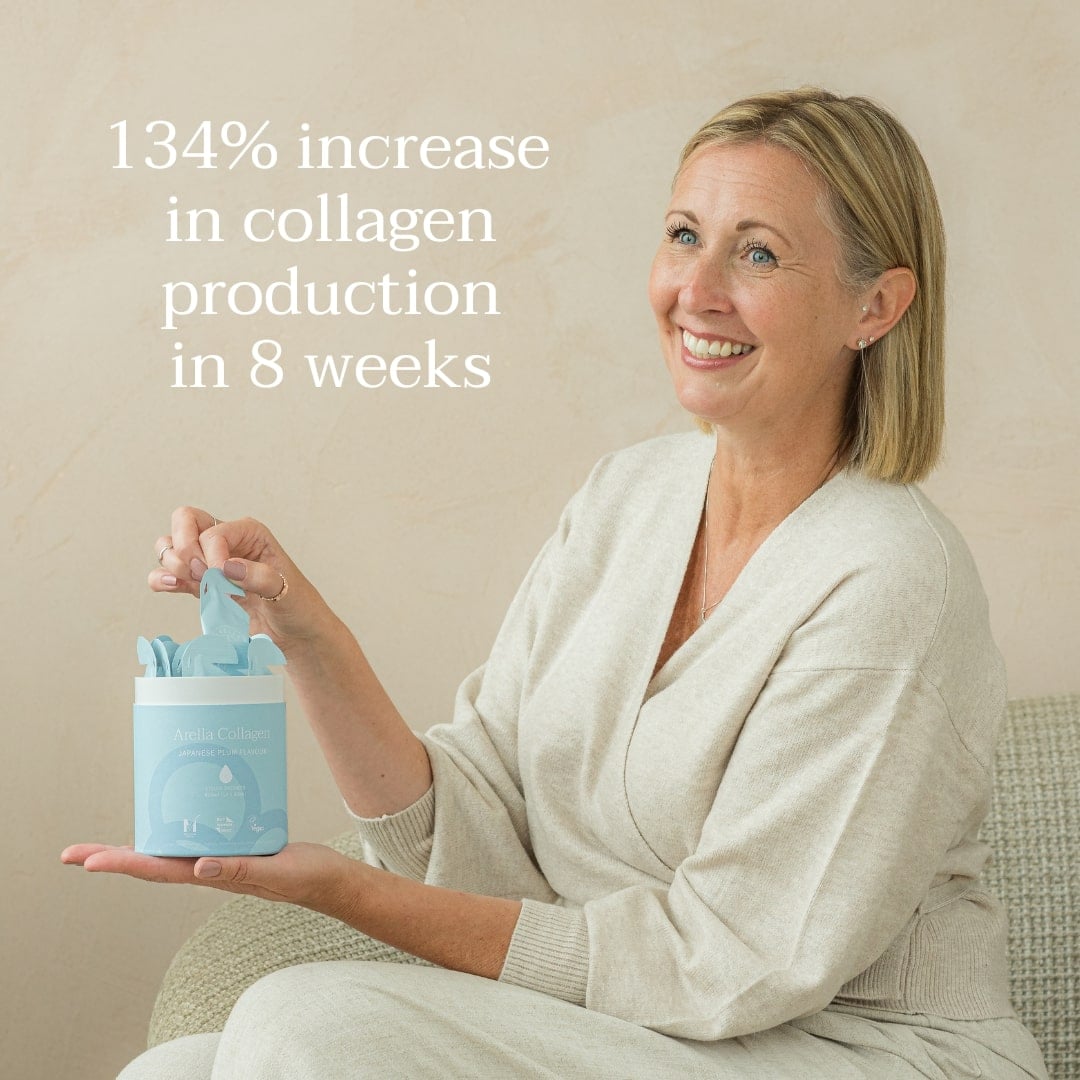
Arella Vegan Collagen is built around VeCollal, described by Arella Beauty as the world’s first plant-based collagen alternative. Rather than relying on a single botanical extract, the formula delivers 2,500mg of VeCollal per daily sachet, alongside hyaluronic acid, Panax ginseng, biotin, and a blend of vitamins. Many other plant-based collagen boosters simply pair a single extract with vitamin C and leave the amino-acid question unanswered. Arella Beauty’s formula, by contrast, names a specific ingredient and a specific dose, which makes it easier to compare against other products in the category.
The Amino-Acid Profile: What Makes VeCollal Different from Marine and Bovine Collagen
According to Arella Beauty, the amino-acid blend in VeCollal is formulated to match the profile of the body’s own Type I collagen. Type I collagen is the structural protein most associated with skin firmness, so a closer amino-acid match is relevant to how a supplement is designed to function. Marine and bovine collagen supply amino acids directly from animal tissue, whereas VeCollal is built to mirror that same composition using plant-derived inputs. The brand states that this is something bovine and marine collagen formulas cannot replicate, since those sources are fixed to the amino-acid makeup of the animal they come from, while a formulated plant blend can be engineered toward a target profile.
This matters for anyone comparing ingredient lists rather than marketing copy. A vegan collagen supplement that cannot state what its amino-acid composition is aiming for leaves a gap that is hard to evaluate. Arella Beauty fills that gap by naming the target explicitly, which at least gives a concrete basis for comparison against marine and bovine alternatives.
Common Myths About Vegan Collagen Absorption and Bioavailability

One persistent myth is that any plant-based formula is automatically less absorbable than an animal-derived one, as though absorption were purely a matter of origin rather than formulation. Another is that liquid formats are a gimmick rather than a practical delivery method. Arella Vegan Collagen is sold as a ready-to-drink liquid sachet rather than a powder or capsule, which the brand says requires no mixing or diluting. A third myth treats all vegan collagen supplements as interchangeable, when formulations differ considerably in dose, ingredient sourcing, and supporting actives.
- Many assume plant-based formulas cannot support skin, hair, and nails because they contain no animal collagen, yet supporting ingredients such as biotin and hyaluronic acid are included specifically for that purpose.
- Some believe a supplement is only about skin, but formulas combining biotin with amino-acid blends are also positioned to support hair and nail health.
- It is commonly assumed that liquid formats are less effective than capsules, though a liquid sachet simply changes how an ingredient is delivered rather than what it contains.
- A frequent misconception is that all plant-based collagen alternatives use the same base ingredient, when formulas can differ sharply between a single botanical extract and a purpose-built blend like VeCollal.
- Many shoppers expect instant results from any collagen supplement, whereas brands including Arella Beauty state a specific multi-week timeframe before visible change is expected.
Supporting Ingredients in Arella Vegan Collagen: Hyaluronic Acid, Biotin and Panax Ginseng
Beyond VeCollal itself, Arella Vegan Collagen includes hyaluronic acid, which the brand links to skin hydration and elasticity support. Biotin is included as part of the formula’s support for hair and nail health, alongside a blend of vitamins. Panax ginseng is also listed among the active ingredients, with the brand noting that research suggests a role for it within the formula.
The sachet itself is flavoured with Japanese plum, and the brand describes the product as suitable for both vegans and vegetarians. It is also stated to be free from dairy, soy, wheat, and gluten, which broadens who can reasonably consider including it in a daily routine. Each of these supporting ingredients is included alongside VeCollal rather than as a replacement for it.
Clinical Evidence and Realistic Timelines for Visible Results
Arella Beauty states that in clinical studies, 80% of users saw visibly reduced wrinkles within eight weeks of use. The brand’s own product page also states that most people see the full difference at the eight-week mark, which sets a concrete and consistent expectation rather than an open-ended one. This kind of stated timeline is useful because it gives a measurable point at which a result should or should not be visible. Orders of Arella Vegan Collagen are also stated to ship within 1 to 3 days, which is a logistical detail rather than a claim about efficacy, but it is part of how the brand describes the overall buying experience.
Framed against the wider vegan collagen supplement category, a stated percentage and a stated timeframe give a basis for evaluation that many competing products do not offer. Whether that figure holds up for any individual depends on consistent daily use over the full period described.
The broader takeaway is that a vegan collagen supplement should be judged on what it states clearly, not on what it implies.
