
Share This Article
Artisan rugs occupy a distinct corner of the home textile market, built on craft traditions rather than factory lines. Sustainable artisan rugs, in particular, combine handwork with material choices that aim to leave a lighter footprint. LOOMY Home positions itself inside that category with a direct-from-loom model, a range of natural and performance fibers, and several named collections worth examining in detail.
What Defines Artisan Rugs and Ethical Rug Production
An artisan rug is generally one shaped by hand rather than assembled on an automated line, which means variation from piece to piece is expected rather than flawed. Ethical rug production usually refers to fair treatment of the people doing that handwork, along with sourcing that avoids unnecessary waste. Sustainable artisan rugs sit at the intersection of these two ideas, pairing handmade construction with materials chosen for their lower long-term impact.
LOOMY Home frames its entire catalog around this intersection, describing its products as sustainable, ethical, and handcrafted. The brand’s own language, “the right way to rug,” signals an attempt to separate its approach from mass-produced alternatives sold at scale. That distinction becomes clearer when looking at how the rugs actually reach a room.
LOOMY Home’s Direct-from-Loom Supply Model
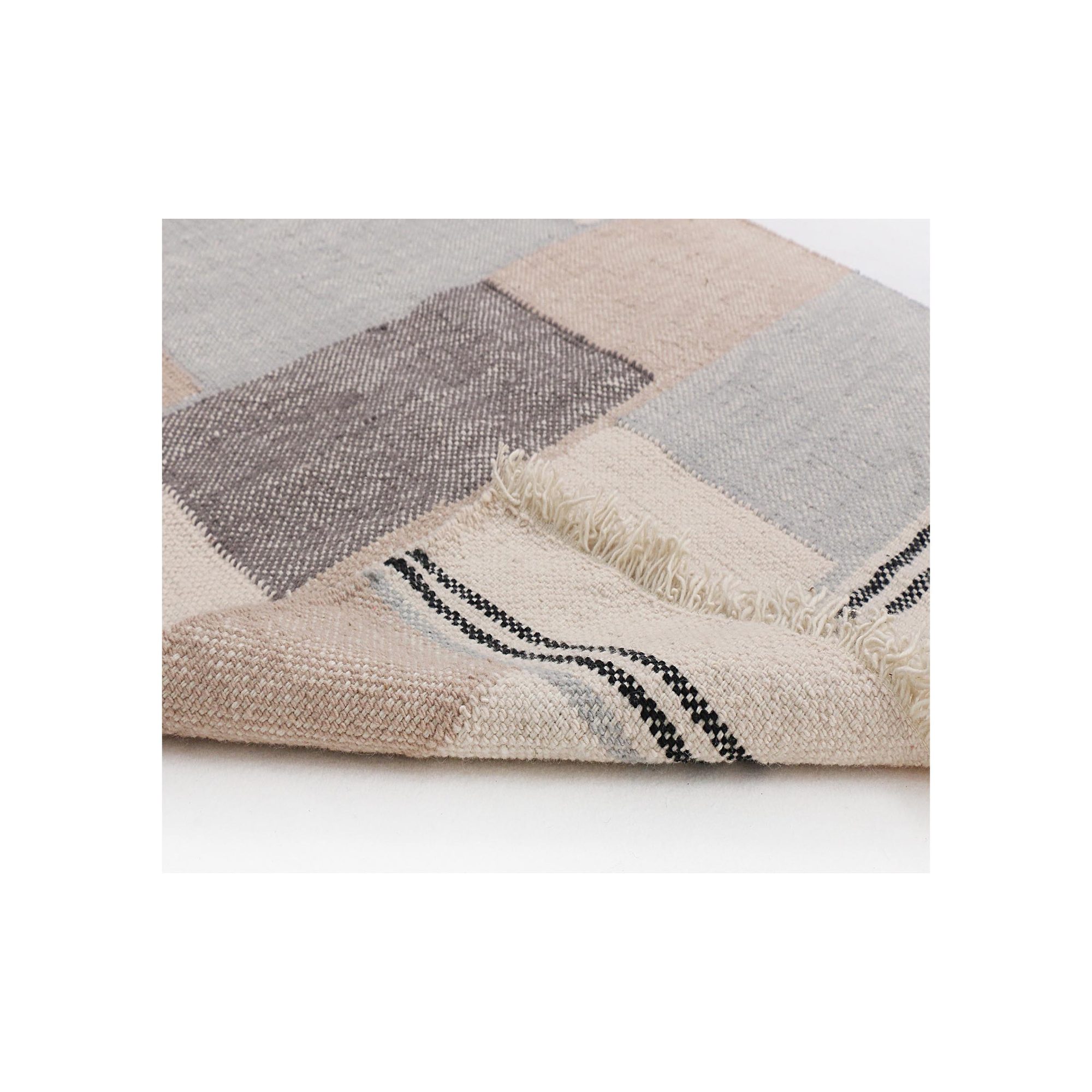
LOOMY Home describes its rugs as coming “direct from the artisans themselves,” moving from loom to room without the usual layers of a conventional retail chain. This direct structure is central to how the brand talks about itself across its site. It is positioned as a way to keep the maker connected to the finished product, rather than as an anonymous link in a longer supply chain.
The Sand In Your Feet Kilim Wool Rug listing states that pieces are handmade in India by certified artisans, offering a concrete example of that direct relationship in practice. Because each rug is made by hand, the brand notes that no two rugs are exactly alike, a detail repeated across several flatweave product descriptions. That variation is presented as a feature of the direct-from-loom approach rather than an inconsistency to correct.
Natural and Performance Materials in LOOMY’s Collections

Material choice is where sustainable artisan rugs most visibly differ from synthetic mass-market options. LOOMY Home’s range spans New Zealand wool, jute, cotton, viscose, and recycled performance yarns, often blended within a single rug. The Patchwork Wool Runner, for example, is made from 80% New Zealand wool and 20% cotton in a handwoven low pile construction.
Performance-oriented designs such as Verdelle, Petaline, and Gelato take a different route, using durable, stain-resistant performance materials built for indoor and outdoor living. These are described as able to withstand high-traffic areas, spills, and everyday wear while keeping a modern look. Natural fiber pieces, by contrast, lean on jute, wool, cotton, hemp, and sisal, which the brand’s Natural Rugs collection page ties directly to biodegradability at the end of a rug’s life.
Hand-Knotted, Hand-Tufted, and Handwoven Techniques Across the Range
Construction technique varies considerably across the catalog, and LOOMY Home names the method used for many of its pieces rather than leaving it vague. The Levi Handknotted Wool Rug is described as a contemporary piece meticulously crafted by skilled artisans using hand-knotting. The Dune Rug and Wanderlust Rug are both hand-knotted from 100% premium wool, with Wanderlust specifically credited to artisans working with ancient loom techniques.
Hand-tufting appears across the Garden, Chinoiserie, and Dotta rugs, all built on a New Zealand wool base. The Dotta Rug adds silky viscose to that wool, giving the surface a sheen that shifts depending on the light, according to its own product description. Handwoven flatweave construction also appears in the Patchwork Wool Runner and that same kilim-style flatweave rug, both of which finish with tassels that add 2 to 3 inches on each side.
The Boxed In, Garden, and Watercolor Collections: Diverse Styles and Materials
The Boxed In Jute Rug, available in both White and Natural colorways, is handwoven from 100% sustainably sourced jute into a square shape with a box-pattern weave. It is described as durable yet lightweight, suited to entryways and other high-traffic spots. This piece is a clear example of how LOOMY Home pairs a natural material with a construction method built for everyday rooms rather than purely decorative use.
The Garden Rug takes a different design direction, hand-tufted in New Zealand wool with trailing vines, sage leaves, and cream blossoms set against a soft blue ground. Its half-inch pile is described as plush underfoot while still durable enough for daily use. The Watercolor Rug, meanwhile, is a printed design made from 70% wool, 20% jute, and 10% cotton with a backing, showing that not every piece in the lineup relies on hand-knotting or hand-tufting alone.
- Wool-based rugs such as Levi, Dune, and Wanderlust rely on hand-knotted construction from premium or New Zealand wool.
- Jute pieces like the Boxed In Natural and Boxed In White are handwoven from 100% sustainably sourced jute.
- Cotton appears as a blending fiber, as seen in the Patchwork Wool Runner’s 80% wool and 20% cotton composition.
- Viscose is combined with wool in hand-tufted designs such as the Dotta Rug to add a silky surface sheen.
- Recycled performance yarns form the basis of indoor-outdoor designs like Verdelle, Petaline, and Gelato.
Sustainability and Biodegradability in Artisan Rug Design
LOOMY Home’s Natural Rugs collection page makes a specific claim worth noting directly. A closed-loop cycle means these pieces are 100% biodegradable at the end of a rug’s life. The page frames this as a point of difference from “almost every other rug” on the market, tying that claim specifically to its wool, jute, cotton, hemp, and sisal pieces.
Sustainable artisan rugs, understood this way, are not a single fixed category but a spectrum of material and construction choices. Choosing between a hand-knotted wool piece and a recycled-yarn performance rug really means choosing between two different sustainability arguments, natural biodegradability versus durable, long-use performance material. LOOMY Home carries both arguments across its catalog rather than picking one approach exclusively.
Where a rug will live, and how it gets used day to day, often shapes which of these paths matters more in practice.
