
Share This Article
Fabric choice shapes how a bridesmaid dress photographs, moves, and sits across a wedding party with different body types. The ongoing comparison of satin vs chiffon bridesmaid dresses comes down to more than shine versus flow. It is about how each material interacts with ruching, side slits, necklines, and the silhouette underneath. chicsew builds its bridesmaid range primarily around soft satin, pairing it with specific silhouettes so planners can match construction details to the look a wedding party wants.
Soft Satin Bridesmaid Dresses: Ruched Waist and Mermaid Silhouette Details
Satin carries weight and structure that lighter fabrics do not, which is why the platform leans on it for mermaid silhouettes. Several styles pair soft satin with ruched waist panels, a detail described on the brand’s site as defining curves without adding bulk. The ruching sits at the natural waistline before the fabric transitions into a fitted mermaid skirt that flares near the knee. A side-slit mermaid cut appears across multiple satin styles, and the collection notes this detail is meant to lengthen the leg line in photographs.
Chiffon A-Line and Sweetheart Neckline Options at ChicSew
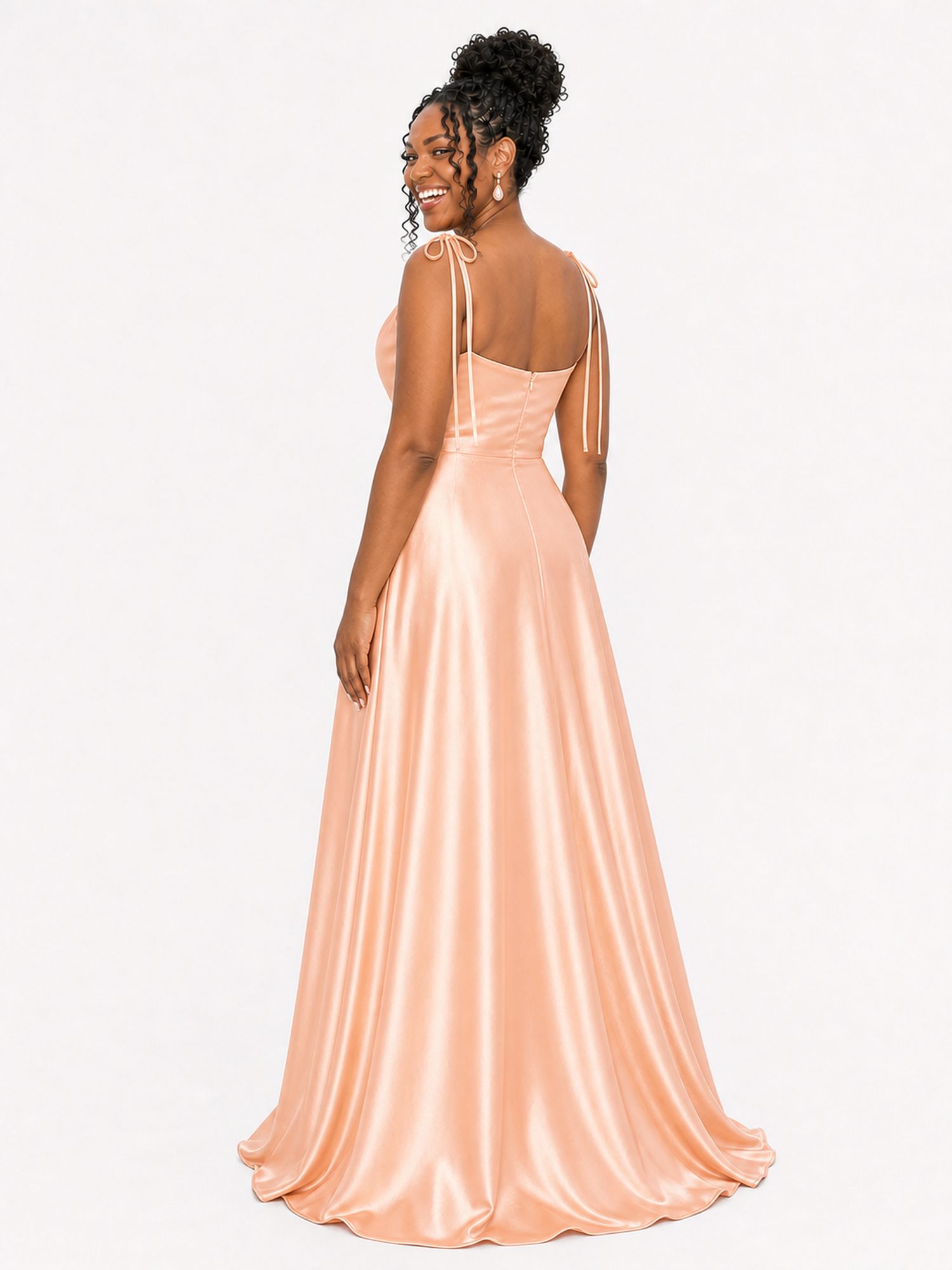
Chiffon shows up elsewhere in the wider catalog, most visibly in flowing A-line and jumpsuit-based gowns built for a softer, less fitted look. Those pieces lean on chiffon’s lightness to create movement rather than the close, body-skimming line that satin produces. A-line and sweetheart necklines also appear within the satin bridesmaid range itself, so the same silhouette idea can be compared across two different fabric weights. For anyone weighing satin vs chiffon bridesmaid dresses by neckline alone, the sweetheart cut reads differently depending on whether the fabric clings or drapes.
Side Slit and Beading: How Embellishment Placement Changes the Silhouette

Embellishment placement is where the satin bridesmaid styles show the most variation. One mermaid style combines a side slit with ruching and beading plus a bow-knot detail at the hip, while a separate sweetheart-neckline mermaid dress pairs a side slit with beading alone and finishes with a zipper back instead of a bow knot. A rhinestone-trimmed mermaid style pairs a side slit with ruching for a sparkle-forward finish, whereas a strapless mermaid dress built with boning swaps the zipper for a lace-up back around that same ruching-and-slit combination. Because satin holds its shape, beading and rhinestone work sit flat against the fabric, while a side slit allows movement without disrupting the fitted line through the hip and thigh.
One-Shoulder and Strapless Necklines: Asymmetry Versus Classic Structure
The one-shoulder lineup extends beyond the ruched style already noted, including a sequined lace one-shoulder mermaid dress that layers lace over satin for added texture. A separate one-shoulder style forgoes lace for soft gathered pleats across the bodice, paired with its own side slit for movement. On the strapless side, a boat-neck long-sleeve mermaid style replaces strapless asymmetry entirely, built with a belted waist rather than a slit. A cold-shoulder mermaid dress adds another neckline variant, pairing soft pleats with a dramatic side split and sweeping train.
- Satin styles in the bridesmaid range lean heavily on mermaid silhouettes, while chiffon elsewhere in the catalog favors A-line and jumpsuit-based cuts.
- Ruched waist treatments show up mainly on satin mermaid dresses, designed to define the waist without added bulk.
- Side slits are a recurring embellishment on satin mermaid styles, often combined with beading, rhinestone work, or a bow knot.
- Strapless and sweetheart satin mermaid dresses frequently include boning for added structure.
- One-shoulder necklines appear on both lace-layered and gathered-pleat satin styles, showing how the same asymmetry reads differently with texture.
Free Custom Sizing and Fabric Behavior: Why Satin and Chiffon Fit Differently Across Body Types
chicsew lists sizing categories across its bridesmaid range, including General, Plus, Pregnant, and Junior options on multiple styles. Because satin has more body than lighter fabrics, a satin mermaid cut depends on close, accurate measurements to sit correctly through the hip and leg. On the bridesmaid dresses page, the program lists custom sizing made to individual measurements at no added cost, stating it is meant to reduce fit risk for a bridal party. Chiffon, being lighter and more forgiving in how it falls, tends to skim rather than hug the frame, which is part of why satin vs chiffon bridesmaid dresses fit so differently across varied builds within one party.
Color Selection Across 80+ Wedding Shades: Coordinating Fabric Weight with Tone
The bridesmaid collection spans more than 80 wedding shades, organized into color families such as green, pink, red, purple, blue, orange, yellow, neutral, and black. Jewel tones like emerald, burgundy, and dark navy appear alongside softer shades such as dusty sage, blush, and champagne. Satin’s sheen tends to read differently on saturated jewel tones than a lighter, airier fabric would, since the surface catches light rather than letting it pass through. The same bridesmaid dresses page also lists swatches at no added cost, described as a way to confirm the satin finish before ordering, which is useful when comparing how a shade might look across satin vs chiffon bridesmaid dresses before committing to a full order.
Fabric weight and silhouette choices keep shaping how a bridesmaid lineup reads, in photographs and in person.
