
Share This Article
Rug buyers who have shopped around long enough tend to notice that not all hand-knotted pieces are built the same way. BENI Rugs organizes its range around distinct weave constructions, and understanding BENI rug weave constructions helps explain why two wool rugs can look and feel so different underfoot. This breakdown looks at Royale, Atlas, and Rabat, plus where the Chelsea Collection fits into that picture.
What Sets Royale Apart: The Palace-Technique Weave
Royale is the newest construction in the BENI Rugs lineup, and it carries real historical weight. The brand describes it as an ancient hand-knotted technique once reserved for palace interiors and the homes of Moroccan nobility. Only a handful of master weavers still practice it today, which keeps production deliberately limited.
Density is the defining trait here. An 8′ x 10′ Royale rug contains 1,578,240 knots, woven from incredibly fine High Atlas wool. That knot count translates into a rug with exceptional softness, precision, and a surface that reads as notably refined compared to coarser weaves.
The Atlas Weave: Hyper-Fine Point Knotting and Density
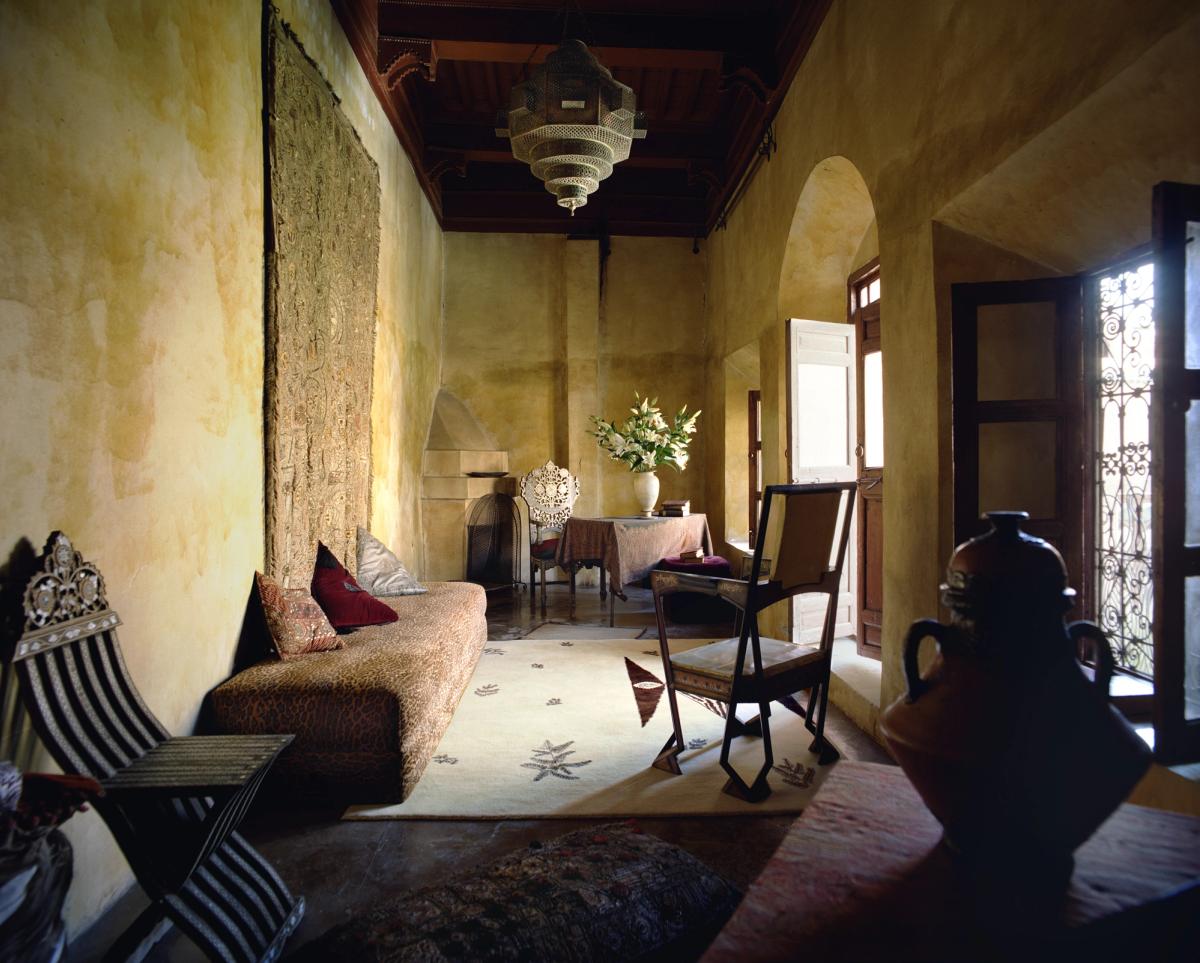
Atlas is described on the BENI Rugs site as a hyper-fine point knotted construction, and it sits among the brand’s most established techniques. The Islands design, for example, is offered in Atlas as a standard construction, which suggests it is a workhorse weave rather than a limited-run specialty. Point knotting of this kind tends to favor crisp pattern definition, which matters for designs built around color fields or graphic motifs.
Compared to Royale, Atlas is positioned as a more widely available option rather than a rare, time-intensive one. That accessibility does not mean it sacrifices craftsmanship, since every BENI rug, regardless of construction, is woven entirely by hand. The distinction is more about technique and density than about hierarchy or quality tiers.
Rabat Construction: The Lightweight, Layering Option

Rabat is framed around a light feel underfoot, exemplified by the Intersection design in the Zahara line. Where Royale emphasizes density and Atlas emphasizes fine point knotting, Rabat leans toward a featherweight character suited to layering. The Chroma I design, described as a featherweight weave for gentle layering, illustrates this same lighter-handed approach within the broader range.
This construction tends to appeal to buyers looking for a rug that sits comfortably under furniture or atop another layer, rather than one meant as a singular dense anchor piece. The trade-off is a different hand and drape compared to the denser Royale or Atlas constructions, though BENI Rugs does not publish comparative durability claims between them.
The Chelsea Collection: Royale Woven Across Eight Designs
The Chelsea Collection marks the debut of Royale across a full set of designs. Created with Colin King, the collection draws on the hidden gardens of Europe’s old cities, referencing courtyards glimpsed through wrought-iron gates and planted squares tucked between townhouses. It includes eight designs, all sharing the single Royale construction, across eight colorways.
Pieces such as Crest and Cloister belong to this collection, each listed as 100% wool and woven in Royale. Because every design in Chelsea uses the same construction, the collection offers a useful reference point for seeing how one weave technique can carry very different patterns and moods.
Weave Selection by Space and Durability Needs
Matching a construction to a room often starts with how the rug will be used day to day. A high-traffic hallway or living room anchor might call for the density that Royale or Atlas provide, while a bedroom or layered reading nook might suit the lighter Rabat-style weave better. BENI Rugs notes that all of its rugs are woven to order from 100% natural wool, which keeps material quality consistent even as construction varies.
Because sizing is also made to order, custom dimensions can be requested directly from the brand for any construction. That flexibility means the choice of weave does not have to be constrained by standard rug dimensions.
- Royale suits spaces where a dense, palace-style finish and a plush, precise surface are the priority.
- Atlas fits rooms that call for crisp pattern definition from a hyper-fine point knotted construction.
- Rabat and its featherweight relatives work well for layering over another rug or for a lighter underfoot feel.
- Knot density generally runs highest in Royale, given its 1,578,240 knots in an 8′ x 10′ size.
- Hand-washing and air-drying in the mountains is part of the finishing process across constructions, not limited to one line.
- Lead times differ by overall rug size rather than by construction, so larger pieces should be planned for further in advance.
Natural Variation and Lead Times Across Constructions
Every BENI rug is woven entirely by hand and then washed and dried in the mountain air, a step that applies across Royale, Atlas, and Rabat alike. Because of this hand-finishing, final sizes, pile heights, and design details can vary by up to 5% from what was ordered. The brand frames these natural variations as expected signs of an authentic, individually made rug.
Lead times are tied to size rather than construction. Current estimated lead times run 12-16 weeks for rugs 9′ x 12′ and smaller, and 16-20 weeks for anything larger than 9′ x 12′. Anyone weighing Royale against Atlas or Rabat should factor these timelines in alongside the aesthetic differences, since a denser or rarer weave does not necessarily mean a longer wait on its own.
Shedding is also worth noting regardless of construction. BENI Rugs states that all natural fiber rugs will shed slightly, especially early on, and that rugs prone to this are washed in a proprietary process before shipment to reduce it. Regular vacuuming in the first couple of weeks is noted as helping reduce shedding further.
Closing Thought
Royale, Atlas, and Rabat each bring a distinct logic to how a wool rug is built and how it behaves in a room. The differences in construction determine how each performs rather than aesthetic choices alone.
