
Share This Article
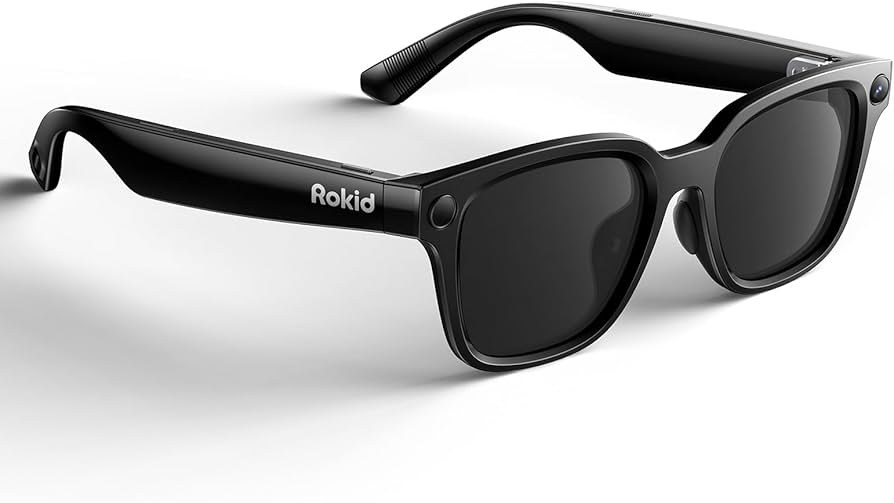
Smart glasses have spent years stuck between two extremes. Either they looked futuristic to the point of awkwardness, or they promised life-changing technology while barely surviving basic everyday use. The Rokid AI Glasses take a noticeably different approach. At first glance, they look surprisingly normal, more like sleek sunglasses than experimental tech strapped to your face. But underneath that simple design sits a collection of AI-powered features built around translation, voice assistance, hands-free communication, and everyday productivity. Rokid is clearly aiming for something bigger than novelty gadgets here. The goal feels much more practical: making wearable technology blend naturally into daily life without forcing people to look like they stepped out of a science-fiction movie.
Why smart glasses are suddenly becoming more practical
For years, wearable tech struggled because people did not necessarily want more screens dominating their lives. Rokid seems to understand that hesitation. Instead of building bulky augmented reality headsets, the Rokid AI Glasses focus on lightweight assistance and convenience. Real-time translation, voice controls, audio functions, and hands-free communication all target situations where pulling out a phone constantly becomes inconvenient. Rokid positions the glasses more like an intelligent companion than a replacement for smartphones entirely. That subtle difference makes the product feel considerably more realistic for everyday users rather than purely tech enthusiasts chasing futuristic experiments.
Rokid focuses heavily on travel and communication features
One of the most interesting parts of the Rokid AI Glasses is the emphasis on real-time translation and voice-powered assistance. Travel technology usually lives inside apps people forget to open until they desperately need them in airports or unfamiliar cities. Rokid simplifies that process by integrating translation directly into wearable hardware. The idea of receiving hands-free language support while navigating conversations or directions feels genuinely useful rather than gimmicky. Rokid also leans into productivity and communication through built-in voice assistance and hands-free calls, which makes the glasses appealing beyond travel scenarios alone. Busy professionals, commuters, and multitaskers could easily see the convenience factor here.
The design looks far more wearable than older smart glasses
One major reason previous smart glasses struggled was appearance. Many looked overly futuristic, bulky, or socially uncomfortable to wear in public. Rokid takes a much cleaner approach. The glasses resemble modern sunglasses first and smart tech second, which honestly makes a huge difference. People are far more likely to adopt wearable devices that blend naturally into existing fashion and daily routines. Rokid understands that wearable technology succeeds when it feels invisible rather than attention-seeking. The more normal the product looks, the more practical it becomes for everyday use in airports, offices, cafes, and public spaces.
AI integration finally feels useful instead of excessive

Artificial intelligence appears in almost every new product now, but Rokid applies it in ways that feel relatively grounded and practical. Voice control, translation, audio interaction, and communication support all solve clear real-world problems rather than adding unnecessary tech complexity for marketing purposes. Rokid seems focused on reducing friction during daily routines instead of overwhelming users with endless futuristic features nobody actually requested. That practicality gives the AI functions much stronger appeal because the glasses feel designed around convenience rather than pure technological spectacle.
The biggest challenge will still be everyday adoption
As interesting as the Rokid AI Glasses look, wearable tech still faces one important challenge: habits. People already rely heavily on smartphones, earbuds, and smartwatches, so convincing users to adopt another connected device requires genuine convenience. Rokid helps its case by focusing on lightweight productivity and communication rather than fully immersive augmented reality experiences. The glasses feel less intimidating than many past smart wearables, but long-term success will still depend on how naturally they fit into real daily routines. Battery life, comfort, usability, and social acceptance will likely matter just as much as the technology itself.
Rokid makes smart glasses feel closer to everyday reality
Rokid succeeds because the AI Glasses feel more grounded than many previous wearable tech experiments. The combination of translation tools, voice controls, communication features, and sleek design creates a product that feels genuinely aimed at modern lifestyles instead of futuristic fantasy. Rokid positions the glasses as practical assistants for travel, productivity, and connected living rather than overwhelming people with overly ambitious promises. Whether smart glasses fully replace other devices remains unclear, but Rokid definitely makes the category feel considerably more wearable, useful, and realistic than it has in years.