
Share This Article
Experienced wearers of Champion often notice that not every hoodie or sweatshirt behaves the same way on the body or after repeated washing. That difference usually comes down to construction, not just styling. Reverse weave construction, fleece weight, knit type, and finishing all play a role in how a given piece drapes, stretches, and holds its shape over time.
Understanding Construction and Its Heritage
Reverse weave construction refers to a method where the fabric is woven so it shrinks along the width rather than the length, a detail Champion‘s archive pages describe as a literal touchstone of the brand’s history. That cross-grain approach is why the fabric has a denser, more structured hand than a typical knit sweatshirt. Champion’s archive pages describe the Reverse Weave as the DNA behind newer collections like Modern Ametora. The Champion Index + Archives line builds directly on original Reverse Weave pieces from the archive decades, remade with the same vintage-inspired character.
Those archival Reverse Weave garments are finished in an original brushed-back fabric, then garment-dyed and sun-faded. That combination gives the fabric a depth that, according to Champion, usually takes years to earn through wear alone. The collaboration with N.HOOLYWOOD takes this a step further, applying three-dimensional pattern cutting to pull the archive apart and rebuild it into sculptural silhouettes that follow the body instead of boxing it in.
Polar Fleece Quarter Zip: Sherpa Insulation and Layering Design
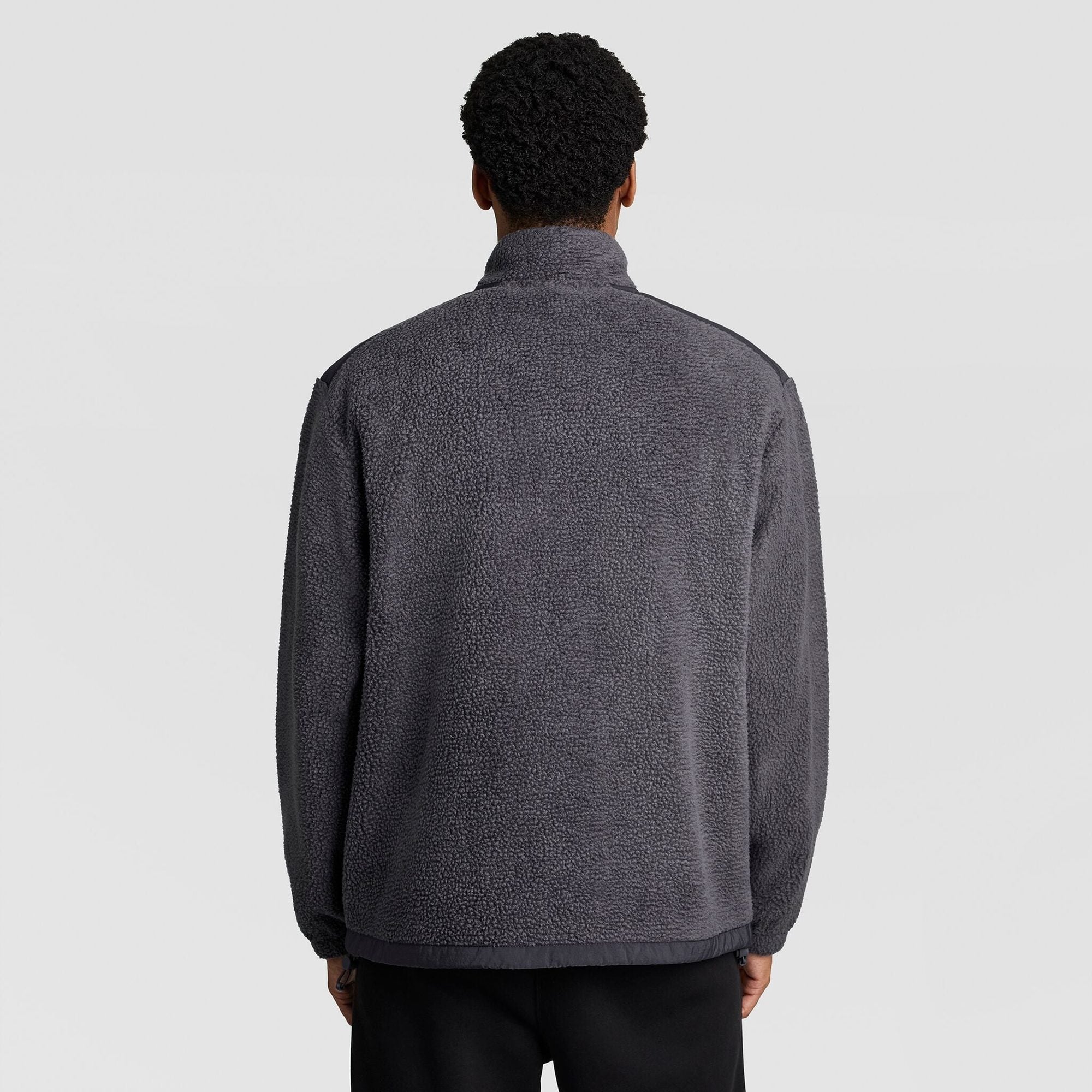
Away from the woven archive pieces, the Champion Polar Fleece Quarter Zip uses a completely different material approach. It is crafted from plush 100% polyester sherpa, built for cold-weather layering rather than heritage styling. The standard fit is described as offering cozy insulation without sacrificing mobility, which matters for anyone layering it under or over other pieces.
The quarter-zip detail pairs with a mock neckline, giving a bit of adjustable coverage at the neck. This is a construction built around warmth and movement, not around the shrink-to-shape weaving that defines construction. Side by side, the two show how differently the range treats outerwear meant for warmth versus sweats meant for structure and heritage detailing.
Jersey Knit Technology in Champion’s Home and Lounge Collection

Champion‘s reach extends beyond apparel into home goods, and jersey knit shows up there as a recurring material choice. The Reversible Solid Jersey Comforter Set uses a solid, reversible jersey design that flips for a different look, finished with cord piping and a small logo patch. The Jersey Backrest Pillow also uses jersey knit, paired with cushioned back and arm support for lounging, reading, or gaming.
That backrest pillow even borrows a detail from apparel, with a hoodie-inspired side pocket for a phone or remote. It is a small example of how construction ideas travel across categories, from garments to bedding and pillows. Jersey knit stays soft and stretchy throughout, which is a different goal entirely from the dense, cross-woven structure built into reverse weave fabric.
Fleece Composition: Cotton-Poly Blends vs. 100% Polyester Materials
Fleece construction across the range is not uniform, and the composition shifts by garment. The Fleece Hoodie with a left chest graphic is made from lightweight cotton-poly fleece, aimed at everyday performance with minimal branding. By contrast, the Polar Fleece Quarter Zip relies on 100% polyester sherpa for its insulating layer.
This split between blended and single-fiber fleece reflects two different jobs within the same broad fleece category. Cotton-poly fleece leans toward a lighter, everyday hoodie weight, while 100% polyester sherpa is built specifically for a plush, insulating hand. Neither one uses reverse weave construction, since fleece and reverse weave remain distinct fabric families within the lineup.
- Reverse weave construction shrinks the fabric along its width, which is the defining trait behind the Reverse Weave Core and Modern Ametora archive pieces.
- The Polar Fleece Quarter Zip is built from 100% polyester sherpa rather than a woven cotton base.
- The Fleece Hoodie with a left chest graphic uses a lightweight cotton-poly fleece blend instead of a single-fiber fabric.
- Home pieces such as the Jersey Backrest Pillow and the Reversible Solid Jersey Comforter Set are built on jersey knit rather than fleece or woven fabric.
- Archive Reverse Weave garments are finished with a brushed-back surface, garment dyeing, and sun-fading applied after construction.
- The N.HOOLYWOOD capsule reworks original Reverse Weave sweatshirts and sweatpants using three-dimensional pattern cutting.
Mesh and Strategic Ventilation in High-Impact Sports Bras
The wider apparel lineup is wide enough to include technical pieces positioned for athletic activity, alongside the archive and lounge categories already covered. While the available brand material does not detail specific mesh placement or ventilation panels for a named sports bra style, the broader apparel lineup is described as workout gear designed for comfort and durability. That framing situates performance pieces as a distinct category from the fleece, jersey, and constructions discussed elsewhere.
Ventilation and mesh paneling are common features across the sports bra category in general, often used to manage airflow during higher-intensity movement. Without a specific product listing detailing exact mesh placement, it is fairer to note that such construction choices exist within the category rather than attribute a specific mechanism to one unnamed style. This keeps the focus on what has actually been confirmed about the broader apparel positioning.
How Garment Dyeing and Vintage Treatment Affect Champion’s Archive Pieces
Garment dyeing happens after a piece is sewn together, rather than before, which is part of what gives the archive Reverse Weave pieces their worn-in look. Combined with sun-fading, this finishing step is applied specifically to the brushed-back fabric used in the Index + Archives line. The result is described as a depth that normally takes years of wear to develop naturally.
This finishing approach sets the archive pieces apart from newer, unfinished fleece or jersey items elsewhere in the range. A freshly made cotton-poly hoodie and a garment-dyed Reverse Weave crew neck sweatshirt start from different fabric bases and go through different finishing stages entirely. Anyone comparing pieces from Champion side by side is really comparing distinct construction and finishing paths, not simply different colorways of the same fabric.
Taken together, these differences explain why the range reads less like a single fabric repeated in different cuts and more like several distinct material stories. Reverse weave construction anchors the archive side, while fleece, jersey, and finishing techniques each serve their own purpose elsewhere in the lineup.
