
Share This Article
Raw British honey and pasteurised honey look similar on a supermarket shelf, yet they behave very differently once opened. One keeps its natural enzymes, pollen, and texture intact, while the other has been heated and filtered to stay liquid indefinitely. Clearing up what actually separates raw British honey from the pasteurised jars most households grew up with helps cut through years of marketing shorthand and consumer confusion.
What Raw British Honey Actually Means: Beyond the Marketing Term
The word raw gets stretched to cover all sorts of jars, but it has a fairly specific meaning. Raw honey is extracted from the comb and bottled without high heat treatment or fine filtration that would strip out pollen and natural particles. Black Bee Honey UK describes its range as 100% British, unpasteurised honey that is only gently warmed and coarse filtered to retain what it calls the good stuff. That distinction matters because coarse filtering removes wax fragments and debris without destroying the pollen grains and enzymes that define raw honey in the first place.
Single origin is another term worth separating from raw. It means the honey comes from one specific location rather than a blend of honeys from multiple countries, which is common in mass-market pasteurised jars. Black Bee Honey UK prints the beekeeper’s name and hive location on every jar, a traceability detail that most pasteurised, blended honey brands simply cannot offer.
Pasteurisation and Heat: Why Black Bee Honey’s Gentle Warming Is Not the Same as Industrial Processing
Industrial pasteurisation heats honey to high temperatures to kill yeast cells, delay crystallisation, and speed up bottling on a production line. This process changes texture permanently and keeps the honey runny for longer on the shelf. It is largely a cosmetic and logistical choice rather than a safety requirement, since honey’s low moisture and natural acidity already make it inhospitable to most bacteria.
Gentle warming, as used by Black Bee Honey UK, serves a narrower and different purpose. It helps the honey flow during bottling without pushing it anywhere near the temperatures used in industrial pasteurisation. The brand’s own product information is explicit that its honey is unpasteurised, warmed only enough to handle, then coarse filtered rather than forced through fine industrial sieves.
The Crystallisation Myth: Why Raw Honey Sets and Why That Matters

Many people assume a set or grainy jar of honey has gone off, but crystallisation is a natural process in unprocessed honey. Glucose separates from water and forms crystals over time, and the speed of that process depends on the particular floral source. Black Bee Honey UK‘s product notes confirm this directly, stating that because the honey is unprocessed it can set over time and that gentle warming restores a runnier texture when that happens.
Some varieties are even built around this trait rather than fighting it. Raw British Winter Ivy Honey sets in the jar with what the brand describes as a crumbly, fudge-like texture rather than a smooth spreadable set. Raw Starflower Honey, by contrast, keeps a delicate and subtly floral character and has picked up a Great Taste Award, while the Raw British Set Spring Honey listing carries 167 reviews from buyers, a separate sign that set textures have not dented customer interest.
Seasonal Variations in Raw Honey: Spring, Summer, Autumn and Winter Differences Explained
Pasteurised, blended honey is formulated for consistency, so one jar tastes much like the next regardless of when it was bottled. Raw, single-origin honey behaves differently because it reflects whatever was blooming at the time of foraging. The seasonal range from Black Bee Honey UK makes this visible across four distinct honeys rather than one uniform product.
Spring honey is foraged from rapeseed, hawthorn, and plum blossom across Somerset, Yorkshire, and Northamptonshire, and sets soft with a creamy, light flavour from the outset. Summer honey is a multi-floral blend gathered from apiaries in Somerset, Lincolnshire, Northamptonshire, and Hertfordshire, producing a runny, golden honey with a heady floral note. Autumn honey is foraged from Ling Heather on the moors of North Yorkshire and Scotland, giving it a bold, aromatic character and a notably thick texture. Winter honey is gathered mainly from Ivy in Hampshire, resulting in fresh, herbal, lightly menthol flavours that finish sweet.
Storage and Shelf Life: Separating Fact from Fiction About Raw Honey Longevity
A persistent myth claims pasteurised honey automatically lasts longer than raw honey, implying raw varieties spoil faster. In reality, both types rely on honey’s naturally low moisture content for long-term stability, and pasteurisation’s main effect is slowing crystallisation rather than preventing spoilage. Because raw honey is unprocessed, texture changes such as setting are a normal part of its storage life rather than a sign of deterioration.
The brand also notes that its honey carries antimicrobial properties, referred to as Total Activity, though it does not attribute any specific health outcome to this trait. Its product pages additionally flag that the honey is unsuitable for babies under 12 months, a standard caution attached to raw and unpasteurised honey generally. That caution sits alongside the B Corp certification the brand holds, which it links to a wider sustainability model rather than to shelf life.
- Pasteurisation does not make honey safer, since honey’s natural chemistry already limits bacterial growth.
- Crystallisation in raw honey is a natural separation of glucose from water, not a sign of spoilage.
- Heating honey at high industrial temperatures can alter its natural pollen and enzyme content, which is why gentle warming is treated differently from full pasteurisation.
- A set jar of raw honey can typically be returned to a runnier texture through gentle warming rather than being discarded.
- Single-origin honey and multi-floral blended honey are not the same product, even when both are labelled simply as honey.
Flavour and Floral Origin: How Single-Origin British Honey Differs From Multi-Floral Blends
Multi-floral blends, the type typically found in large pasteurised jars, mix honey from many sources and sometimes many countries to hit a consistent flavour target. Single-origin raw British honey instead carries the specific character of one location and one foraging season. This is where the flavour range of Black Bee Honey UK becomes most apparent, from the delicate, subtly floral Raw Starflower Honey sourced from Borage in Lincolnshire, Northamptonshire, and Hertfordshire, to the fruity, light gold Raw Orchard Honey gathered from pear and apple blossom in Powys and Kent.
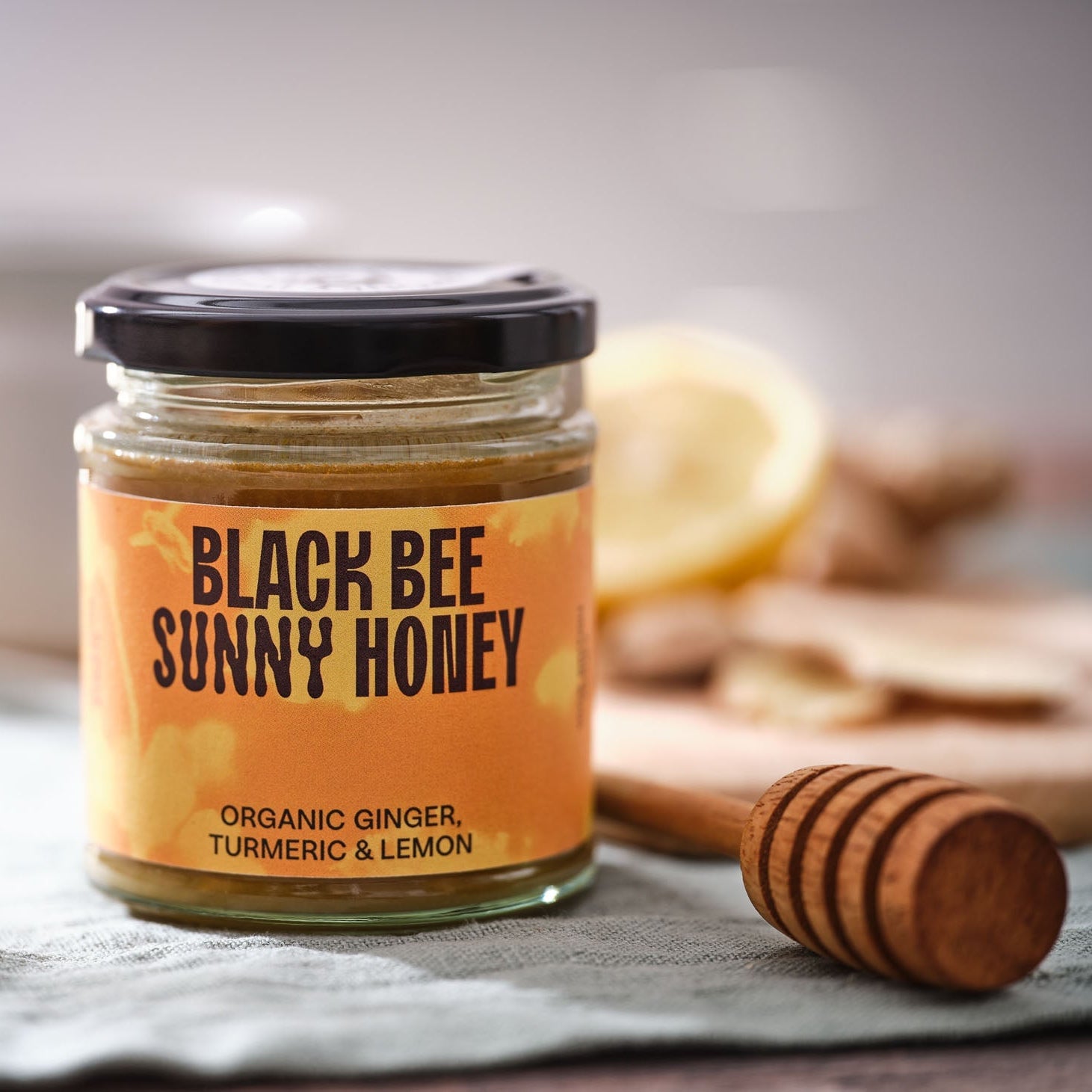
Beyond the core seasonal and limited-release honeys, the range also includes flavoured variations such as Raw British Hot Honey, blended from a habanero chilli mash into British wildflower honey for a medium heat level, and a Christmas Honey blended with natural almond and vanilla flavouring for a marzipan-like taste. These sit alongside straightforward infusions like Raw Sunny Honey with Lemon, Turmeric and Ginger, made with organic ginger, turmeric, and lemon extract stirred through Spring honey. None of these rely on blending honey from multiple undisclosed origins, which keeps the single-origin thread consistent across the whole range.
Choosing between raw and pasteurised honey ultimately comes down to what each process preserves or removes. Raw British honey keeps its seasonal character, natural texture changes, and traceable origin, while pasteurised honey trades those traits for shelf uniformity. Knowing the difference turns a label on a jar into genuinely useful information.
