
Share This Article
A video call scheduled for mid-afternoon, a laptop fan already struggling, and a thermostat set by someone else in the next room; anyone who works from home recognizes that mix. Portable air conditioning for home office setups answers that exact moment, cooling the person at the desk instead of the whole floor plan. Coolzy builds its range around that narrower job, offering compact units that aim cool air directly at a person rather than conditioning an entire house.
What Sets Coolzy Apart: Ultra-Low Power Consumption and Quiet Operation
Coolzy markets itself as a low power portable air conditioner that stays compact and quiet. The brand states a noise level between 44dB and 54dB, which sits closer to a running refrigerator than a window unit. It also weighs only 34 lbs, making it easy to move between a desk, a bedroom, or another spot in the house. That light build is tied directly to running cost, with the brand stating it takes less than a dollar a night to operate.
That combination of quiet operation and light weight matters for anyone setting up portable air conditioning for home office use without adding noise to a call. A loud compressor or a rattling fan becomes a real distraction during a workday. The brand’s own positioning leans on sitting near a desk without overwhelming the room acoustically.
Coolzy-Pro vs Coolzy-Go: Features and Cooling Capacity Across the Range
Coolzy sells two named models, the Coolzy-Pro and the It-Go, each offered alongside a set of accessories sold separately from the units themselves. The brand states a cooling output of 3650 BTU and highlights instant cooling, meaning there is no waiting period before the air coming out the front feels cold. This spec applies across the range rather than to a single model.
Both models are built around the same no-water, no-hose approach, which the brand contrasts with older portable air conditioners that need a technician for installation. The maker notes it is USA certified and sold in 32 countries world-wide, which speaks to the scale of distribution behind both models rather than a difference between them.
Direct Cooling Technology: How Personal Air Conditioning Works for Home Offices
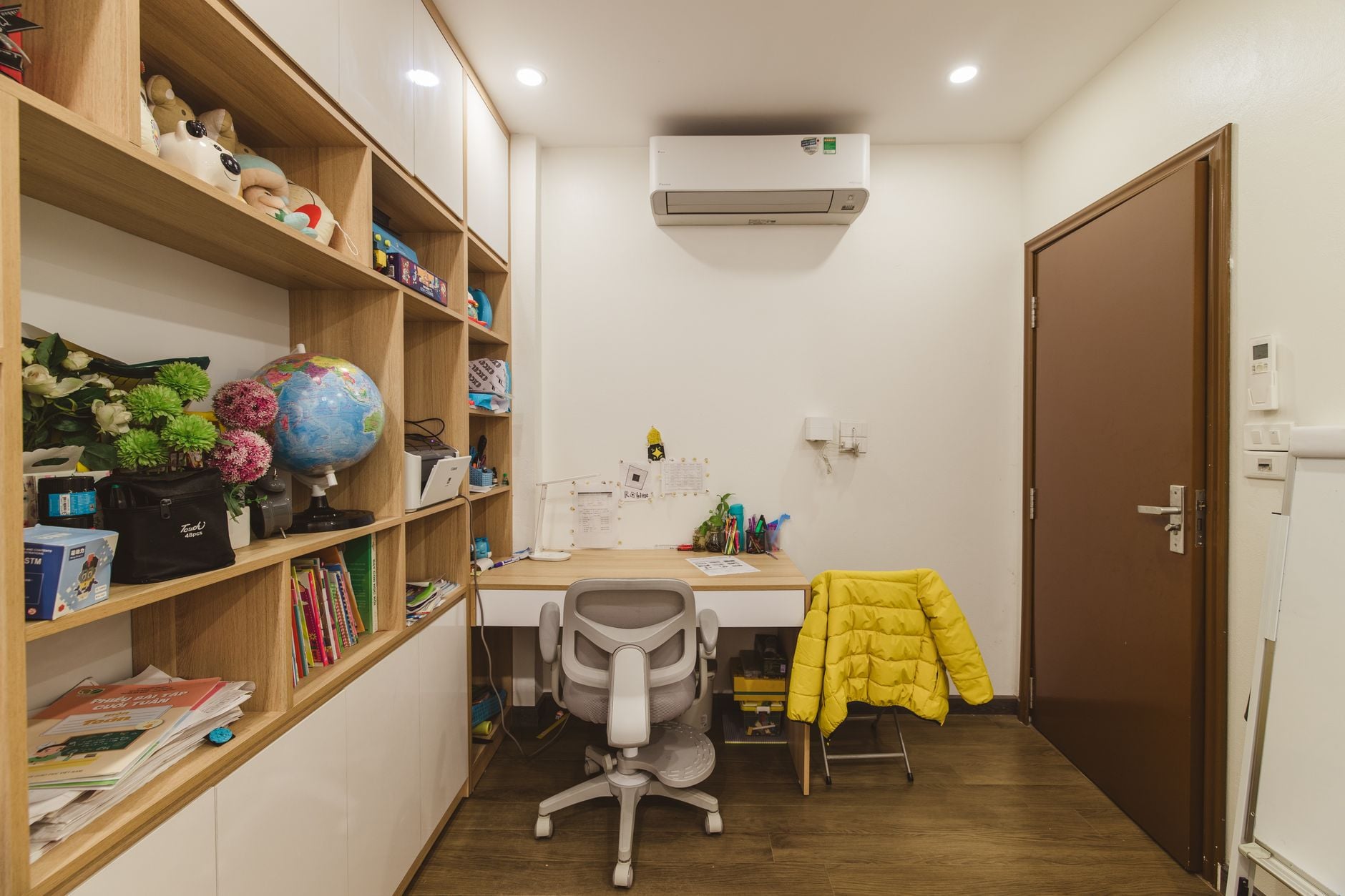
Coolzy describes its approach as a blanket of cool air aimed at a person rather than a system built to lower the temperature of an entire room. The brand is explicit about this limit, stating plainly that a Coolzy won’t cool a room because it isn’t built for that. Instead, it is best described as a refrigerated fan blowing cool air constantly, similar to a fan placed inside a fridge.
This directional approach is a core part of why the brand positions itself for home office use. Someone sitting at a desk benefits from air aimed squarely at them instead of air diffusing into a space that includes an unused corner or an empty hallway. Product pages describe warm air venting out the back of the unit, ideally through an open window nearby.
Energy Efficiency and Operating Costs of Low-Power Portable Units
Running an air conditioner across an entire house, or even a single large room, draws considerably more power than cooling the space immediately around one person. For home offices in particular, this means a unit can run through a full workday without the same demand a central or whole-room system would place on a household. That makes portable air conditioning for home office setups a different proposition from whole-room cooling in terms of how the power gets used.
Low power consumption is also tied to the compact size of the hardware itself. A unit built to direct air at one person, rather than push volume through a room, does not need the same compressor load as a system meant to cool a larger space. Coolzy states ultra low power use as one of the defining traits of its design.
Coolzy’s Accessories: Focus Enhancers and Tails for Extended Reach

Coolzy sells a Short Tail and a Long Tail, accessories built to extend the reach of the airflow rather than change how the unit itself cools. This matters when a desk sits further from where the unit is placed, since repositioning the whole machine throughout the day is not always practical. Instead, the tail accessory lets the cool air travel further to the actual seating position.
For portable air conditioning for home office arrangements where desk placement is fixed by cables, outlets, or window access, this kind of accessory adds flexibility. It lets the unit stay near a window or door for venting warm air out the back while still delivering cool air exactly where a person sits. This setup keeps the main unit and its tail working together rather than as separate purchases.
Real-World Applications: From Bedrooms to Workspaces and Warehouses
Customer stories shared by the brand mention uses ranging from a child’s bedroom to an adult struggling with sleep in a humid climate. The brand also points to larger spaces, stating its units work in warehouses where fans or standard air conditioning can be ineffective. This range, from a small bedroom to a warehouse floor, illustrates how directional cooling adapts to different space sizes.
In each case, the principle stays the same. The unit cools the person, not the volume of air surrounding them, which is why both small and large spaces are framed as suitable environments for personal cooling.
- A home office tucked into a shared living room benefits from air directed at a single desk without cooling furniture and surfaces nobody is using.
- A warehouse with high ceilings and poor air circulation can leave traditional fans or air conditioning struggling to reach workers at ground level.
- A bedroom shared with a sleeping child allows a parent to keep one corner cool without running a central system overnight.
- A temporary workspace, such as a garage conversion or a sunroom without ductwork, can gain cooling without any structural installation.
- A multi-person household with only one person needing cooling during work hours avoids conditioning rooms that stay empty most of the day.
These scenarios share a common thread, the cooling need is personal and localized rather than spread across a whole structure. Portable air conditioning for home office settings, in particular, tends to fall into this pattern, since only one desk and one chair actually need the cold air.
Closing Thought
As more work moves into shared or improvised spaces, cooling built around the person, not the room, may matter more than the square footage around a desk.
