Share This Article
AI voice recorders are everywhere right now, but most of them promise more than they deliver. PLAUD AI enters the space with a clear angle: it’s not just about recording audio, it’s about transforming conversations into structured, usable notes automatically. That distinction matters. If you regularly sit in meetings, conduct interviews, attend lectures, or brainstorm ideas on the go, the difference between “audio stored” and “insights extracted” is significant. The real question is whether PLAUD actually reduces workload or simply adds another device to manage.
What Is PLAUD AI and How Does It Work?
PLAUD AI is a compact, dedicated voice recording device paired with AI-powered transcription and summarization software. You record conversations using the device, and the audio syncs to its companion app, where artificial intelligence converts speech into searchable transcripts and structured summaries. Unlike generic recorders or basic voice memo apps, PLAUD’s core value lies in processing the information after capture. It aims to eliminate the need to replay long recordings by generating condensed key points and organized notes almost immediately.
What Makes PLAUD Different From Standard Voice Recorders?
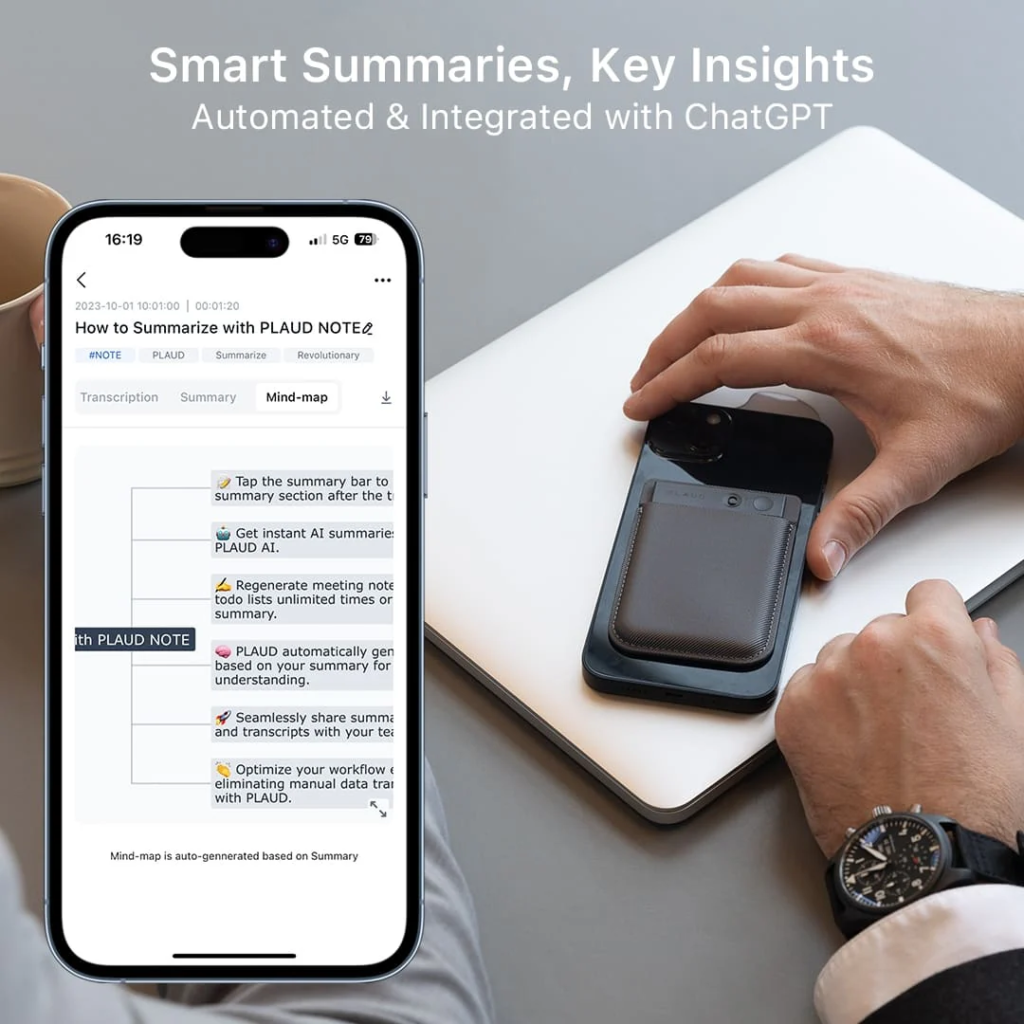
The fundamental difference is not in capturing sound but in interpreting it. A traditional recorder archives audio files, leaving you to sift through them later. PLAUD attempts to close that loop by turning spoken conversations into actionable summaries. Instead of blocking off another hour to re-listen to a meeting, you receive a structured overview that highlights essential ideas and decisions. For users who deal with high volumes of spoken information, that automation is the true selling point, not the hardware itself.
How Accurate Is PLAUD AI Transcription?
Transcription accuracy is generally strong in controlled environments such as meetings, interviews, and lectures where speakers are clear and not constantly interrupting one another. Like all AI-based systems, performance can drop in settings with heavy background noise, overlapping dialogue, or strong accents. However, for most professional or academic contexts, the transcripts are accurate enough to serve as a reliable reference point. The summaries tend to capture the essence of discussions rather than every nuance, which is usually sufficient for productivity purposes but may require occasional manual adjustments.
What Is PLAUD Actually Useful For?
PLAUD becomes most useful when conversations drive your workflow. Business professionals can use it to document meetings and client calls without dividing attention between listening and typing. Students can record lectures and revisit organized summaries when studying. Content creators and journalists can streamline interviews by quickly identifying key quotes and talking points. The value appears when time spent processing information decreases. If your daily routine includes multiple conversations that need documentation, PLAUD fits naturally into that ecosystem.
Is PLAUD Worth It for Business Professionals?
For professionals who spend significant time in meetings, PLAUD can reduce mental fatigue. Taking notes while actively participating in discussions often splits focus, and important context can be lost. By outsourcing documentation to AI, you can engage more fully during conversations and review structured outputs afterward. For consultants, founders, managers, and sales professionals, this shift can translate into better attention during discussions and less administrative cleanup later. The return on investment depends on how frequently you rely on meeting documentation.
Is PLAUD Good for Students?

Students, particularly those in lecture-heavy programs, may find PLAUD helpful for reviewing complex material. Instead of rushing to transcribe slides or spoken explanations, they can focus on understanding concepts in real time and later revisit summarized notes. It does not replace active studying or critical thinking, but it can reduce the stress of missing important details. Students who prefer handwritten notes for retention may still combine both approaches, using PLAUD as a backup rather than a sole study method.
How Does PLAUD Compare to App-Only AI Recorders?
Many transcription services operate entirely as smartphone apps, which lowers the barrier to entry. PLAUD differentiates itself by offering dedicated hardware optimized for recording and seamless syncing with its AI software. This reduces reliance on phone microphones and multitasking during important conversations. However, app-based alternatives may be more affordable upfront. The trade-off comes down to convenience and workflow integration. PLAUD aims to minimize friction by creating a single-purpose tool, whereas apps rely on devices you already own.
Is PLAUD AI Worth Buying?
PLAUD AI is not just a recording device; it is a productivity tool designed to convert conversations into organized knowledge. If your work or studies revolve around meetings, interviews, or lectures, it can meaningfully reduce the time spent processing information afterward. If you only occasionally record audio or prefer manual note-taking, the investment may feel unnecessary. For users who treat information as an asset and value efficiency, PLAUD AI can function less like a gadget and more like a quiet digital assistant that handles the documentation for you.