
Share This Article
Cold nights change what skin and body need from sleepwear. As temperatures drop, many people reach for heavier layers that trap heat but also trap moisture, leaving fabric damp and uncomfortable by morning. Plant-based sleepwear winter options approach the problem differently, relying on breathable natural fibers rather than synthetic bulk. Katruss builds its seasonal collections around this idea, pairing plant and fruit-based fabrics with designs meant for colder, quieter months.
Plant-Based Fabrics and Winter Sleep Science
Winter sleep comfort depends on how a fabric manages heat and moisture against skin through a long, still night, since body temperature can shift from warm to overheated without anyone noticing until morning. Synthetic materials such as polyester, nylon, and acrylic are derived from fossil fuels and tend to trap heat while failing to wick away moisture, which leaves the body feeling sticky rather than warm. Natural, plant-based fibers behave differently because they allow air to move through the weave instead of sealing it in. That difference is why fabric selection carries as much weight as garment thickness once the season turns colder.
Katruss positions its fabric choices around this breathability principle rather than around added insulation or bulk. The brand describes its garments as designed to breathe with the wearer, which is a different approach than simply adding thicker layers for winter. For anyone searching for plant-based sleepwear winter solutions, that distinction between trapped heat and regulated heat is central to why fabric choice matters as much as garment weight.
The Pure Aura Collection: Simplicity and Serene Rest
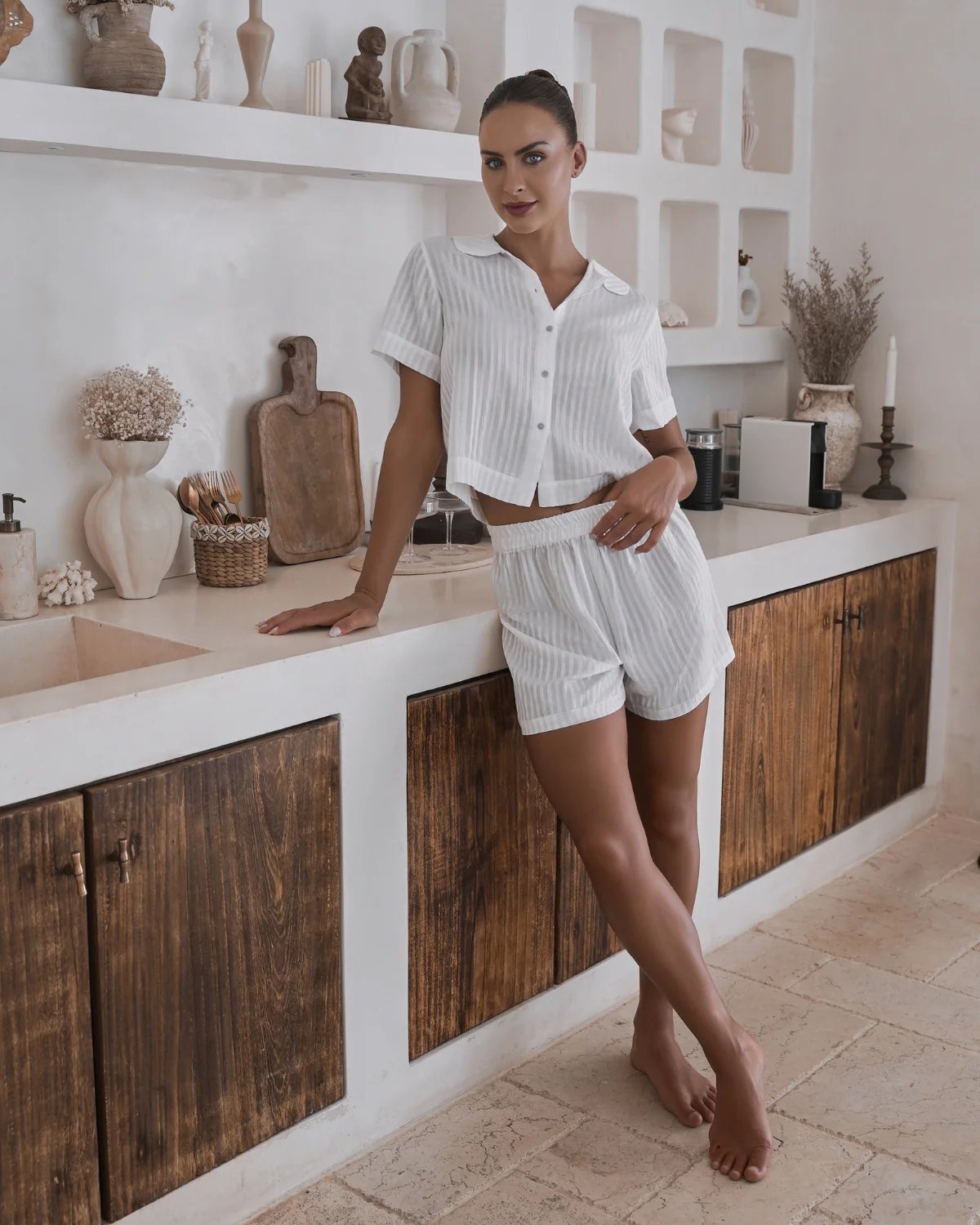
Pure Aura is described on the Katruss site as the brand’s debut collection, built around simplicity and ease. Each piece in the line is framed as an expression of modern luxury rooted in clarity and intention, offering space to unwind rather than performing a bold visual statement. The collection’s quiet aesthetic suits the slower pace many associate with winter evenings, when the goal is to settle rather than to stand out.
Within Pure Aura, pieces such as sleep dresses with delicate ties and robe dresses appear in finishes like Silken Glow and Silky Whisper. These styles lean on rose fiber fabric, which the brand describes as having a soft, silk-like texture with a lightweight feel. That combination of softness and simplicity is what the collection is built to deliver across colder stretches of the year.
The Radiant Allure Collection: Bold Comfort for Winter Nights
Radiant Allure takes a different tone, described by Katruss as a celebration of bold, resilient women who move through life with purpose. The collection is framed around confidence and vibrant energy rather than quiet minimalism, giving winter sleepwear a more expressive option alongside Pure Aura. Pieces in this range include items such as the Robe Dress in Diamond Sheen and PJ sets in Sunlit Stripes, each built from the same plant-based fabric philosophy as the rest of the range.
Because Radiant Allure and Pure Aura share the same commitment to natural fibers, the choice between them is really about mood rather than material. Both lines draw from the same fabric spotlight, meaning the warmth and breathability qualities carry across either collection. That consistency allows seasonal dressing decisions to focus on style rather than compromise on comfort.
Rose, Aloe Vera, and Sugarcane Fabrics for Cold-Weather Wear
Katruss organizes much of its range around a fabric spotlight featuring Rose, Aloe Vera, and Sugarcane, among others. Rose fabric is described as offering silk-like softness with a subtle glow, appearing in pieces like the Sleep Dress with Front Slit in the Silken Glow finish. Aloe Vera, by contrast, is framed as calm comfort for sensitive skin, with a matte finish the brand compares to a cocoon-like softness.
Sugarcane fabric rounds out this trio with what the brand calls a lightweight feel suited to everyday ease. None of these three fibers is marketed as an insulating winter fabric in the traditional sense, but their breathability is presented as the quality that keeps skin comfortable regardless of season. That makes them a practical foundation for a plant-based sleepwear winter rotation that still feels light against the skin.
Sustainable Materials and Winter Comfort
Katruss frames its entire fabric philosophy around an alternative to synthetic sleepwear, which the brand describes as effectively another form of plastic due to its fossil fuel origins. Synthetic fabrics may feel soft initially, but according to the brand’s own materials, they lack breathability and trap heat rather than releasing it. That trapped heat can lead to overheating and sweating overnight, which undermines rest regardless of how warm a garment appears to be.
The seven fabrics in the fabric spotlight each bring a distinct texture and comfort profile to this sustainability-first approach.
- Rose fabric delivers a silk-like softness with a subtle glow that suits lightweight winter layering.
- Aloe Vera fabric offers a matte, cocoon-like softness described as calming for sensitive skin.
- Sugarcane fabric provides a lightweight feel intended for everyday ease across temperature shifts.
- Banana fabric adds textured elegance with structure, giving garments a more defined drape.
- Eucalyptus fabric is described as smooth against bare skin, suited to direct-contact sleepwear.
- Orange fabric brings a supple drape with a subtle sheen for a softer visual finish.
- Lotus fabric is presented as exceptionally rare, with an exquisite level of softness.
Beyond individual texture, the brand ties its approach back to the environmental cost of synthetic alternatives, noting that fossil-fuel-based fabrics contribute to carbon emissions, pollution, and microplastic shedding. That broader framing positions the plant-based range as an environmental choice as much as a comfort one.
Transitioning to Plant-Based Sleepwear in the Colder Months

Moving into a plant-based sleepwear winter wardrobe does not require abandoning existing styles, since Katruss spreads its natural fabrics across loungewear, sleepwear, and underwear categories alike. Robe dresses, PJ sets, rompers, and sleep dresses all draw from the same seven-fabric spotlight, meaning a shift toward natural fibers can happen piece by piece. The brand’s own product pages note care details such as hand washing in cold water and avoiding tumble drying, which points to garments meant for repeated seasonal wear.
Katruss also ships its orders in branded, FSC-certified packaging, a detail that extends the sustainability framing beyond the garments themselves. For anyone reconsidering what goes into a winter sleep routine, that packaging detail reflects the same plant-based, lower-impact philosophy running through the fabric choices.
Closing Thought
Fabric choice remains a quiet but steady factor in how winter nights unfold, season after season.
