
Share This Article
Unfinished tasks tend to pile up quietly in the back of the mind, creating a low hum of worry that never fully goes away. Mental clarity task management addresses that hum by giving every obligation a fixed place outside the brain. Todoist builds its entire system around that idea, offering a structured way to capture, sort, and revisit responsibilities without constant mental rehearsal. The result, according to the brand’s own description, is a path toward feeling focused, organized, and calm.
How Task Overload Affects Mental Well-Being
Holding too many open loops in mind at once is mentally taxing. Each unfinished task acts like a small background process, quietly consuming attention even during unrelated moments. Over time, this constant tracking can make it harder to concentrate on the task directly in front of a person. Writing things down and organizing them externally is a well-known way to reduce that cognitive load, which is where task management tools come into play.
Anxiety about forgetting something important often grows worse the longer a task stays untracked. A missed deadline or an overlooked errand can feel disproportionately stressful compared to its actual size. This is less about the task itself and more about the uncertainty of not knowing what has been missed. Externalizing the full list of responsibilities removes that uncertainty by making everything visible in one place.
Capturing Tasks at the Speed of Thought: Todoist’s Natural Language System
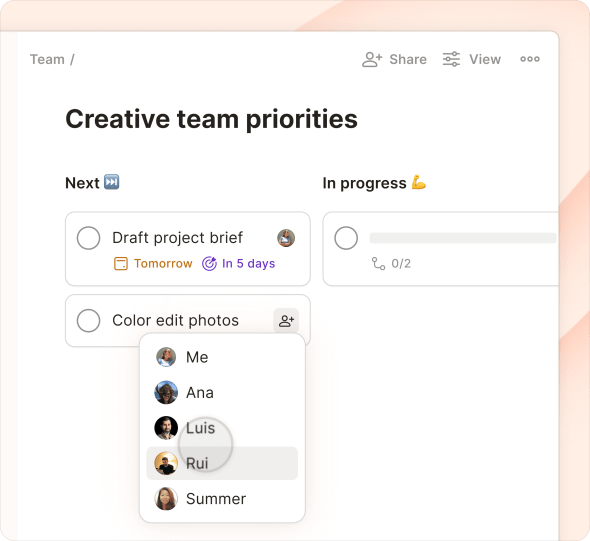
Todoist lets people capture tasks using natural, easy-flowing language rather than rigid forms. A task can be typed the way it would be said out loud, and the app organizes it instantly. This matters because the gap between thinking of something and recording it is often where forgetting happens. The faster that gap closes, the less mental effort is spent trying to hold onto the thought.
According to the brand, It has spent over a decade refining this capture experience to function as an extension of the mind. That framing reflects a broader goal within mental clarity task management: reducing friction between having a thought and acting on it. The fewer steps involved in logging a task, the more consistently people are likely to use the system at all.
Sorting and Filtering for Mental Clarity

Once tasks are captured, the next challenge is deciding what deserves attention right now. Todoist addresses this by sorting tasks into views such as Today and Upcoming, along with custom filters. This separation means a long list of future obligations does not have to compete visually with what needs doing in the present moment.
Seeing only what matters at a given time is central to achieving mental clarity through task management. Custom filters allow a more specific slice of the task list to surface, such as items tied to a particular project or context. That selective visibility can make a long list feel far less overwhelming than scrolling through everything at once.
The Role of Planning Confidence in Reducing Stress
Stress often comes not from the number of tasks themselves but from uncertainty about when they will get done. Todoist supports planning through due dates, a calendar view, and recurring task setup. Seeing a week laid out visually can replace vague worry with a concrete sense of what is scheduled and when.
Recurring tasks remove the need to re-create regular obligations from scratch each time they come around. Setting a task to repeat on a regular basis means it will resurface automatically without being manually re-entered. That kind of structural reliability is part of what the brand describes as planning with confidence.
- Natural language task capture allows a new to-do to be typed quickly without navigating multiple menus.
- Today and Upcoming views separate immediate priorities from longer-term plans.
- Custom filters surface a specific subset of tasks based on project, label, or other criteria.
- Calendar view lays out scheduled due dates across the week for a clearer sense of timing.
- Recurring task setup automatically brings back regular obligations without manual re-entry.
Todoist’s Productivity Methods for Sustainable Focus
Beyond individual features, Todoist offers more than 50 templates built for specific situations, covering categories such as Work, Personal, Education, Management, Marketing and Sales, and Customer Support. An accounting tasks template, for example, helps track receipts, invoices, and deadlines such as recurring tax dates throughout a year. A client management template organizes details from first contact through ongoing follow-up, including attached files and links relevant to each task.
These templates remove the need to build a task structure from nothing every time a new kind of project starts. For teams, Todoist also provides a shared space for collaboration that sits alongside, but separate from, personal tasks and projects. This separation allows team-related mental clarity task management to coexist with individual planning without the two lists blending into confusion.
Building a Calmer Workday and Personal Life</Thank you removed H2>
Mixing personal errands with professional deadlines inside one mental inventory tends to make both harder to manage. The brand’s structure, with separate projects, labels, and filters, allows work and personal responsibilities to be tracked side by side without overlapping in a confusing way. Templates such as Business Travel Packing or Appointments extend this organization into everyday personal logistics as well.
Integrations add another layer of convenience to the overall workflow. The Todoist connector for Claude, for instance, allows tasks to be reviewed or rescheduled through simple prompts, such as asking which high-priority items are due in a given week. Small conveniences like this reduce the number of manual steps involved in keeping a task list current and accurate.
Across devices, small details also reduce friction in daily use. On Android, for example, an Add Task quick setting tile can be added to the quick settings panel for faster task entry. These are not dramatic features on their own, but they contribute to a system that stays easy to maintain over time.
Closing Thought
A calmer relationship with daily obligations often comes down to having one dependable place to put them. Todoist positions itself as that place for millions of people managing work and personal responsibilities together.
