
Share This Article
Luxury streetwear collections occupy a peculiar space between runway tailoring and street-level graphic culture, and few labels have mapped that territory as deliberately as Off-White. Examining how the brand structures its clothing, footwear, and accessory lines reveals a consistent design logic rather than a loose assortment of seasonal drops. This article looks at the conceptual choices that separate Off-White’s output from both conventional luxury houses and mainstream streetwear labels.
The Design DNA Behind Off-White’s Clothing Collections
The clothing range draws on tailoring references layered with workwear and utility details. Jackets, shirting, and outerwear frequently carry diagonal stripe motifs, quotation marks around garment names, and industrial-style text printed directly onto fabric. These devices function as a visual signature across seasons rather than one-off graphic treatments. As a result, pieces from different collections still read as part of a single continuous design vocabulary.
The quotation mark device appears on everything from jersey to structured tailoring, suggesting that the brand applies the same visual language whether working with lightweight summer fabrics or heavier winter outerwear. This consistency means that a shopper encountering a new season’s release can immediately recognize pieces as belonging to the It catalogue based on these recurring typographic and geometric elements, even before considering the brand’s specific color palettes or silhouette choices.
Footwear Categories and Silhouette Evolution in the Off-White Range
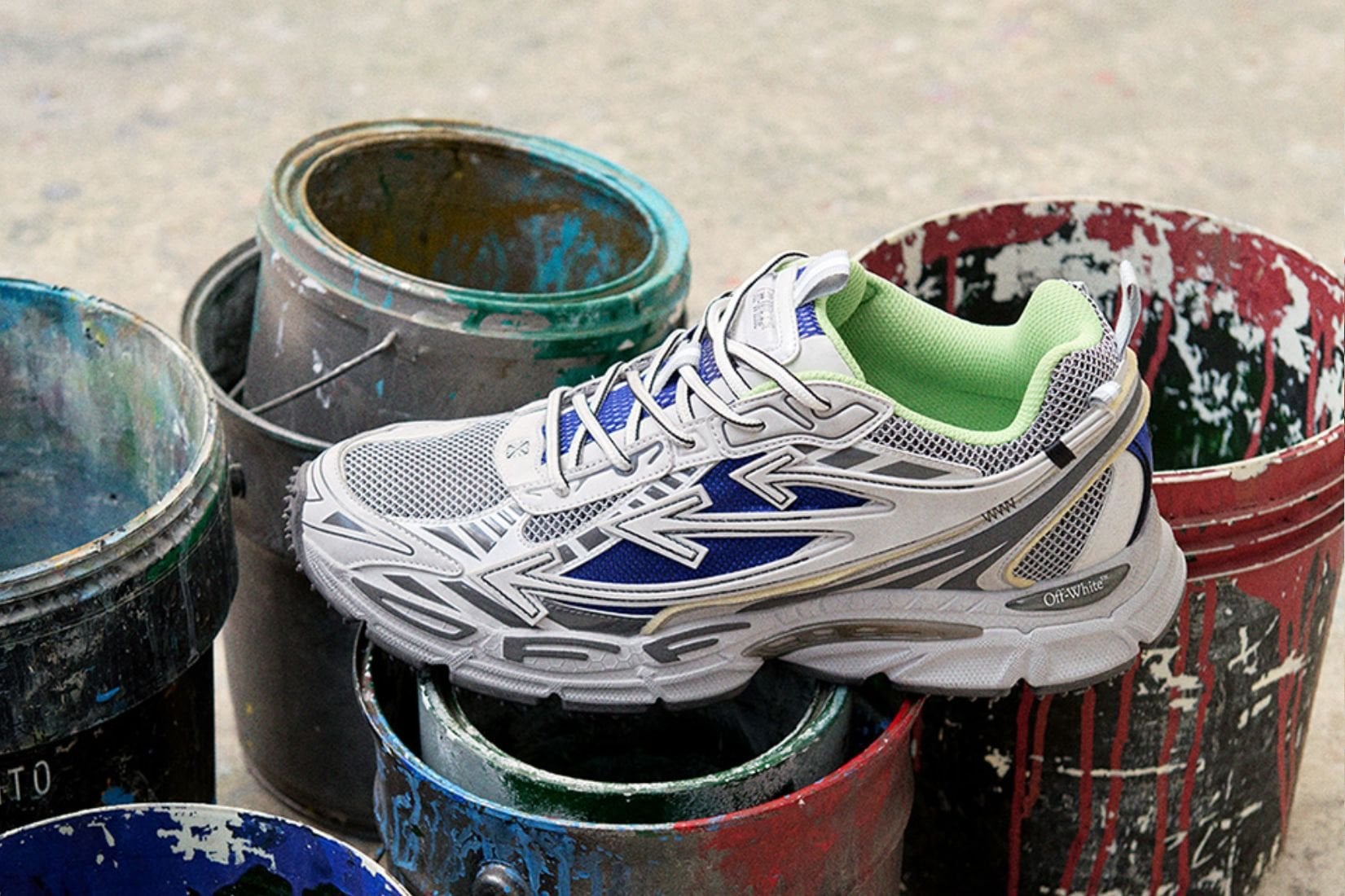
The footwear side of Off-White spans sneakers, boots, and more formal shoe silhouettes, each carrying distinct construction choices. Zip-tie accents, exposed foam midsoles, and arrow graphics have become recognizable markers across multiple sneaker lines. Off-White has also extended these silhouette ideas into boots and low-profile trainers, showing how a single design cue can migrate across footwear categories. That continuity gives the footwear range a cohesive identity even as individual models change from season to season.
The zip-tie element in particular has become so closely associated with the brand’s footwear output that it now functions almost as a hallmark of authenticity within the Off-White sneaker ecosystem. Whether applied to high-profile collaborations or core collection releases, the presence of this detail signals the brand’s commitment to construction-led graphic thinking. Paired with the exposed foam components that reveal internal structure rather than hiding it, these choices emphasize the technical side of sneaker manufacturing as a design statement.
Accessory Lines and Complementary Product Strategy

Beyond clothing and shoes, the brand maintains accessory lines including belts, bags, and small leather goods that echo the same graphic language found in its apparel. Industrial webbing straps, printed arrows, and branded hardware appear across these items, tying them back to the main clothing and footwear collections. This approach treats accessories as an extension of the garment story rather than a separate product category. Consequently, a belt or bag often communicates the same design references as a jacket from the same season.
The accessory strategy extends the brand’s visual vocabulary into everyday objects that function as independent purchases yet still reinforce the larger design system. A shopper might acquire a belt featuring the same arrow motif visible on a seasonal sneaker, or a bag in a material and construction style that mirrors choices made in outerwear. This cross-pollination of design elements across price points and product categories strengthens brand recognition and allows customers to build layered outfits where each component speaks the same visual language.
The Intersection of Graphic Design and Garment Construction
One of the more distinctive aspects of Off-White‘s output is how closely its graphic elements are tied to construction details rather than applied as surface decoration alone. Stripes often align with seams, quotation marks sit at functional points like pockets or collars, and text treatments follow the structure of the garment itself. This integration is part of what separates luxury streetwear collections built around a coherent design system from labels that simply print logos onto standard blanks. The brand’s catalogue repeatedly returns to this pairing of graphic identity and garment architecture.
This structural approach means that the visual identity cannot be separated from how the garment is made. A stripe is not merely printed on top of fabric but becomes part of the seam logic, making the design inseparable from the construction process itself. When a quotation mark appears at a pocket edge or along a collar line, it serves both as a graphic marker and as a subtle acknowledgment of functional garment architecture. This philosophy extends the brand’s design thinking beyond aesthetics into the realm of functional tailoring.
Building a Complete Wardrobe Across Off-White’s Seasonal Releases
Because the brand produces clothing, footwear, and accessories under the same visual language, it becomes possible to build a wardrobe where pieces from different categories relate to one another. A seasonal release might include outerwear, trousers, sneakers, and a bag that all reference the same stripe or arrow motif. This cross-category consistency is a defining feature of how the brand organizes its luxury streetwear collections season after season. The brand website showcases the full range of current offerings, with free shipping available on orders.
The seasonal approach means that each drop represents a moment where the entire product ecosystem expands in a coordinated direction. Rather than individual departments releasing unrelated items, Off-White constructs seasons where graphic motifs, color stories, and construction techniques flow across apparel, footwear, and accessories simultaneously. This unified vision makes it possible for customers to understand the seasonal narrative and build complementary outfits that speak to a cohesive creative direction rather than assembling disparate pieces.
How Material Selection and Technical Details Define the Brand’s Positioning
Material choices across the range, from structured outerwear fabrics to technical sneaker components like exposed foam, reinforce the brand’s position within luxury streetwear rather than standard ready-to-wear. These details signal a deliberate focus on construction quality alongside graphic identity. The combination of recognizable motifs and considered material use is part of what continues to define Off-White within the broader luxury streetwear collections landscape.
- Diagonal stripe motifs appear consistently across clothing, footwear, and accessories as a unifying graphic device.
- Quotation marks printed around garment or product names function as a recurring textual signature.
- Zip-tie details on sneakers have become an identifiable construction element within the footwear range.
- Exposed foam midsoles distinguish certain sneaker silhouettes from standard athletic footwear construction.
- Industrial webbing straps and branded hardware connect accessory lines back to the main apparel collections.
- Arrow graphics recur across footwear and accessories, reinforcing cross-category visual continuity.
The brand’s commitment to aligning graphic language with construction logic across all product categories demonstrates a design approach that treats luxury streetwear as a cohesive system rather than a collection of separate items.
