
Share This Article
Shopping for KitchenAid stand mixers and appliances often starts with the mixer itself, but the range extends well beyond that one iconic countertop piece. From blenders and food processors to espresso machines and major kitchen appliances, the lineup covers nearly every stage of cooking and baking. This article looks at how the stand mixer range is organized, how it compares to other countertop appliances, and how the whole ecosystem fits together for anyone evaluating the options.
Stand Mixer Customization Tool: Building a Personalized KitchenAid Mixer
KitchenAid lists its stand mixers alongside a dedicated attachments section on its site, signaling that the mixer is meant to be configured rather than used as a single fixed unit. Shoppers browsing the countertop appliances section can move directly from the mixer listings to the attachments catalog, which is organized as its own category. That structure reflects how the brand frames the stand mixer as a base appliance that grows with whatever attachment gets added to it.
This approach matters for anyone comparing KitchenAid stand mixers and appliances side by side, since the mixer’s value is tied closely to what can be attached to it. Pasta-making and cutting attachments, vegetable spiralizers, and meat grinding attachments are mentioned directly among the brand’s own materials. Because these attachments connect to the mixer’s power source, the base unit effectively becomes several different tools over time.
KitchenAid Stand Mixers: Core Features and Attachments
The brand’s own comparison of stand mixers and hand mixers describes the stand mixer as a heavy-duty electric mixer that sits on a countertop, attached permanently to its stand. That is a structural distinction from a hand mixer, which stays handheld and is positioned for smaller mixing jobs. According to the brand, the stand mixer’s attachments allow it to do more than mix, including cutting butter for biscuits, mashing potatoes, and spiraling vegetables.
Food processors enter this comparison too, since the stand mixer and food processor are positioned as two different tools suited to different techniques. The food processor is described as better suited to chopping, grating, and puréeing, while the stand mixer handles whipping, mixing, and mashing. For dough specifically, food processors typically use a plastic blade, though some bakers prefer the metal blade for kneading because it cuts through dough quickly and helps keep it from overheating.
Countertop Appliances Beyond the Mixer: Blenders, Food Processors, and Hand Mixers
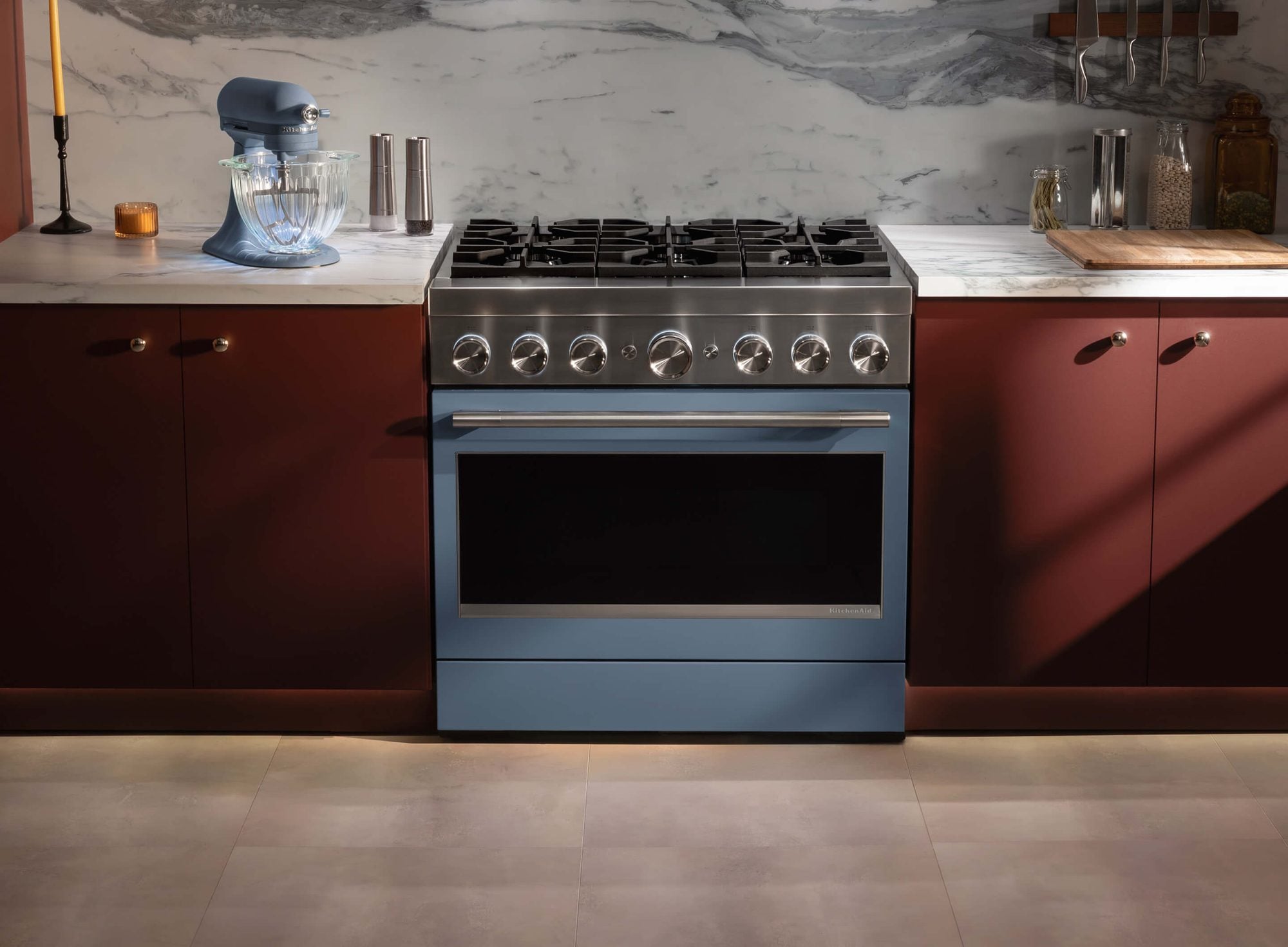
Stand mixers sit within a wider countertop lineup that includes blenders, hand blenders, hand mixers, food processors, and cookware, all listed together under the countertop appliances section of the site. Each of these categories gets its own dedicated page, suggesting a distinct product line rather than a single catalog of similar tools. That breadth gives anyone comparing KitchenAid stand mixers and appliances several entry points depending on the kind of prep work involved.
Hand mixers, in particular, are positioned as a lighter alternative for smaller mixing tasks. They are described as simple to operate, useful for quickly working through a range of recipes, though less suited to longer mixing sessions or stiffer batches of dough. This complements rather than duplicates what the stand mixer does, since the two tools are presented as working well together rather than as competitors.
Espresso Machines and Specialty Countertop Appliances
Beyond mixing and processing, the countertop lineup also includes espresso machines and a grain and rice cooker, both listed as their own categories on the site. These sit alongside the KitchenAid Go line, grouped within the countertop appliances and kitchenware section. Including specialty categories like these broadens the kitchen appliances range well past mixing and food prep into beverage making and grain cooking.
For anyone assembling a full kitchen setup, these specialty categories round out the countertop offering. Rather than treating the stand mixer as the sole centerpiece, the navigation places espresso machines and grain cookers as equally browsable categories. That positioning reinforces how wide the countertop range actually is.
Major Appliances Integration with the KitchenAid Ecosystem

The catalog does not stop at the countertop. Major appliances include cooktops, wall ovens, refrigerators, dishwashers, ranges, microwaves, undercounter refrigeration, disposals and compactors, hoods and vents, and warming drawers. Freestanding refrigerators, for example, come in multi-door, French door, and side-by-side configurations according to the brand’s own listings.
This means the range spans from small handheld tools to full kitchen installations, and someone furnishing a kitchen from the ground up can move between countertop appliances and major appliances within the same ecosystem. That continuity is a key reason people search for KitchenAid stand mixers and appliances together rather than separately, and the site backs that link with distinct return windows, 60 days on countertop appliances and 15 days on major appliances.
Comparing Countertop and Major Appliance Categories in the KitchenAid Line
Countertop appliances and major appliances are organized as two separate sections on the site, each with its own set of subcategories. Countertop appliances cover smaller, portable tools used for mixing, blending, processing, and brewing. Major appliances, on the other hand, are built into the kitchen itself, covering cooking, refrigeration, cleaning, and ventilation.
Both sections fall under the KitchenAid brand, which states it has been bringing culinary inspiration to kitchens for a long history. The company frames its mission around giving people the appliances needed for anything they want to do in a kitchen. That framing links the countertop and major appliance sides together rather than treating them as unrelated product lines.
- Blenders are listed as their own category, separate from the smaller hand blender line.
- Hand blenders offer a more compact, handheld alternative to the full-size blender category.
- Hand mixers provide a lighter mixing option positioned alongside, not instead of, the stand mixer line.
- Food processors are grouped separately for chopping, grating, and puréeing tasks.
- Espresso machines appear as a dedicated category within the countertop appliances section.
- A grain and rice cooker rounds out the countertop lineup as its own distinct product category.
Taken together, these categories show that KitchenAid stand mixers and appliances form part of a much larger catalog rather than a narrow product line, stretching from a single hand mixer on a counter to a full suite of ranges and refrigerators. The breadth across countertop and major appliances gives shoppers a wide set of categories to compare before deciding what fits a given kitchen.
In the end, the range rewards comparison rather than quick assumptions about one mixer or machine.
