

Share This Article
Picking between two creatine formats often comes down to serving size and how a routine fits into daily life. The creatine HCl vs monohydrate question matters because the two compounds are bonded differently and dosed differently as a result. Ecowise US sells separate gummy lines built around each form, giving shoppers a clear choice between concentration and volume.
Understanding Creatine HCl vs. Monohydrate: Core Formula Differences
Creatine hydrochloride and creatine monohydrate are both forms of creatine, but the HCl version is typically used in smaller amounts per serving than monohydrate. That difference in concentration is the center of most creatine HCl vs monohydrate comparisons, since it shapes how a serving is measured and how many gummies make up a dose. EcoWise US has built two distinct gummy lines around that gap rather than blending the two compounds into a single product.
The HCl line uses a patented CON-CRET form of creatine hydrochloride, while the monohydrate line uses a micronized version of standard creatine monohydrate. Both arrive in gummy form, which removes the need for scooping or mixing powder into liquid. That shared delivery method is where the similarities largely end, since the active compound and the serving size diverge from there.
EcoWise Creatine HCl Gummies: Patented Potency and Bioavailability
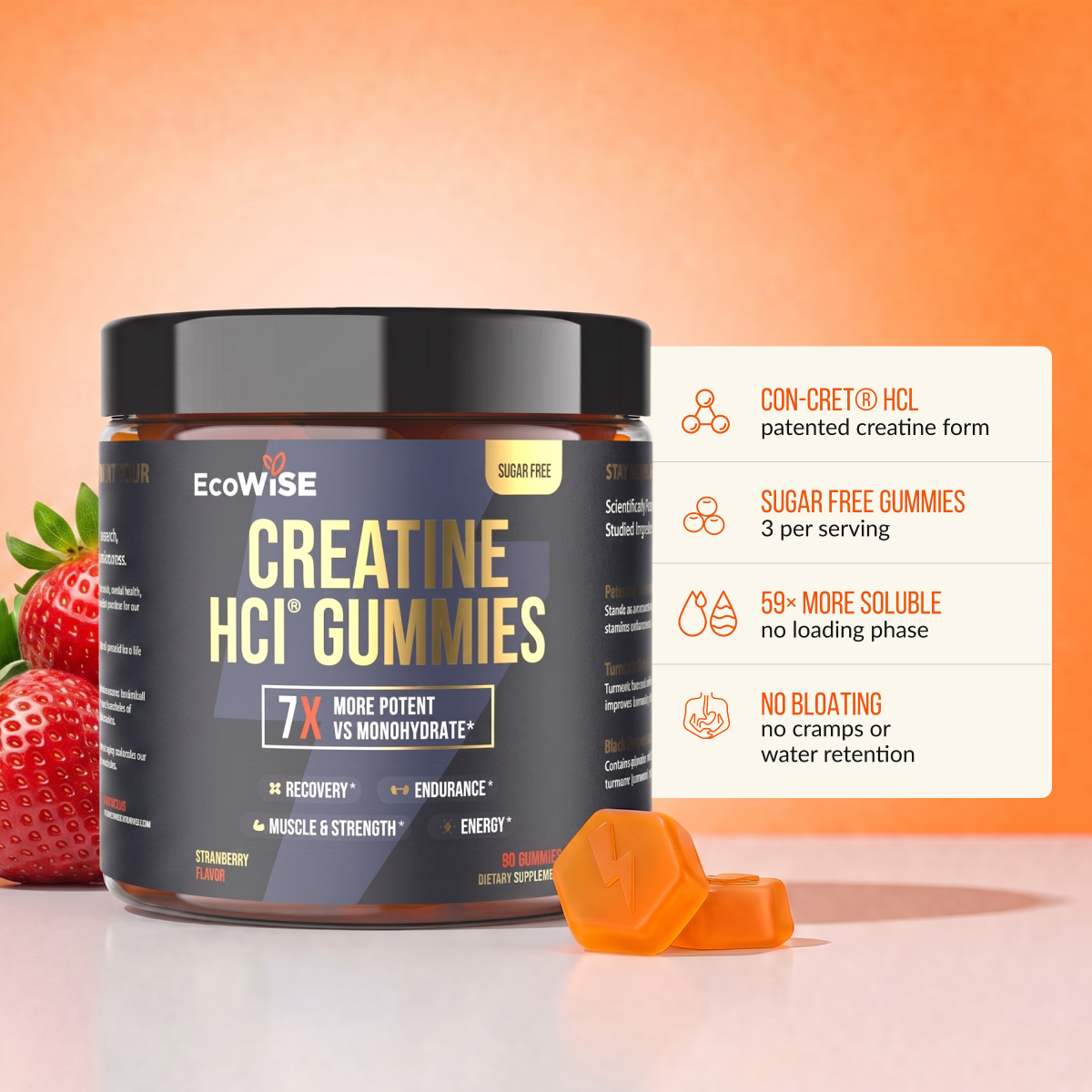
Ecowise US markets its HCl gummies around a patented formula containing 900 mg of creatine HCl per serving, delivered across three gummies. The brand describes this creatine as micronized, noting that the form is highly soluble and offers superior bioavailability. Listed benefits include building lean muscle mass, improving strength and endurance, and supporting faster recovery.
The product page also lists joint health, cognitive support, gut health, and cardiovascular health as additional claimed benefits, placing the HCl formula in a broader wellness context beyond muscle performance alone. These gummies are described as vegan, sugar-free, and free of artificial ingredients. The HCl line is positioned specifically around strength and energy rather than general wellness alone.
EcoWise Monohydrate Gummies: Higher Dosage Per Serving
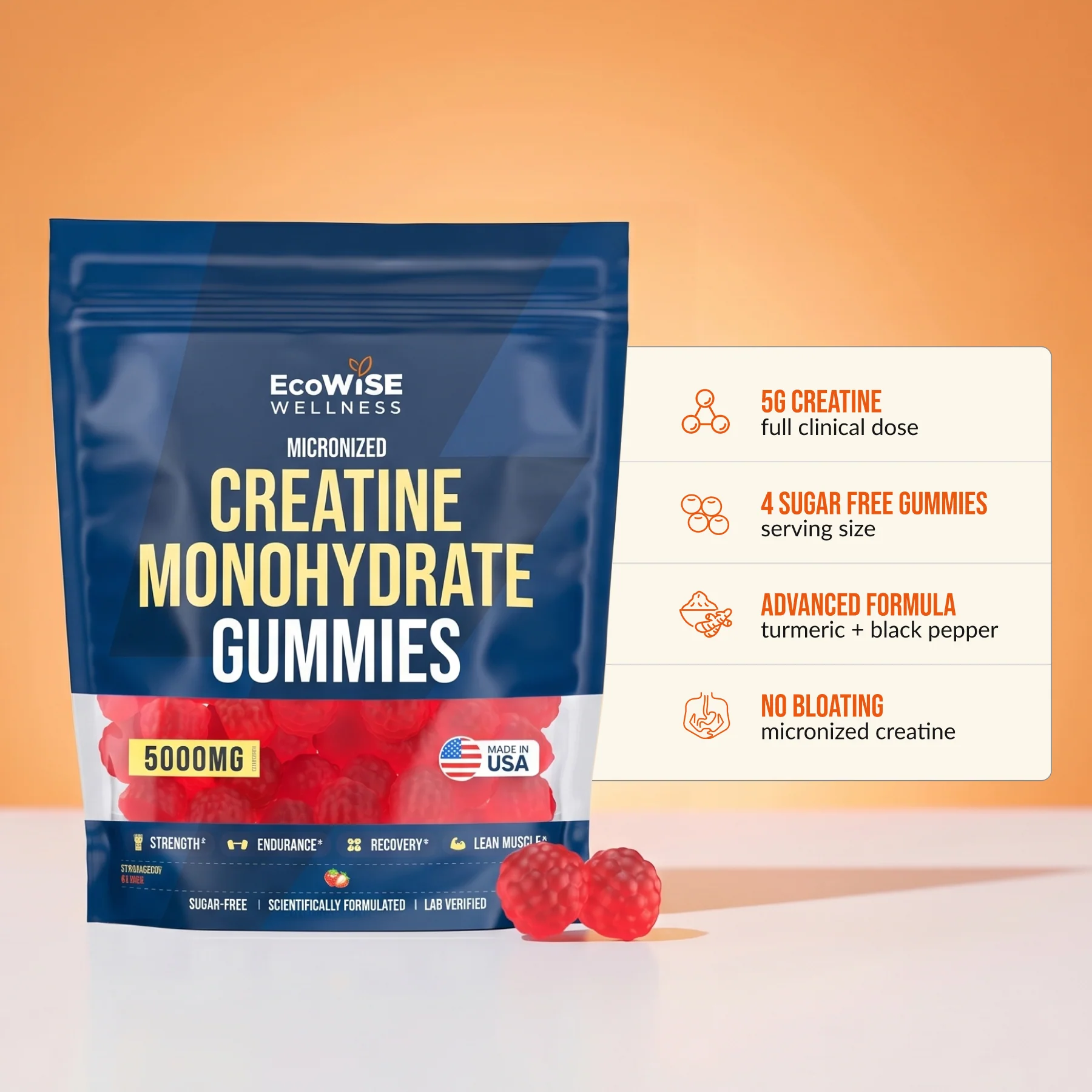
The monohydrate line takes a different approach on volume, delivering 5 g of micronized creatine monohydrate across a serving size of 4 gummies. EcoWise US frames this product as addressing common complaints about creatine powder, including mess, chalky taste, bloating, water retention, and cramping. The page lists lean muscle support, strength, faster recovery, anti-inflammation benefits, better absorption, and increased energy among its claims.
Bonus benefits listed on the monohydrate product page include cognition support and cardiovascular health, a shorter list than the HCl page but aimed at similar territory. The formula is also noted as third-party tested, a detail that sits alongside its sugar-free, vegan, additive-free description. The higher gram count per serving is the defining feature that separates this formula from the HCl option.
Dosing, Convenience, and Daily Commitment Compared
Serving structure is one of the clearest practical differences between the two lines. The HCl gummies are built around a three-gummy serving, while the monohydrate gummies use a four-gummy serving size. Both formats are pre-dosed, which removes the shaker bottle and scoop measuring associated with traditional creatine powder.
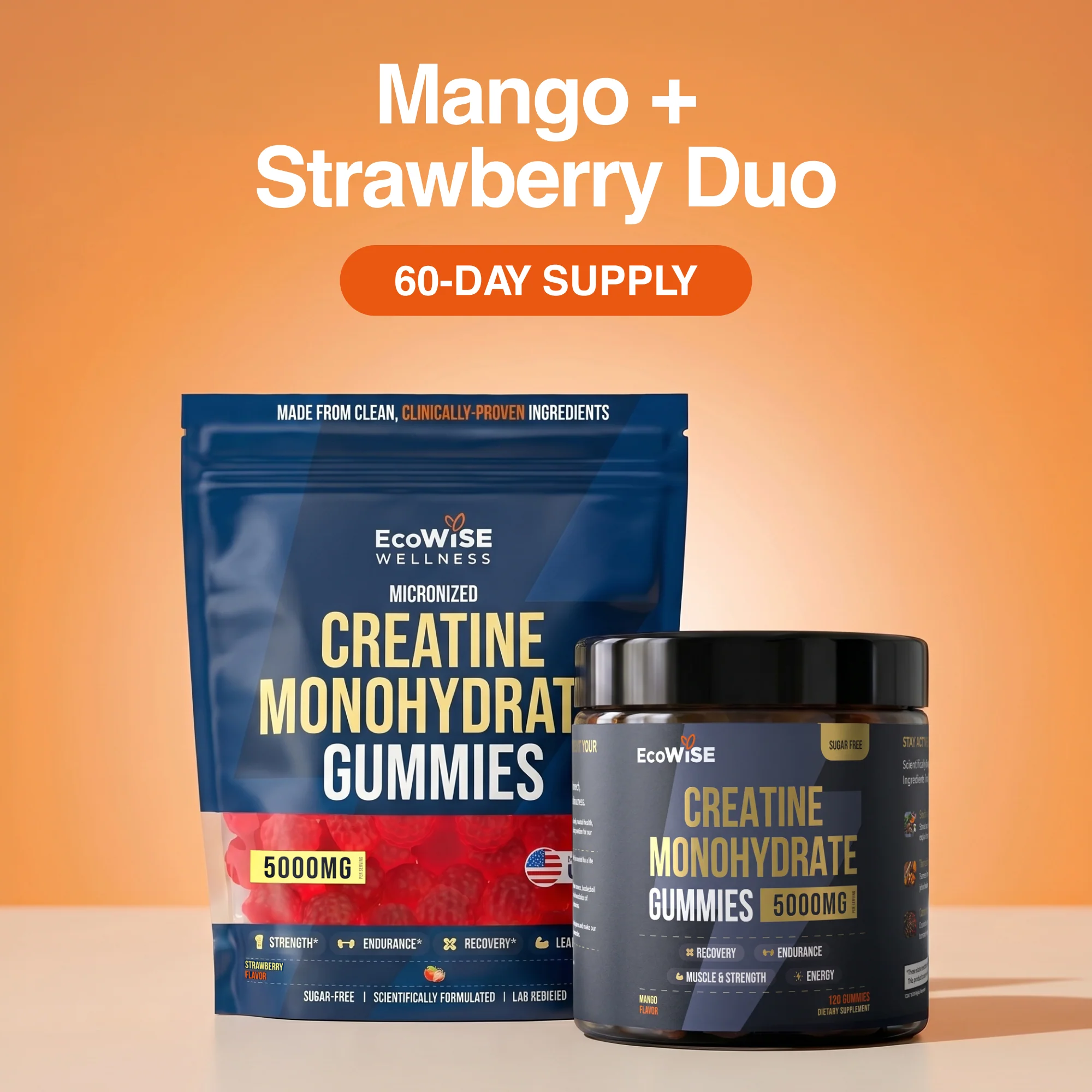
This pre-dosed structure is a recurring theme across Ecowise US marketing, which repeatedly contrasts its gummies against mixing powder or dealing with a chalky aftertaste. Subscription options exist for both lines, with the ability to pause, change frequency, or cancel. Flavor options include strawberry and mango across the range, giving some choice within each formula.
Performance Goals: Strength, Endurance, and Recovery Across Both Formulas
Both the HCl and monohydrate lines are marketed toward overlapping performance goals, including muscle growth, increased strength, better endurance, and faster recovery. That overlap is not unusual within the creatine category generally, since different salt forms of creatine are commonly associated with similar downstream goals even when the dose size and compound differ. In other words, the shared marketing language reflects the broader supplement category rather than a claim that both EcoWise formulas work identically inside the body.
- EcoWise Creatine HCl Gummies contain 900 mg of patented CON-CRET creatine HCl per three-gummy serving.
- Ecowise Monohydrate Gummies deliver 5 g of micronized creatine monohydrate across a four-gummy serving size.
- The HCl formula is described as highly soluble with claimed superior bioavailability.
- The monohydrate formula is positioned as a solution to the mess, chalkiness, and bloating associated with traditional creatine powder.
- Both formulas list strength, endurance, lean muscle support, and recovery among their core claimed benefits.
- The HCl page adds joint health and gut health to its claims list, while the monohydrate page keeps its bonus claims to cognition and cardiovascular support.
- Flavor options across the range include strawberry and mango.
Within the creatine HCl vs monohydrate decision, the performance claims themselves do not differ dramatically between formulas. What changes is the dose size and the compound used to reach similar stated goals. That distinction is the practical difference a shopper evaluating the two Ecowise US lines is working with.
Taste, Texture, and Long-Term Adherence

Gummy format is the shared design choice across both lines, aimed at avoiding the texture issues tied to mixed creatine powder. EcoWise US highlights a customer quote describing the HCl gummies as the first creatine product actually finished to the end of the container, which the brand uses to emphasize usability over a sustained period. Both lines avoid artificial sweeteners and fillers, according to the product listings.
Packaging for the monohydrate line is also noted as being made with 99% recycled materials, a detail the brand lists among its points of differentiation from other creatine gummies and powders. The format itself stays consistent across both Ecowise US creatine products regardless of which compound is chosen. Based on available product information, any difference in taste or texture between the two comes down more to flavor choice than to the underlying creatine compound.
Format and flavor aside, the lasting question for anyone comparing these two gummies is which serving size fits an existing routine better.
