
Share This Article
Plenty of claims circulate about prescription weight management, and sorting fact from assumption matters more for female health than a quick scroll through social media suggests. Some of the most persistent weight loss medications myths involve how screening, side effects, and clinical support actually work. This article looks at what clinician-led female health plans genuinely involve, using SheMed‘s published approach as a reference point against the misconceptions.
Weight Loss Medications Are a Shortcut Without Health Monitoring
A common assumption is that prescription weight management is a shortcut that skips medical oversight entirely. That idea sits at the centre of many weight loss medications myths circulating online. In reality, SheMed’s programme begins with an eligibility quiz, followed by a blood test before any medication is approved by a clinician.
Medication is only dispatched after a clinician reviews the blood test results. It describes next-day delivery once approval is given, arranged discreetly. That sequence, quiz, blood test, clinician review, delivery, runs counter to the notion that these plans are a standalone, unsupervised purchase.
Misconceptions About Blood Tests and Baseline Health Screening
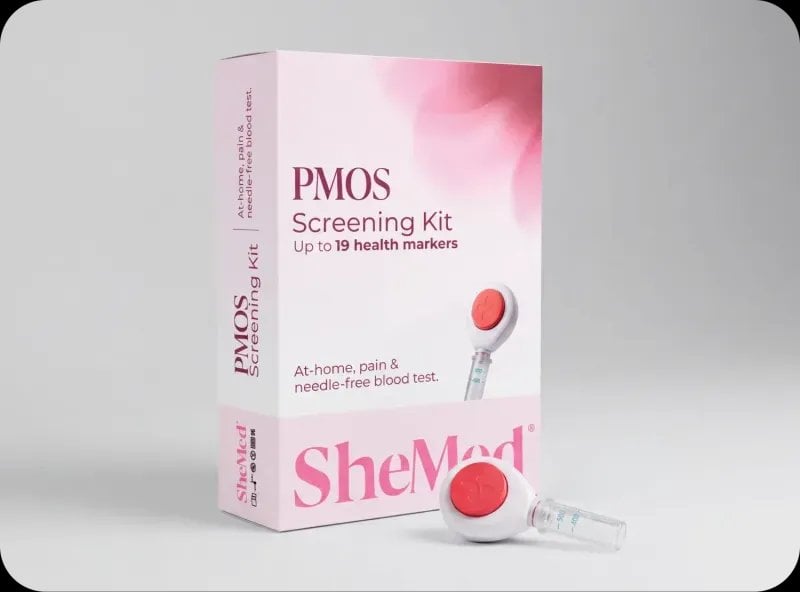
Another widespread misconception treats blood testing as optional, when SheMed instead bundles a blood test into the core weight loss programme and lists a separate blood test and side-effects package as a distinct, included option rather than an upsell. These screenings look at indicators such as diabetes risk, pre-diabetes markers, cholesterol level, and liver health.
Repeat testing at key milestones is also part of the structure, rather than a single check at the start. This addresses another of the weight loss medications myths, the idea that one baseline reading is enough to track metabolic change over months of treatment. Ongoing blood work gives a clearer picture of how the body responds over time than a single snapshot ever could.
The Myth That Weight Loss Medications Work the Same for All Women
It is often assumed that a single medication or dosage produces identical results across every woman, regardless of starting point. SheMed’s own research, a study involving more than 8,000 women enrolled across the UK aged 18 to 79, spanned diverse ethnicities, BMI ranges, and health backgrounds. The average BMI at baseline was 38.2, reflecting obesity classes I to III rather than a narrow or cherry-picked group.
Retention at six months in that study was over 91%, a result the brand notes is strong for GLP-1 treatment delivered outside a hospital or specialist clinic setting. That range of participants, and the variation in outcomes implied by such a broad dataset, undercuts the assumption that treatment response looks the same for everyone. Testimonials shared by The brand show different timeframes and different amounts of weight change among women, which also points away from a one-size-fits-all outcome.
Why PMOS Screening Matters More Than Scale Weight Alone

Scale weight is often treated as the only meaningful marker of progress, but that overlooks hormonal and metabolic factors specific to women. SheMed has launched a PMOS screening test, described as an at-home PMOS and hormone screening option. This sits alongside the weight loss plans as a distinct offering rather than an add-on feature.
SheMed‘s own content on GLP-1 medications and PCOS points to insulin resistance as a root issue behind symptoms such as irregular periods, excess hair growth, and weight that is hard to shift. That framing matters because it shows metabolic health is broader than a single number on a scale. PMOS and hormone screening is positioned as a way to look at that broader picture rather than weight in isolation.
Common Misunderstandings About Side Effect Management and Support
A frequent assumption is that anyone starting a GLP-1 medication is left to manage side effects alone. It’s programme lists a side-effect care pack alongside what it calls expert clinical support, and it also names a dedicated blood test and side-effects package within that same offering.
Unlimited access to clinicians is listed among the programme’s features, with the stated aim of reviewing medical history and guiding women through treatment. One testimonial on the SheMed site specifically mentions unlimited messaging meaning questions got answered quickly throughout the process. That kind of ongoing contact runs against the myth that medication is dispensed once and then support disappears.
- Some women believe weight loss medications are a shortcut that bypasses medical supervision entirely.
- Some assume a single blood test at the start of treatment is sufficient to track metabolic health over time.
- Some think every woman will respond to the same medication and dosage in an identical way.
- Some believe scale weight alone tells the full story of metabolic and hormonal health.
- Some assume side effects must be managed without any clinical support once medication is delivered.
- Some think screening for conditions like PMOS is unnecessary if weight loss is already happening.
What Clinician-Led Care Actually Means in Female Weight Loss Plans
Clinician-led care, as the brand presents it, combines a personalised care plan and a free health check-up with an all-in-one app that lets women place orders, track progress, complete weekly check-ins, and access recipes and health education content. Together these pieces describe what the programme includes rather than a list of optional add-ons.
SheMed also references a care team made up of clinicians working specifically within women’s health, alongside its published UCL-associated study data. Clinical care for the programme is noted as provided by eMed. Taken together, these details describe a structured, monitored process rather than the unsupervised shortcut implied by many weight loss medications myths.
Screening, data, and ongoing clinical contact, not guesswork, are what actually separate informed treatment from assumption.
