
Share This Article
Smart switches myths circulate widely among people considering their first connected lighting upgrade, and many of those myths quietly stop good decisions before they start. Some assumptions date back to early smart home gadgets that genuinely were fussy about wiring, bulbs, and constant app babysitting. Zigbee hardware has moved past most of those limitations, and a closer look at the claims shows how dated they have become.
The Myth: Smart Switches Always Need a Neutral Wire
A persistent belief holds that every smart switch demands a neutral wire at the back box, which rules out older properties entirely. This was true of some early smart switch designs, which relied on a constant neutral connection to keep their internal electronics powered. Many homes built before certain wiring regulations simply do not have that wire running to every switch position, which left plenty of people assuming connected lighting was off the table.
Repenic‘s Zigbee switches are built around compatibility with standard UK wiring setups, including the toggle and rocker ranges available in 1 to 4 gang configurations. The point is not that neutral wires never matter, but that a single wiring assumption should not be the deciding factor before even checking a specific product’s requirements.
Zigbee Smart Switches Don’t Require App Control for Daily Use
Another common misconception is that a smart switch turns every light operation into a phone-based task. In practice, Zigbee smart rocker and toggle switches keep their physical press-and-click or toggle action fully functional at the wall. The smart layer adds optional remote control and scheduling on top, rather than replacing the switch people already know how to use.
This distinction matters because it directly undercuts one of the most repeated smart switches myths, the idea that an app has to open before a light turns on. A household member unfamiliar with the connected features can still flip the switch exactly as before, while anyone wanting app-based control can use it when convenient.
Mechanical Feel vs. Smart Control: Why These Aren’t Mutually Exclusive
There is a widespread assumption that adding smart capability to a switch means sacrificing the tactile feel of a traditional mechanical control. Repenic‘s toggle switches are described as delivering a crisp, precise toggle action with reassuring tactile feedback, a detail carried through both the standard and Zigbee-enabled versions. The rocker switch range follows the same logic, keeping the familiar press-and-click sensation while layering in Zigbee 3.0 control underneath.
That combination challenges a core assumption behind many smart switches myths, namely that function and feel are a trade-off. A switch can retain its everyday mechanical operation and still support multi-way control and energy monitoring at the same time.
Repenic’s Premium Finishes Prove Smart Switches Can Be Design-Forward

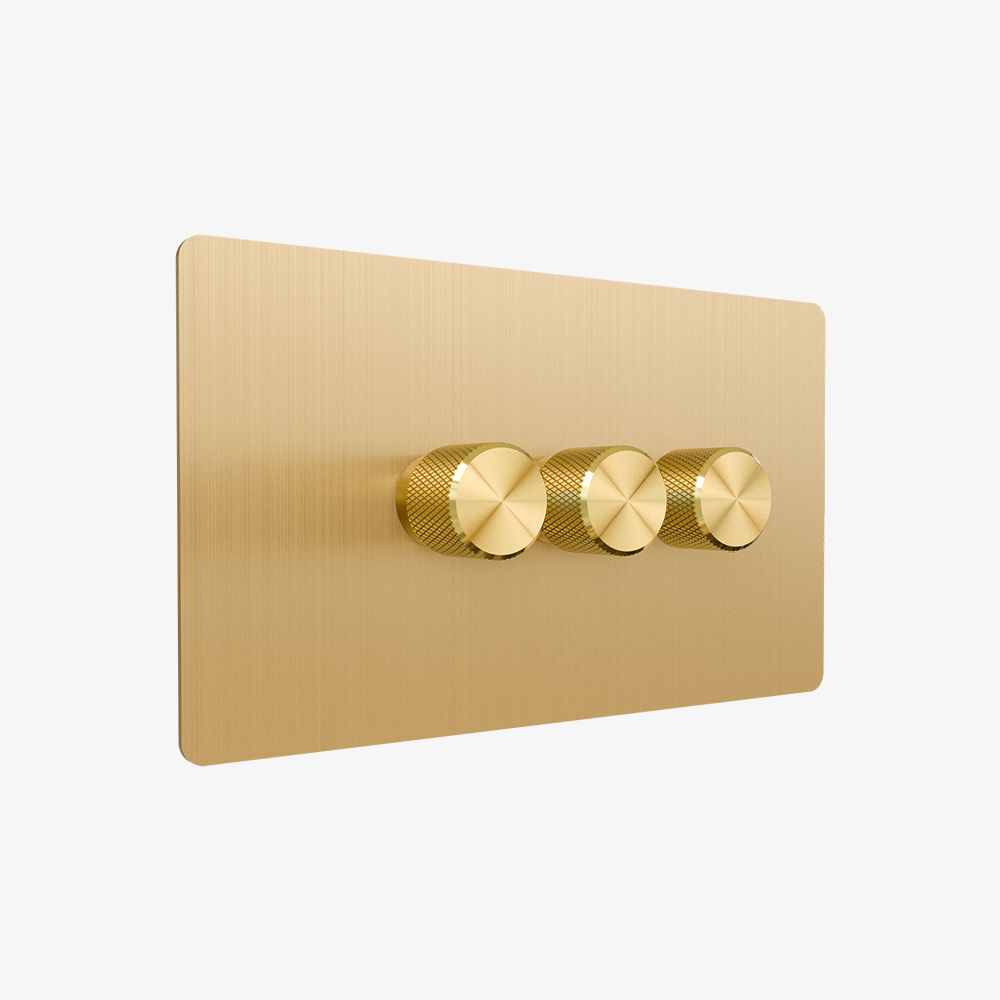
Smart devices have a reputation for looking clinical or out of place next to period features and considered interiors. The range pushes against that stereotype with faceplates offered in brushed brass, stainless steel, matt black, and matt white, across light switches, sockets, dimmer switches, and smart thermostats. The brass and stainless steel options use solid faceplate construction, which keeps the material consistent with the finish rather than treating it as a surface coating.
Because the finish options span switches, dimmers, and sockets alike, an interior can keep a single consistent look across every wall plate in a room. That range of finishes also feeds into the Mix & Match approach the brand offers, where a plate size and finish can be chosen first and then paired with toggle switches or rotary dimmers as needed.
Multi-Way Control Without Rewiring: The Multi-Point Dimmer Advantage
Controlling one set of lights from two or more locations usually conjures images of complex rewiring work, which puts people off the idea before they look into it. Repenic‘s Zigbee & Multi-Point Dimmer Bundle pairs a Zigbee Smart Dimmer with a Multi-Point Dimmer Switch so the same lights can be adjusted from different positions in a room. Both an on/off function and rotary dimming are available at each point, whether that is beside a bed, near a doorway, or across the room.
The listing notes that lighting can be adjusted at any of these points without reaching for a phone, since the Multi-Point Dimmer Switch supplies the physical control at each extra position while the Zigbee Smart Dimmer supplies the smart layer behind it. This setup directly answers one of the more technical smart switches myths, which assumes multi-way dimming is only possible through extensive new wiring runs.
Zigbee 3.0 Compatibility Across the Product Range
Zigbee 3.0 compatibility is mentioned across Repenic‘s smart rocker, smart toggle, and smart dimmer product lines, alongside features like smart bulb compatibility, multi-way control, and energy or power monitoring. That consistency across product lines means a household is not locked into a single switch type to keep a connected lighting setup coherent. A compatible Zigbee platform can add remote control and scheduling on top of the switch’s physical operation, without changing how the light is switched at the wall.
- Some assume a neutral wire is always mandatory, when Zigbee switches from this range are built for standard UK wiring setups.
- Some assume smart switches are incompatible with existing bulbs, when smart bulb compatibility is listed as a feature on the Zigbee toggle switches.
- Some assume every light adjustment has to go through an app, when the physical toggle or rocker action remains fully functional at the wall.
- Some assume multi-way lighting control requires new wiring runs, when the Multi-Point Dimmer Switch extends physical control to extra positions while a Zigbee Smart Dimmer supplies the smart layer.
- Some assume smart hardware has to look utilitarian, when finishes such as brushed brass and matt black are offered across switches, sockets, and dimmers.
- Some assume connected products installed later will not match what is already on the walls, when the Mix & Match approach allows a consistent plate size and finish to be kept throughout.
Taken together, these points show that most smart switches myths rest on outdated assumptions about wiring, app dependency, bulb compatibility, and design compromise. Zigbee-based hardware, including the ranges Repenic lists across toggle, rocker, dimmer, and socket products, addresses each of these points directly rather than sidestepping them. Anyone comparing options has reason to look past the old assumptions and check what a specific product actually requires and supports.
Connected lighting no longer has to mean a trade-off between tradition and technology.
