
Share This Article
Home gym equipment mistakes often start long before delivery day, when assumptions about space, performance, and features go unchecked. Many buyers picture a single idea of what a treadmill, rower, or multi-gym should do, without comparing the actual specifications. Fitness Options, a Nottingham-based supplier covering the whole of the UK, lists a wide enough range of cardio and strength machines to show just how varied that category really is.
Assuming All Treadmills Deliver the Same Running Experience
A frequent home gym equipment mistake is treating every treadmill as an interchangeable box with a belt and a motor, when running belt size actually varies considerably between models and affects stride comfort for taller users. The Future T330 Home Folding Treadmill runs a 120cm x 45cm belt, while the Future T440 steps up to a 130cm x 48cm belt for those who want more room to move.
Speed range is another detail buyers skip over. The Future T330 covers a DC motor range from 0.5 to 10mph, whereas the Future T550 reaches up to 22km/h. Comparing only the headline features, rather than belt dimensions and speed range, is exactly how mismatched purchases happen.
The Myth That Folding Treadmills Sacrifice Performance
A persistent myth holds that any treadmill which folds away must compromise on build or capability. Fitness Options stocks several folding models, including the Future T660, which shares its spec with the Future T550 but adds a larger running area and more preset programmes. That pairing shows folding design and stronger performance are not mutually exclusive.
The NordicTrack T5 Treadmill is also a foldable model, and it comes with a period of iFIT Train membership included, giving access to training content through a tablet or smartphone. Features like that demonstrate folding treadmills can carry smart technology just as readily as fixed-frame machines, and overlooking that point is one of the more avoidable home gym equipment mistakes shoppers make.
Why Rowing Machines Like the WaterRower A1 Aren’t Just Cardio Equipment

Rowing machines are frequently filed under pure cardio, which overlooks what a stroke actually works. The WaterRower A1, part of the range Fitness Options carries, is handcrafted from oak hardwood sourced from replenishable forests, left unstained, and hand finished in Danish oil. Its single-seat monorail is made from aluminium, which keeps the frame light while adding structural strength.
The A1 also includes an updated monitor, described as a simpler version within the WaterRower monitor line. Beyond the WaterRower, the catalogue lists the NordicTrack RW 300 Rower, built with an oversized steel seat rail for taller users and an Inertia Enhanced Flywheel. Treating a rower as a one-dimensional cardio tool ignores these construction and seating details that shape day-to-day use.
Misunderstanding Electronic Resistance in Strength Training
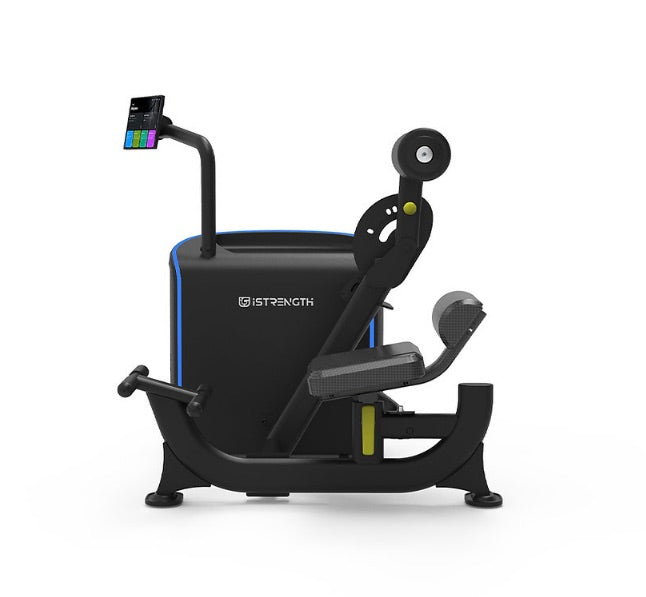
Strength equipment buyers often assume every machine relies on a traditional weight stack, which is not the case across the board. The Spirit I-Strength range, including its Functional Trainer and Abdominal/Back Extension units, replaces a weight stack with electronic resistance instead. This is described as a resistance training experience distinct from stack-based machines.
The same electronic resistance approach appears across other Spirit I-Strength pieces, such as the Inner Thigh/Outer Thigh and Leg Press/Calf Extension units. Assuming all strength machines function the same way, whether cable stack, plate-loaded, or electronic, is another of the frequent home gym equipment mistakes shoppers make before checking a product description closely.
Thinking Multi-Gyms and Functional Trainers Are Interchangeable
Multi-gyms and functional trainers get grouped together often, yet the product names within Fitness Options‘ catalogue suggest distinct categories. The Inspire FT2 PRO Smith Functional Trainer is listed separately from its own FT2 PRO Smith Functional Trainer Package, implying configuration choices within just this one functional trainer line. The Spirit I-Strength Functional Trainer, built around electronic resistance, is likewise marketed as its own next-generation line rather than a conventional multi-gym.
Treating these as one single category, rather than reading what each specific unit includes, can leave a buyer with equipment that does not match the intended use. Below are some common beliefs about home fitness equipment that lead to this kind of confusion, alongside how the facts actually differ.
- Many assume a higher weight capacity always means a bulkier footprint, yet folding and compact designs exist across treadmill and rower categories alike.
- Some believe all rowing machines are built from the same materials, while the WaterRower A1 specifically uses oak hardwood and an aluminium monorail.
- A common assumption is that smart training features only appear on fixed-frame cardio machines, yet the NordicTrack T5 includes iFIT Train membership despite folding away for storage.
- Buyers often think multi-gyms and functional trainers are simply different names for the same product, though the catalogue lists them as distinct lines with their own configurations.
- It is frequently assumed that electronic resistance is rare or experimental, despite Spirit I-Strength building an entire range of machines around it.
Overlooking Space-Saving Features in Modern Equipment
Overestimating the floor space a home gym requires is one of the simplest home gym equipment mistakes to fix with a closer look at folding and storage-friendly designs. The treadmill range, from the Future T330 through the Future T660, is built around folding frames that fold away after use. The Bowflex Selectech 1090i Adjustable Dumbbells replace 17 sets of individual weights, covering a range from 10lb to 90lb in one compact unit.
Similarly, the Bowflex Selectech 840 Kettlebell replaces six individual kettlebells, adjusting from 8lbs to 40lbs by rotating a dial on top. The Bowflex Selectech Dumbbell Stand is designed to remove the need to bend down for each weight, which is a storage and access detail rather than a cardio or strength feature. Fitness Options‘ range, spanning treadmills, rowers, multi-gyms, and adjustable free weights, gives a concrete picture of how varied space-saving design can be within home fitness equipment.
Avoiding these missteps comes down to reading actual specifications rather than assuming one machine behaves like another.
