
Share This Article
Cuticles get blamed for looking ragged, but the real issue is usually the tool used on them. Nippers, e-files, and overzealous salon trims cut living skin along with the dead, which sets off a cycle of regrowth and repair. Blade-free cuticle care works differently, treating the dead skin as the only target and leaving the rest alone.
Why Cutting Cuticles Triggers Thicker Regrowth
Skin reacts to injury by rebuilding, and that is exactly what happens when a blade nicks the cuticle. The body treats the cut as a wound and responds by growing tougher tissue in that spot. That is why the same patch of skin seems to need trimming again a few weeks later, often looking coarser than before. Fyle‘s own materials put it plainly: nippers and e-files take living tissue along with the dead, and the body answers an injury by rebuilding thicker.
This is the mechanism behind the endless cycle of salon appointments. Each cut invites another cut, because the regrowth is never quite as smooth as the skin that was removed. A fine file, by contrast, only removes what is already dead, so there is nothing for the skin to defend against. Over time, that means less material to deal with at each session, not more.
The Difference Between Dead Skin and Living Cuticle
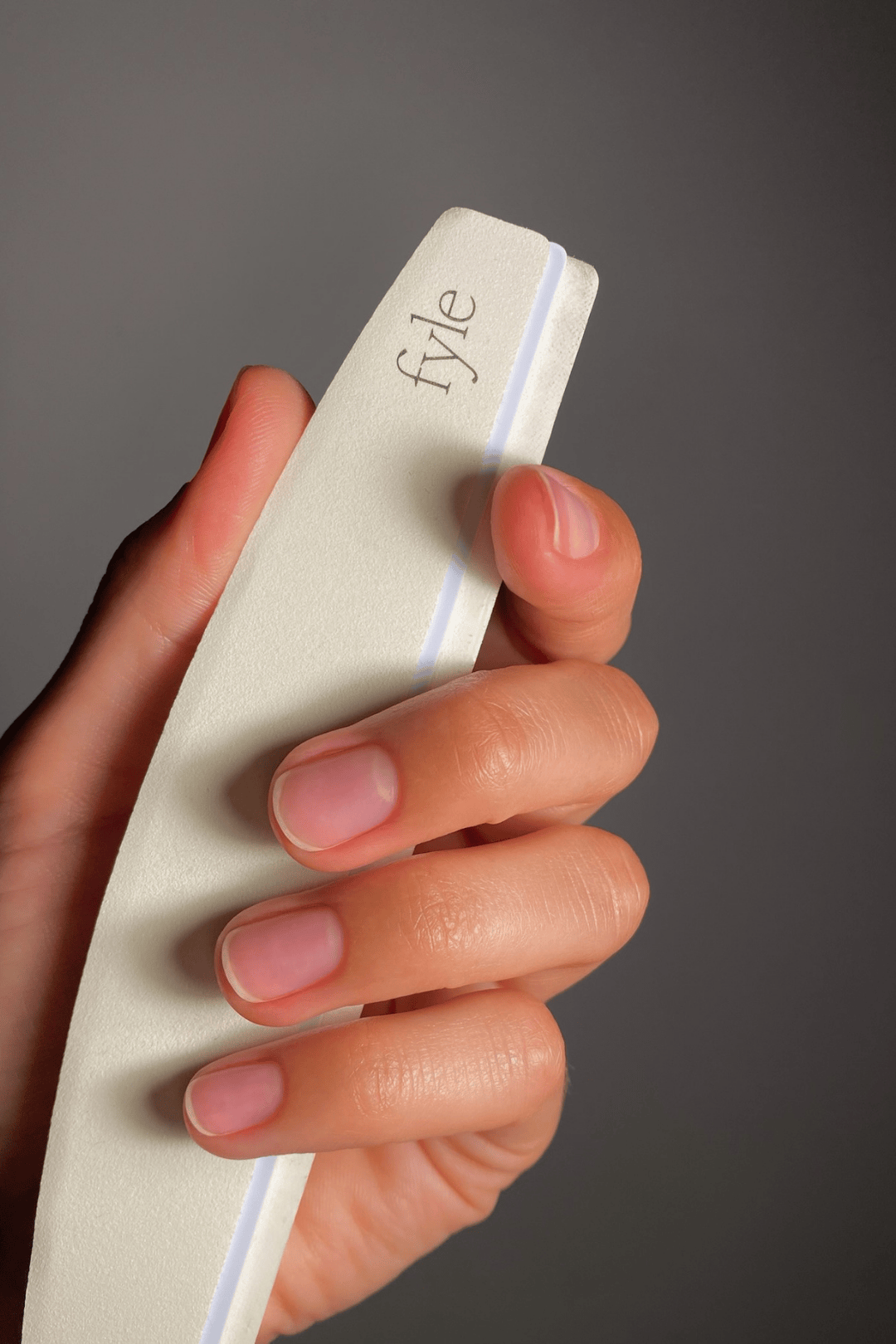
Not all the skin around the nail plate is the same. Some of it is dead tissue that has already done its job and can be removed without consequence. The living cuticle, closer to the nail fold, is still active and protective, and damaging it is what causes the thickening response described above.
Distinguishing between the two is the whole basis of blade-free cuticle care. Filing tools are designed to catch only the dead layer, leaving the living edge undisturbed. Fyle describes this directly on its product pages, noting that the method involves filing away the dead skin and leaving the living edge alone, so nothing grows back in defence.
How the File Manicure Method Works Without Blades

The File Manicure Kit from Fyle is built around this filing principle rather than cutting tools. It includes a Pusher to free the cuticle from the nail plate, a Strip for the dead skin around the cuticle line, and a double-sided Buff for the final smoothing step. None of these tools are sharp, and the brand is explicit that ordinary nail files should not substitute for them, since they carry a harder, coarser grit that can harm the surrounding skin.
A full session, following the brand’s published tutorial, takes a few steps: freeing the cuticle, working the Strip around the side folds and along the cuticle line, buffing, shaping the nail, and finishing with balm. Reviewers cited by the brand describe the whole routine as achievable in roughly five to fifteen minutes at home. For anyone replacing regular salon visits, the Complete Kit version adds a Shiner tool, which brings a natural glow to the nail without polish.
The Cuticle Sealing Balm Step That Oil Alone Cannot Replace
Many at-home routines stop at a cuticle oil, but oil only locks in moisture that is already present in the skin. If the skin was dry to begin with, oil does not solve that, which is why dryness often persists into a second week. Fyle‘s Cuticle Sealing Balm is positioned differently, described as hydrating and sealing in a single step rather than simply coating the surface.
The balm is the final stage of the File Manicure, massaged in after filing and buffing are complete. It is fragrance-free, made in Yorkshire, and sized at 5 ml, small enough to carry in a coat pocket according to the brand’s own description. It is also meant to be reapplied through the day whenever hands have been exposed to soap, weather, or washing up, rather than used only once during a full manicure session.
Why Hangnails and Ragged Edges Return After Salon Visits
A salon manicure can look clean on the day, but ragged edges and hangnails often reappear within a week or two. That pattern traces back to the same cutting cycle described earlier: trimmed cuticles regrow thicker and less even, and the skin becomes more prone to snagging. Picking at the resulting hangnails then compounds the damage, since picking is itself another form of tearing living skin.
Fyle frames its Kit as a response to exactly this complaint, listing dry cuticles, overgrown cuticles, hangnails, and nails recovering from gel treatments among the issues it targets. Because the filing method does not wound the skin, there is less for it to repair between sessions. The brand’s refill boxes, designed to fit the Core from the original Kit, suggest the method is intended as an ongoing routine rather than a one-time fix.
Common Misconceptions About Cuticle Care
- Cuticle oil alone resolves dryness, when oil mainly seals in existing moisture rather than adding it.
- Nippers are the only professional option, overlooking that cutting tools remove living tissue along with dead skin.
- Thicker cuticle skin is simply a personal trait, when it is actually a response to repeated cutting.
- A standard emery board works on the cuticle line, even though ordinary files carry coarser grit meant for the nail plate, not the surrounding skin.
- A single salon visit produces lasting results, when the regrowth cycle continues unless the underlying method changes.
- Picking at hangnails between appointments is a minor habit, even though it tears living skin in the same way a blade does.
Across its product range, Fyle positions filing and buffing as the alternative to cutting tools, with the Double-Sided Buffs available separately in packs for those replacing worn components. The approach does not rely on soaking, acids, or machines, according to the brand’s own descriptions. For hands going in and out of water throughout the day, the balm is described as useful beyond the manicure routine itself, not just as a finishing touch.
Cuticle care built around filing rather than cutting works differently from the cycle that salon trimming creates.
