
Share This Article
Picking among camping sleeping pads can feel more complicated than it should, especially once self-inflating designs, air pads, and insulated builds all start to look alike online. BRoadout carries several distinct sleeping pad styles, each built around a different inflation method and insulation level. This breakdown looks at how the materials, R-values, and setup methods actually differ across the range.
Understanding Sleeping Pad Types: Self-Inflating vs. Air vs. Foam
Self-inflating pads use an open-cell foam core that draws air in once a valve opens, which means minimal manual effort to reach a usable firmness. Air pads skip the foam entirely and rely on an external pump or a built-in foot pump to fill the chamber, which tends to shave weight and pack size. Foam-based mats, including the ATEPA XPE foam camping sleep pad, use a solid foam or batting fill instead of air chambers, giving a fixed amount of cushioning without any inflation step at all. Each approach suits a different balance of setup speed, packed size, and ground insulation.
The KingCamp Classic Light Self-Inflating Sleeping Pad: Comfort and Convenience
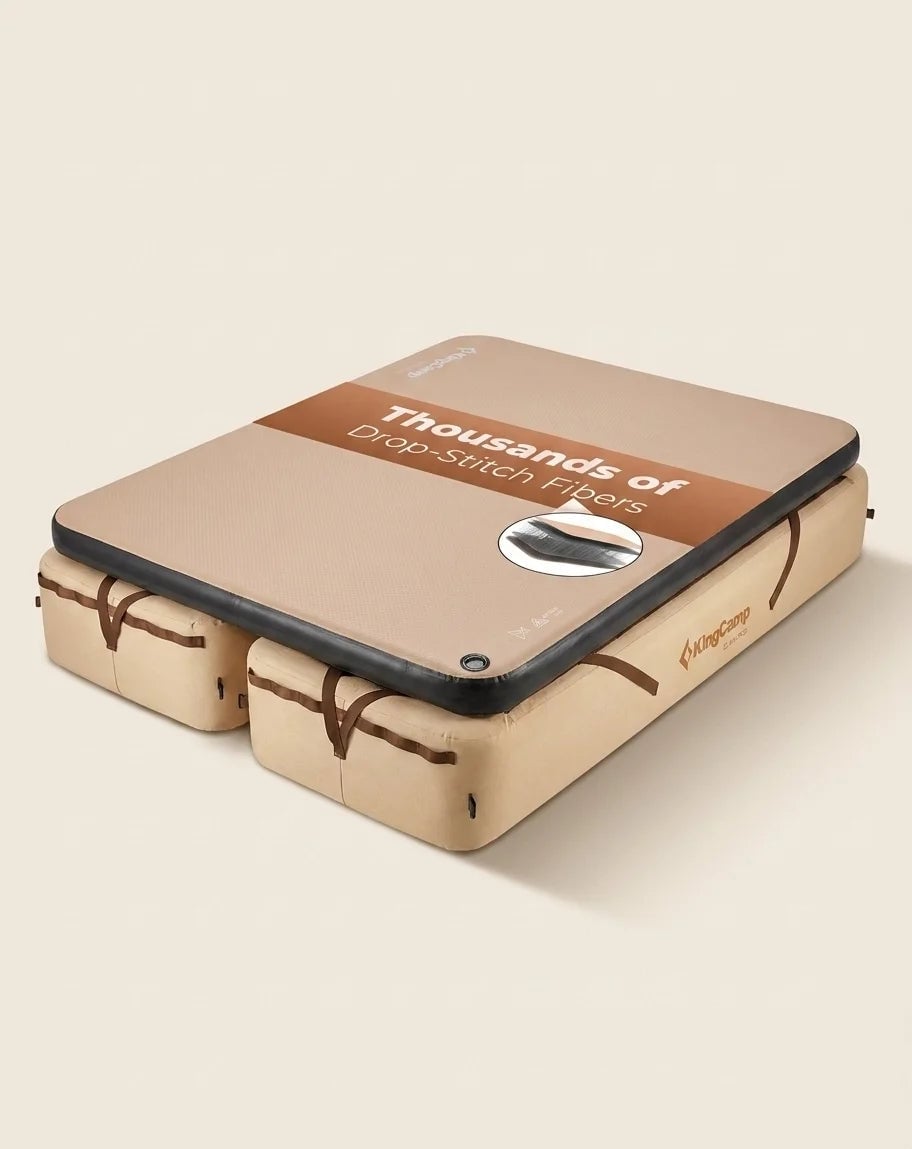
The KingCamp Classic Light Self-Inflating Sleeping Pad is one of the self-inflating options listed on BRoadout, designed to add comfort to overnight outdoor stays without a complicated setup routine. Opening the valve lets the internal foam expand and pull in air on its own, so a sleeper does not need a pump to get a usable surface. This style sits in the same self-inflating family as the FUNDANGO self-inflating sleeping pad, which uses a peach-skin fabric top layer and a memory-foam-style fill for a softer feel against the skin. Both designs aim to reduce the gap between a tent floor and the kind of surface people associate with indoor sleeping.
The KingCamp DELUXE 10.1 Inflatable Pad: Built-In Pump and Ultralight Design
The KingCamp DELUXE 10.1 Inflatable Sleeping Pad takes a different route, relying on a built-in foot pump rather than foam expansion. That pump means inflation happens without a separate hand pump or lung power, and the listing also mentions a built-in pillow as part of the same unit. BRoadout describes it as an ultralight camping mat built around a simple three-step idea: step, pump, and sleep, so the bed is ready in minutes rather than requiring a longer setup. This places the DELUXE 10.1 firmly in the air pad category among camping sleeping pads, prioritizing fast setup and a lighter carry over the slower self-inflating approach.
The ATEPA GridX 8 Ultralight Insulated Sleeping Pad: R-Value 8 for Cold Adventures

Insulation becomes the deciding factor once temperatures drop, and the ATEPA GridX 8 Ultralight Insulated Sleeping Pad is built around that need. It carries an R-value of 8, which BRoadout lists as a four-season rating suited to winter conditions and backpacking trips where ground cold is a real concern. The product description frames it around extreme insulation paired with an ultralight carry, aimed at backpackers and winter campers who do not want to add significant bulk to a pack. That R-value of 8 sits well above the R-value 1 to 2 range that BRoadout assigns to its summer sleeping pad collection, which is built for warm-weather trips rather than cold-ground sleeping.
Backpacking Pads vs. Car Camping Pads: Size, Weight, and Insulation Trade-Offs
Backpacking-oriented pads, including the GridX 8 and the DELUXE 10.1, lean toward lighter builds and smaller packed dimensions since every ounce in a pack matters on a trail. Car camping changes that calculation, since weight and pack size matter less once gear travels by vehicle rather than on someone’s back. BRoadout‘s own site organizes its sleeping pad and mat selection by use case, including separate groupings for car camping and backpacking, which signals that the pads inside each group are matched to different carrying conditions. A family using an SUV tent, for example, has room for a larger mat like the KingCamp ISIAY MAX 2.8, a 9.2 x 9.2 foot insulated tent floor mat with aluminum backing, something a solo backpacker would never carry on foot.
Choosing a Sleeping Pad by Season and Adventure Type
Season plays a direct role in which pad makes sense, since BRoadout separates its listings into summer sleeping pads and all-season or winter-rated options. The summer collection on the brand’s site states plainly that an R-value around 1 to 2 is designed for light insulation and better packability, suited to warm nights and casual trips. Cooler mountain conditions, early spring, or late fall call for a higher R-value pad instead, which is where options like the GridX 8 come into the picture. Matching the pad to the season, rather than defaulting to a single all-purpose mat, is the organizing idea behind how BRoadout structures this part of its range.
- Self-inflating pads such as the KingCamp Classic Light open with a valve and fill through internal foam, reducing manual setup effort.
- Air pads like the KingCamp DELUXE 10.1 use a built-in foot pump and an attached pillow to reach a ready-to-sleep state in minutes.
- Insulated pads such as the ATEPA GridX 8 carry an R-value of 8, positioning them for winter camping and backpacking in cold ground conditions.
- Foam mats, including the ATEPA XPE foam pad, skip inflation entirely and rely on a fixed foam or batting fill for cushioning.
- Summer-rated pads with an R-value of 1 to 2 trade insulation for lighter packability on warm-weather trips.
Across these camping sleeping pads, the differences come down to how each one inflates, how much insulation it carries, and how it is meant to be carried. Matching those three factors to a specific trip, rather than picking any available mat, tends to matter more once ground temperature or pack weight becomes a real constraint.
