
Share This Article
Fitness can feel like a chore, but what if your workout equipment actually made you want to exercise? Rebounders have quietly become one of the most underrated fitness tools in home gyms and studios worldwide. Unlike tedious treadmills or stationary bikes, a quality fitness rebounder combines cardiovascular training, lymphatic stimulation and pure fun into a single piece of equipment. Whether you’re recovering from an injury, looking to add variety to your routine or simply tired of boring cardio, rebounders offer something genuinely different.
The Science Behind the Bounce
When you use a Boogie Bounce Fitness Rebounders, your body experiences constant gravitational load changes. Each time you land on the mat, deceleration engages your stabilizer muscles, core and legs far more efficiently than flat-surface cardio. The momentum naturally forces your body to balance, recruit deep postural muscles and maintain alignment throughout the movement. This unique demand on your system creates an effective cardiovascular workout while being exceptionally low-impact compared to running.
Beyond muscle engagement, rebounders stimulate the lymphatic system, a critical circulatory network that traditional exercise often neglects. Unlike your blood circulation, which has the heart to pump it around, your lymphatic system depends on muscle contractions and gravity changes to move fluid through your body. The up-and-down motion of rebounding provides exactly the stimulus your lymph nodes need to filter waste and support immune function.
Rebounders vs. Other Cardio Equipment
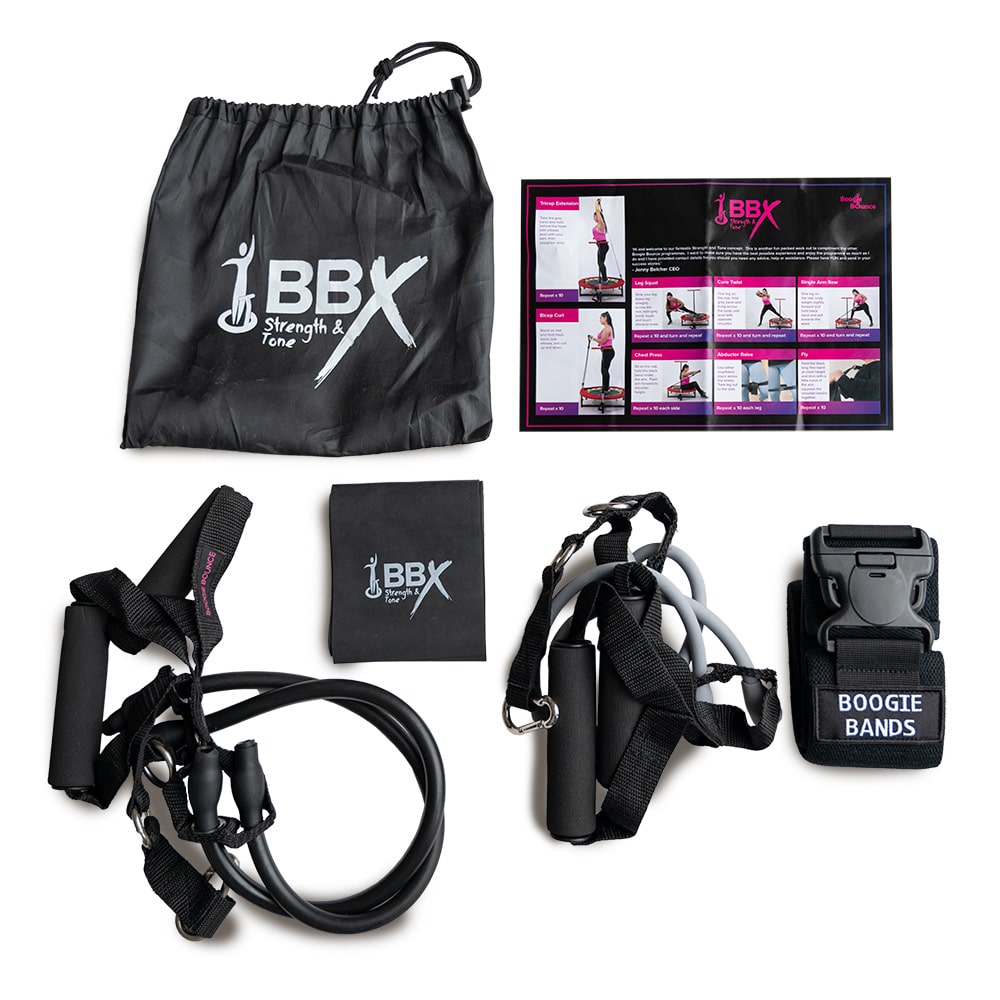
When comparing rebounders to conventional cardio machines, the advantages become clear. A treadmill pounds your joints with every step; an elliptical machine is smooth but often feels disconnected and monotonous. Rebounders, by contrast, provide gentle cushioning that absorbs impact while maintaining engagement. The instability element, which some might view as a drawback, is actually your core’s best friend. Every bounce requires microadjustments, turning a simple cardio session into a full-body stability workout.
Boogie Bounce Fitness Rebounders are engineered with this in mind. Premium models feature reinforced frames, professional-grade springs and non-slip surfaces designed to handle both gentle rehabilitation bounces and high-intensity cardio sessions. You’re not just buying a mini trampoline; you’re investing in a versatile training platform.
Workouts for Every Fitness Level
One of the best features of rebounder training is its scalability. Beginners can start with gentle bouncing, keeping both feet on the mat and focusing on rhythm and balance. This low-intensity approach builds confidence and allows joints to adapt. Intermediate users can progress to higher bounces, single-leg variations and added arm movements to elevate heart rate. Advanced athletes can integrate burpees, knee drives, twist jumps and explosive plyometric sequences that would challenge anyone.
- Gentle bounce ideal for warm-ups, lymphatic drainage and recovery days; minimal impact on joints and ligaments.
- Moderate bounce increases heart rate while maintaining control; perfect for 20–30 minute steady-state cardio sessions.
- High-intensity intervals short bursts of explosive movement alternated with recovery; burns significant calories in minimal time.
- Weighted variations holding light dumbbells or wearing a weighted vest increases resistance and muscle recruitment.
- Stability training single-leg balancing and slow, controlled movements that develop proprioception and core strength.
Real-World Benefits Beyond the Gym

People often underestimate how rebounding improves everyday function. The balance and proprioceptive gains translate directly to better posture, reduced fall risk and improved movement quality in daily life. Athletes across sports, from basketball to running to gymnastics, have added rebounding to their training because it addresses fundamental movement deficits while also providing active recovery between hard sessions.
For anyone managing a chronic condition or recovering from injury, rebounders offer a unique middle ground. Physical therapists and rehabilitation specialists often recommend them because the impact is controlled, adjustable and doesn’t force joint movement in a single plane. You control the bounce intensity, speed and range entirely. Boogie Bounce Fitness Rebounders are particularly popular in physiotherapy settings for precisely this reason.
Choosing the Right Rebounder for Your Space
Quality varies dramatically in the rebounder market. Cheap models feel unstable, wear out quickly and often aren’t enjoyable to use. A well-made rebounder, one with a stable frame, quality springs and adequate mat tension, transforms the entire experience. Consider your space constraints, your body weight and your intended use. A serious athlete needs different specifications than someone using it for light recovery sessions.
Boogie Bounce Fitness Rebounders offers models specifically engineered for different needs and body types, ensuring you get a device that actually performs well. This attention to detail separates effective training equipment from novelty purchases that end up collecting dust.
Making Rebounding a Sustainable Habit
The most underrated aspect of rebounding is how fun it actually is. It engages your vestibular system (your body’s balance center) and this stimulation releases endorphins. Many users report that bouncing feels playful rather than punishing, a stark contrast to typical cardio. When exercise doesn’t feel like work, consistency becomes automatic.
Start with just 10 minutes three times per week and gradually increase frequency and duration as your conditioning improves. Many people find themselves bouncing for 20–30 minutes without realizing time has passed. That’s the hallmark of an effective, sustainable training tool. When you actually enjoy your workout, adherence skyrockets and results follow.
Boogie Bounce Fitness Rebounders represent an investment in a training method that works with your body, not against it. Whether your goal is fat loss, athletic performance, rehabilitation or simply reclaiming the joy of movement, rebounding offers a proven, engaging path forward.