
Share This Article
Merrell hiking boots vs trail running shoes sit at two ends of the same outdoor footwear range, each built around a different priority. Merrell organizes its catalogue into hiking, trail running, and lifestyle lines, and each one answers to a different kind of ground and pace. Looking at sole design, cushioning, and weight across these categories helps clarify which shoe fits which outdoor task.
What Sets Merrell’s Hiking Boots Apart: The Moab Legacy
Merrell‘s hiking line centers on the Moab family, a boot the brand describes as backed by 40 years of trail innovation. According to the brand’s own pages, the Moab 3 remains the world’s number one hiking boot, known for trusted traction and comfort straight out of the box. It comes in Mid and Low profiles, along with waterproof and GORE-TEX® versions, which gives some flexibility in ankle support and weather protection.
Because the Moab 3 is the brand’s most established hiking silhouette, it anchors most comparisons between sturdier boots and lighter trail footwear. Its construction leans toward stability and durability over long days on uneven paths rather than speed. That combination of support and weather coverage sets the baseline against which the rest of the range gets measured.
The Moab 3 and Moab Speed 2: Evolution of Merrell’s Flagship Hiking Boot
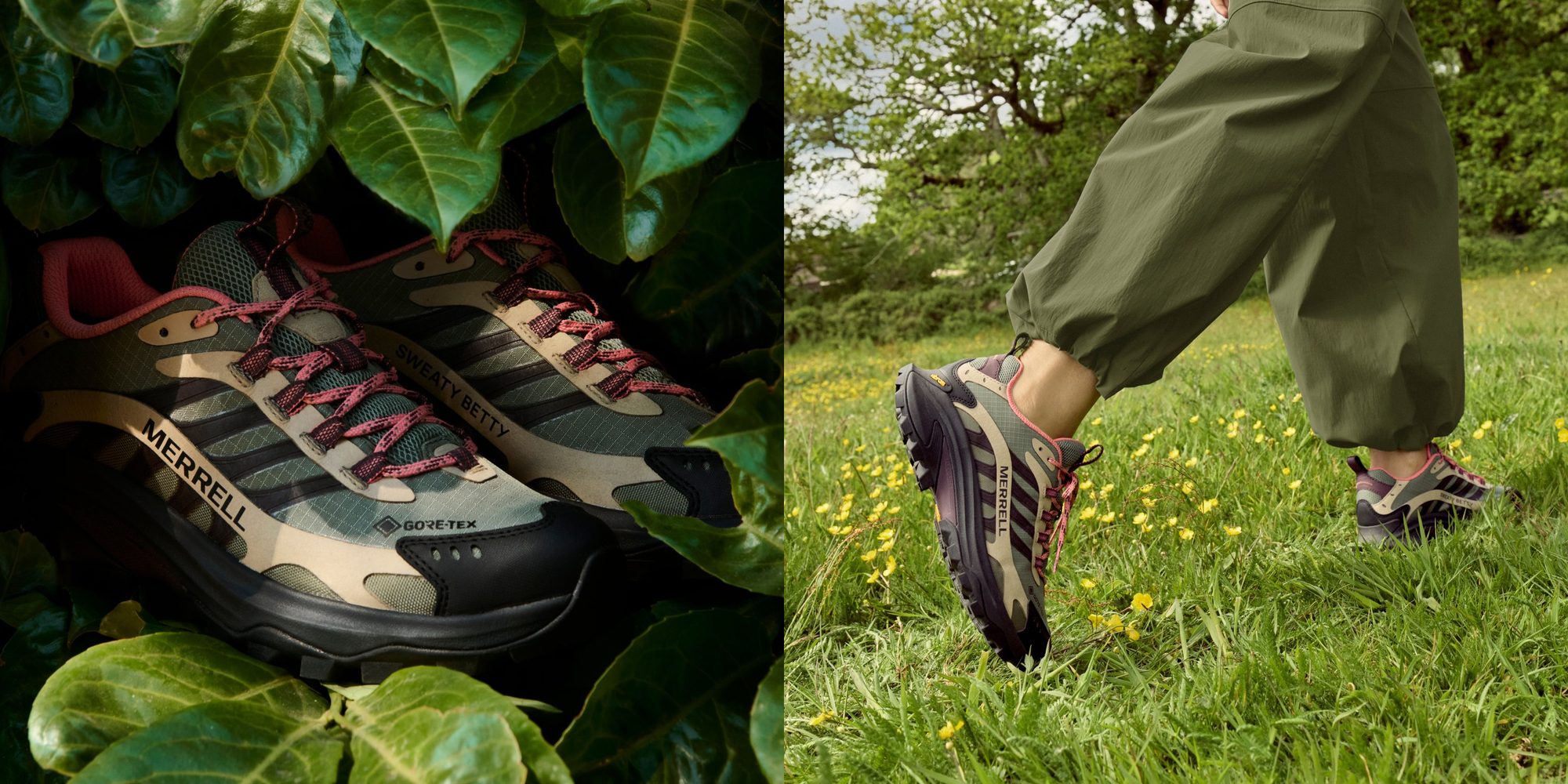
Where the Moab 3 represents the traditional hiking boot form, the Moab Speed 2 shows how that design evolves toward a lighter, sneaker-like hybrid. The brand describes it as dialed up for agility and speed, pairing trail-tested insights from the Moab with newer trail technology. It comes in Waterproof and GORE-TEX® options, a Mid Leather version, and a Leather Wide Widths version, which extends the line into broader fit choices rather than speed alone.
The Moab Speed 2 narrows the gap between a hiking boot and a trail runner, keeping some of the structure associated with hiking footwear while trimming weight for quicker movement. That middle ground makes the Moab Speed 2 a practical crossover for hikers who still want waterproof protection without the added bulk, a detail worth weighing when comparing Merrell hiking boots vs trail running shoes for a shoulder-season trip.
Trail Running Shoes: The Agility Peak 6 and Lightweight Alternatives
On the trail running side, the Agility Peak 6 is the brand’s current flagship, built with FloatPro™ foam for cushioning and FlexConnect™ grooves designed to adapt to terrain underfoot. It also uses Vibram® Megagrip, a rubber compound associated with traction on technical trails. The shoe is described as distraction-free by design, aimed at runners who want responsiveness rather than bulk.
Unlike the Moab boots, trail running shoes in this category sit lower to the ground and weigh less, prioritizing quick footwork over ankle support. A runner moving fast over mixed terrain has different footwear needs than a hiker carrying weight over a full day, which is the practical core of any hiking boots vs trail running shoes comparison. That difference in build, not just marketing language, is what separates the two categories on the trail.
Lifestyle and Barefoot Options in the Merrell Range

Beyond hiking and trail running, Merrell also offers a Barefoot Collection, built with a minimalist design and low-profile silhouettes across its lineup. Models in this line include the Trail Glove 8, the Wrapt Sneaker, and the Wrapt Mid Waterproof, each using a grippy rubber outsole intended for traction from trail to city streets. This collection sits apart from both the hiking and trail running lines, since it is built around a low-profile feel rather than structured support or cushioned responsiveness.
These lifestyle-oriented shoes reflect a broader positioning that blends outdoor performance with everyday wear. They are not designed to replace a hiking boot on a long backcountry trek, nor to match a dedicated trail runner’s responsiveness. Instead, they occupy a separate space for casual or light outdoor use, distinct from the more specialized hiking and trail running shoes.
How Waterproof and GORE-TEX® Technology Differs Across Categories
Waterproofing shows up across more than one category, though it gets applied differently depending on the shoe’s purpose. The Moab 3 offers a Waterproof and GORE-TEX® version, as does the Moab Speed 2, giving both the traditional boot and its lighter hybrid counterpart a weatherproof option. The Barefoot line includes a Wrapt Mid Waterproof model too, so water resistance is not reserved for hiking boots alone within the catalogue.
What differs is how that protection pairs with the rest of the shoe’s build. A waterproof hiking boot like the Moab 3 combines that membrane with a sturdier upper and a more substantial sole. A waterproof option in a lighter line, by contrast, keeps the reduced weight and lower profile associated with its category, so the waterproofing layer serves a different kind of footwear altogether.
Choosing Between Hiking Boots, Trail Runners, and Casual Outdoor Shoes
Deciding among these categories comes down to matching the shoe’s build to the kind of ground and pace involved. Hiking boots such as the Moab 3 suit longer days on rougher trails, where ankle support and durability matter most. Trail running shoes such as the Agility Peak 6 suit faster-paced movement, where cushioning and responsiveness take priority over structure. Factoring in terrain, distance, and pace, along with the Barefoot Collection’s zero-drop sole for a more grounded feel, offers the clearest way to decide between Merrell hiking boots vs trail running shoes for a given outing.
- Merrell’s hiking boots use a heavier, more supportive sole built for stability on uneven or rocky trails.
- Trail running shoes like the Agility Peak 6 use FloatPro™ foam cushioning and Vibram® Megagrip for lighter, faster movement.
- Lifestyle and Barefoot models use a minimalist zero-drop sole intended for a natural, grounded feel rather than structured support.
- Hiking boots generally carry more weight on the foot due to their sturdier construction and ankle coverage.
- Trail running shoes sit lower to the ground, reducing bulk for quicker footwork over mixed terrain.
- Waterproof and GORE-TEX® versions appear across hiking, hybrid, and even Barefoot lines, rather than being limited to one category.
The Moab Speed 2 shows there is also room for a hybrid approach between the two. Lifestyle and Barefoot options round out the range for anyone seeking something lighter for everyday outdoor use.
Three distinct approaches, one range, each shaped by a different kind of ground underfoot.
