
Share This Article
A remote worker in Lisbon tries to call a client in Singapore and hesitates, unsure whether the carrier will quietly add roaming charges to the bill. A backpacker crossing three countries in a week wonders if a single eSIM will hold up, or whether each border means buying a new SIM card. These everyday situations are exactly where confusion about international calling without roaming tends to grow, often because marketing language promises more than it explains. Dingo offers calls and eSIM data inside one application, and separating the myths from how the service actually works helps clarify what travelers and remote workers can expect.
What Dingo Calls and eSIMs Actually Do: Separating Fact From Marketing
Dingo combines two separate functions inside one web application, international calling and eSIM mobile data. The calling side lets someone dial any country at a stated rate, without a roaming surcharge or a fixed contract. The eSIM side supplies mobile internet access in over 190 countries, without requiring a physical SIM card to be swapped or mailed.
A common misconception is that these are bundled into one inseparable subscription. In reality, the platform allows a person to use only calls, only an eSIM, or both together, depending on what the situation calls for. That flexibility is part of what separates genuine international calling without roaming from plans that force a single rigid package on every customer.
The Myth of Hidden Charges: How Dingo’s Transparent Rates Work
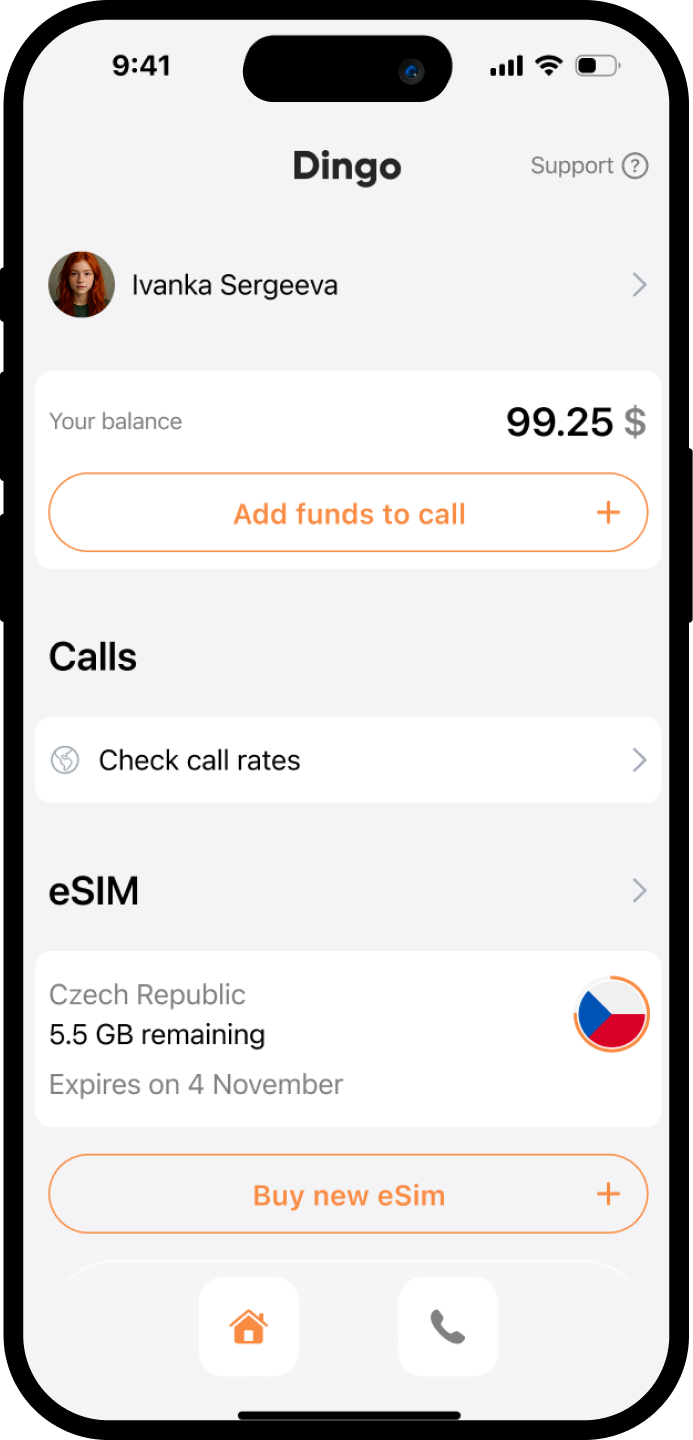
One of the most persistent myths about apps offering calls abroad is that the advertised rate is never the final rate. Dingo addresses this by publishing rates by country inside the application, so the cost of a call to a specific destination is visible before dialing. There is no contract to sign and no monthly commitment forcing usage of a fixed bundle.
Instead, the structure is pay-as-used, meaning funds are drawn only for the calls actually placed. This differs from traditional roaming, where charges can accumulate from background data use or incoming calls without any clear warning. For that reason, checking the call cost ahead of time is treated as a standard step rather than an advanced feature, which is part of what makes calling internationally without roaming fees feel predictable.
Device Compatibility Misunderstandings: Which Phones Support Dingo eSIM
Device compatibility is another area where assumptions run ahead of the facts. Not every phone on the market supports eSIM technology, so the question of which devices qualify is a legitimate one. Dingo‘s own FAQ addresses this directly, covering what counts as a suitable device and what happens if someone switches to a new phone.
A related worry is whether funds or an active plan transfer when a device changes. The FAQ speaks to this scenario specifically, since moving to a new phone is common among travelers and remote workers who rely on multiple devices. Confirming eSIM support before attempting activation avoids the frustration of a plan that cannot install on an incompatible handset.
The Data Expiration Misconception: What Happens to Unused Data After Your Plan Expires
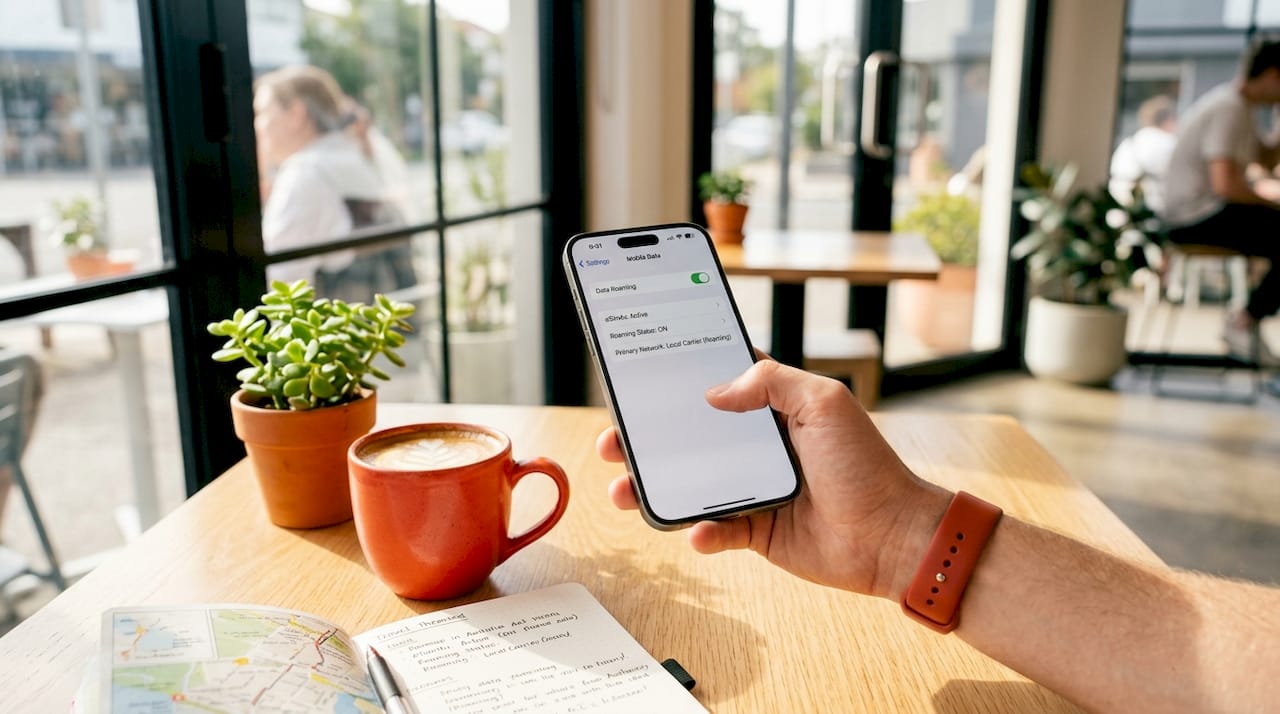
Many assume that leftover data simply carries forward indefinitely, the way some loyalty programs roll over unused credit. The FAQ addresses this question directly, under the heading asking what happens to unused data after the eSIM expires. The structure of country, regional, and international plans means that each plan has its own defined use window tied to the data purchased.
Because expectations vary so much between travelers, remote workers, and infrequent users, checking that FAQ before purchase removes ambiguity. It also prevents the frustration of assuming a plan behaves like a traditional mobile contract when it does not. Clarity on this point matters most for people who buy an eSIM for a short trip rather than ongoing use.
Common Account and Activation Mistakes: Topping Up, Device Transfers, and Refunds
Activation and account management generate their own set of misunderstandings. Some people expect a top-up to reflect instantly and panic when it does not appear right away, while others are unsure which top-up methods are even available. Dingo‘s FAQ outlines several of these processes directly, including what to do if a top-up fails to register and how to view a top-up history.
Refunds are another frequent point of confusion, since not every user realizes a formal refund process exists. The FAQ also explains account deletion and the reasoning behind requiring a country to be specified before calling begins. Understanding these account mechanics ahead of time avoids delays once calling or data usage is already underway.
- Many travelers assume an eSIM requires a physical SIM swap at every border, when a single eSIM can cover multiple countries under one plan.
- Some remote workers believe international call rates are unpredictable, even though per-country rates can be checked before a call is placed.
- A frequent assumption is that unused data rolls over automatically, though plan terms define what happens once a plan expires.
- Device compatibility is often overlooked until activation fails, which makes confirming eSIM support beforehand worthwhile.
- People sometimes assume that changing phones means losing an existing balance, without checking whether funds transfer to a new device.
- Refund processes are often assumed not to exist at all, even when a clear refund procedure is documented.

International Coverage Myths: Reality of 190+ Countries Without Physical SIM
Coverage claims invite skepticism, particularly the idea that a single eSIM can realistically work across more than 190 countries. The eSIM product is built around country, regional, and international plan options, rather than a single blanket plan covering everywhere at once. That structure means coverage depends on which plan is purchased, not on a universal connection that works identically everywhere.
Instant activation and high-speed local networks are part of what the eSIM product advertises, but confirming destination coverage before travel remains a reasonable step. Dingo‘s FAQ specifically addresses how to check whether a destination is covered, which suggests coverage is plan-dependent rather than automatic. For anyone relying on international calling without roaming charges while moving between several countries, matching the plan type to the itinerary matters more than assuming blanket coverage.
Misunderstandings about coverage, device support, and data timing all stem from the same root cause, namely assuming an eSIM behaves like a traditional SIM card. Understanding the differences is what matters most.
