
Share This Article
Kitchen hygiene conversations tend to circle back to one object used daily: the cutting board. Titanium cutting boards have entered that conversation as a response to long-standing complaints about plastic grooves and wooden stains. This piece looks at why the material matters, and where Vanotiumshop‘s version fits among the choices available to home cooks and professional kitchens alike.
The Bacteria Problem: Why Plastic and Wood Cutting Boards Fall Short
Plastic boards develop knife grooves after repeated use, and those grooves become hiding spots for bacteria that ordinary washing cannot reach. Wooden boards bring a different issue because they absorb liquid. Meat juices, marinades, and moisture soak into the fibers, creating conditions where microbes can linger long after a board looks clean.
Both materials share a common weakness: porosity. Once a surface has tiny openings, no amount of scrubbing fully restores it to a sterile state. That is the starting point for understanding why titanium cutting boards get discussed as an alternative rather than just another material option.
How Titanium’s Non-Porous Surface Works for Food Safety
A non-porous surface simply does not have the microscopic gaps that trap residue. Liquids sit on top rather than sinking in, which means they can be wiped away instead of settling into the material. This is the core mechanical difference between titanium and both plastic and wood.
Because nothing soaks in, there is less opportunity for bacteria or mold to establish themselves between uses. Vanotiumshop describes its board’s surface as blocking bacteria, mold, and even parasites, which directly addresses the cross-contamination risk that plastic and wood both carry.
The Vanotium 100% Pure Titanium Cutting Board: Advanced Design and Hygiene Features
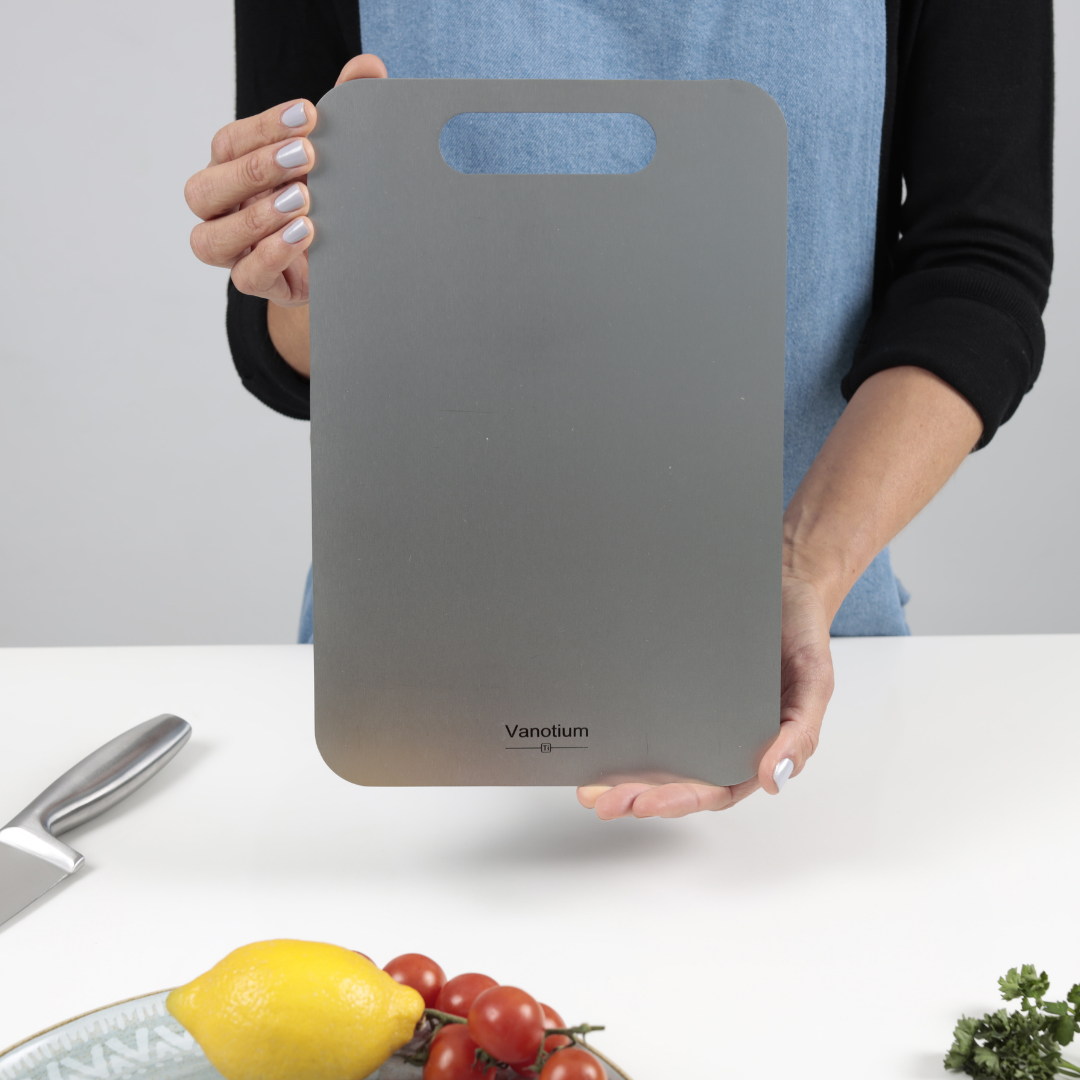
The Vanotium 100% Pure Titanium Cutting Board is built from premium-grade titanium with a medical-grade surface finish. Vanotiumshop markets it as a one-time purchase rather than a replace-every-few-months item, framing it as a long-term kitchen fixture instead of a disposable tool.
The product listing describes the board as fully dishwasher safe, non-porous, and fast-drying, which reduces the risk of warping or hidden buildup that can affect other board materials over time. It is positioned for raw meat, seafood, fruits, and vegetables without the surface absorbing juices or odors from any of them.
Knife Maintenance and Durability: Titanium vs. Other Board Materials
Board material affects blade edges, and this is one area where plastic, wood, and glass behave differently. Plastic can dull blades gradually through repeated micro-abrasion, while glass is known for chipping and dulling knives quickly because of its hardness. Wood sits somewhere between the two, generally gentler than glass but still subject to wear over years of cutting.
Vanotiumshop states that its board is knife-friendly and, with proper maintenance, keeps blades sharper for longer compared with plastic, glass, or wood alternatives. That claim is specific to the Vanotium board rather than a general statement about every titanium product on the market, so it is worth treating as a brand-specific feature rather than a universal rule for titanium cutting boards.
Practical Benefits Beyond Bacteria: Stain Resistance, Odor Control, and Easy Cleaning
Garlic, fish, and meat are three of the most common culprits behind lingering kitchen odors, and wooden boards in particular tend to hold onto them. Vanotiumshop states that these juices wash away instantly from its titanium surface, with the board returning to its original appearance after cleaning rather than gradually staining over repeated use.
Scratch resistance is another practical point raised on the brand’s product page, which positions the board as suitable for handling raw ingredients without surface damage. Combined with its non-porous structure, that resistance to scratching is part of why the board is marketed as not absorbing odors over time.
- Titanium cutting boards resist the knife grooves that let bacteria accumulate inside plastic boards.
- Unlike wood, a non-porous titanium surface does not absorb meat juices or marinades.
- Titanium is positioned as gentler on knife edges than glass, which is known for chipping and dulling blades.
- Dishwasher-safe titanium avoids the warping risk that can affect wooden boards exposed to repeated moisture.
- A non-absorbent titanium surface resists the stubborn odors that garlic, fish, and onion can leave behind on wood or plastic.
Why Home Cooks and Professional Kitchens Choose Titanium
Vanotiumshop reports a 4.9/5 customer rating from over 1,200 customers, figures the brand attributes to feedback gathered on its own site. The company also describes the board as trusted in professional kitchens as well as everyday households, suggesting the appeal spans both casual cooking and higher-volume food preparation settings.
For buyers weighing the decision, Vanotiumshop backs the purchase with a 30-day money-back guarantee, allowing a board to be returned for a full refund if it does not meet expectations. That policy, combined with the hygiene and maintenance points raised throughout the FAQ on the brand’s site, outlines the case the company makes for choosing titanium over plastic, wood, or glass.
Closing Thought

Material choice in the kitchen is rarely just about appearance, and the case for titanium cutting boards rests on that practical distinction.
