
Share This Article
Choosing between a Smart Cable and a NEAT Cable often comes down to a simple question: is the priority power visibility at a desk, or compact organization on the move? The Smart Cable vs NEAT Cable comparison matters most for anyone already familiar with Function101‘s charging lineup and trying to decide which design actually fits a daily routine. Both cables share a USB-C to USB-C format, but the engineering behind each one points toward a different kind of user.
Smart Cable: Live Wattage Monitoring and High-Power Delivery
The Smart Cable from Function101 builds a digital display directly into the connector, showing live wattage the moment it is plugged in. There is no companion app and no guesswork involved. A user sees exactly how much power is flowing into a laptop, phone, or tablet in real time. This makes it straightforward to confirm whether a MacBook is charging at full speed or simply trickling along on a weaker outlet or power bank.
That kind of visibility matters most in settings where the cable stays connected for long stretches, like a desk or a nightstand. Instead of assuming a charger is working, the display removes ambiguity on the spot. For anyone who regularly swaps between chargers of different capacities, this feedback loop becomes a quick, repeatable check rather than a one-time curiosity.
NEAT Cable: Magnetic Organization and Flat-Pack Design
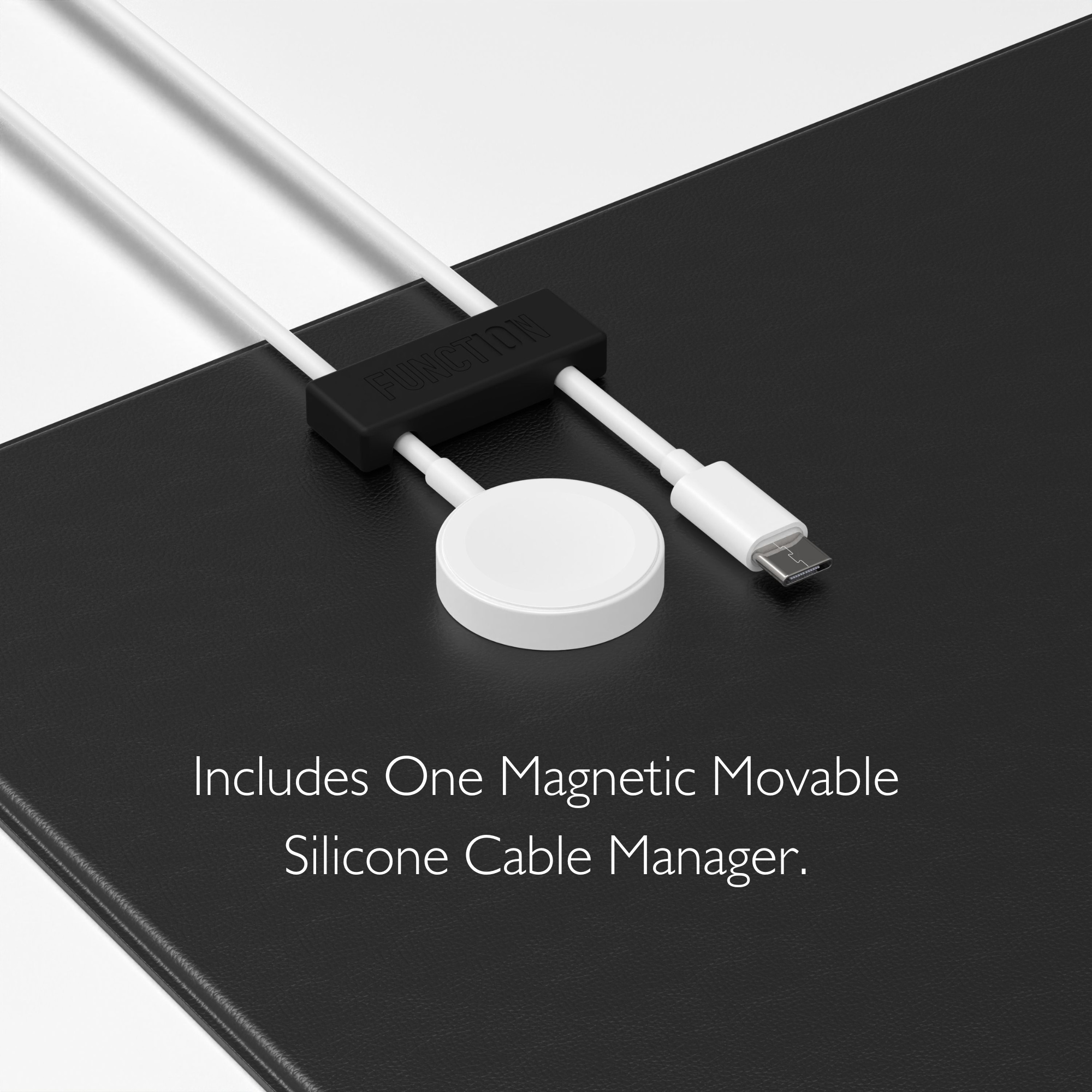
The NEAT Cable takes a different approach entirely. It uses embedded magnets along a flat cable body, which let it coil up on its own and stay coiled until needed. There is no wattage readout here, no digital feedback. The entire design is built around solving a different problem: tangled cables shoved into a bag or a drawer.
Because it packs flat, the NEAT Cable sits neatly in a pocket, pouch, or travel case without doubling back on itself the way a standard round cable tends to. Function101 markets it specifically for travel, business trips, and daily commuting, where a cable gets pulled out and put away repeatedly throughout the day. The magnetic coiling is less about performance monitoring and more about keeping a bag or desk drawer free of knots, which is really the core of the Smart Cable vs NEAT Cable split.
60W vs 100W Smart Cable: Power Capacity and Device Compatibility

Function101 offers the Smart Cable in two power capacities, 60W and 100W, both using USB-C to USB-C connectors with the same live digital display. The 60W version runs at a length of 1.5m and is color-matched to Apple devices, making it a natural fit for phones, tablets, and lighter charging needs. The 100W version is built for higher-demand devices such as MacBook Pro models and pro displays, where more power needs to move through the cable without a bottleneck.
Picking between the two generally comes down to what is being charged rather than personal preference. A phone or a pair of AirPods does not need 100W of delivery, so the 60W option covers that ground efficiently. A MacBook Pro or an external display driven over USB-C, on the other hand, benefits from the higher ceiling the 100W cable provides.
Cable Materials and Durability Across the Range
Across the charging lineup, Function101 focuses on functional design details rather than generic claims about toughness. The NEAT Cable’s flat profile and embedded magnets are built specifically to resist tangling during repeated packing and unpacking. The Smart Cable’s defining feature is its connector-mounted display, engineered to show accurate wattage without needing a separate app to interpret it.
Both cable lines fall under Function101‘s standard 30-day return window and 2-year warranty, along with USA-based phone and email support. That coverage applies across the brand’s charging cables, not just one specific model, giving buyers the same support terms whether the Smart Cable or the NEAT Cable is the one in use.
When to Choose Smart Cable for Workspace Setup
A fixed workspace is where the Smart Cable’s design logic makes the most sense. Sitting at a desk for extended periods, a person can glance at the connector and confirm a laptop is drawing full power instead of quietly undercharging. That single piece of feedback eliminates a common source of uncertainty for anyone running a MacBook Pro through a dock, hub, or multi-port charger.
The 100W Smart Cable in particular suits setups involving larger laptops and external displays, where power delivery needs to stay consistent. For lighter desk tasks like charging a phone next to a keyboard, the 60W version covers the same need without unnecessary capacity. In both cases, the display turns an otherwise invisible process into something visible and checkable, which is exactly where the Smart Cable vs NEAT Cable question tends to resolve itself for desk-bound use.
When to Choose NEAT Cable for Travel and Portability
Frequent travel changes the calculus. A cable that needs to be coiled, packed, pulled back out, and recoiled multiple times a day benefits far more from magnetic self-organization than from a wattage display. The NEAT Cable’s flat, coiling design is built around exactly that repeated packing cycle, whether for a business trip, a daily commute, or general on-the-go charging.
Function101 also offers a BentoPack and NEAT Cable bundle, pairing the cable with a case designed to store and protect everyday tech essentials. That pairing reflects the same travel-first logic behind the cable itself: fewer tangles, a smaller footprint, and quicker access when time is short.
- A home office with a single dedicated laptop station benefits more from the Smart Cable’s live wattage display than from magnetic coiling.
- Someone who travels weekly for work and repacks a bag daily tends to get more practical value from the NEAT Cable’s flat, tangle-resistant design.
- Charging a MacBook Pro or an external display calls for the 100W Smart Cable rather than the 60W version built for lighter devices.
- A nightstand charging routine, where the cable stays plugged in overnight, suits either cable depending on whether wattage feedback or tidy storage matters more.
- A commuter who moves a cable between a bag, a desk, and a charging dock throughout the day benefits from the NEAT Cable’s quick coil-and-go handling.
In the end, the Smart Cable vs NEAT Cable decision is less about one being better and more about matching a cable to a routine.
