
Share This Article
Sports bra fit mistakes happen more often than most shoppers realize, and the cause rarely sits with the garment itself. A loosely sized band, an unadjusted strap, or a false assumption about sizing can turn a well-made bra into a frustrating one. LSKD builds several sports bra styles with specific construction choices, and looking at where common fit assumptions go wrong across the category is a useful place to start.
The Waistband Misconception: Why LSKD’s Wide Hemband Design Works Differently
A wide band under the bust is often dismissed as decorative, something added for coverage rather than function. In most sports bras, a band that sits too high or too loose changes how weight is carried across the chest during movement. That single assumption is behind a large share of sports bra fit mistakes shoppers make without realizing it.
In several LSKD styles, including the Momentum Sports Bra and the Empowered Sports Bra, the hemband is described as wide and supportive, built specifically to anchor the garment during training. A band sized loosely or treated as a cosmetic extra works against that stated purpose, which is why construction details matter as much as the size label itself.
Removable Padding Myths: What You’re Getting Wrong About LSKD Sports Bra Construction
Removable padding is often treated as a throwaway detail, something to pull out once and forget. In reality, padding placement interacts with neckline, coverage, and support level, so removing it changes how a bra performs rather than simply how it looks. Assuming padded and unpadded versions of the same bra behave identically is one of the more persistent sizing myths in activewear.
The Stamina Sports Bra lists removable padding as a deliberate feature alongside a bonded hemband and cross-over straps. Its deep V neckline offers less coverage, which pairs the padding and support profile with a specific kind of session rather than a universal one.
Strap Adjustment Errors: How Adjustable Straps on Models Like the Momentum Sports Bra Are Meant to Fit
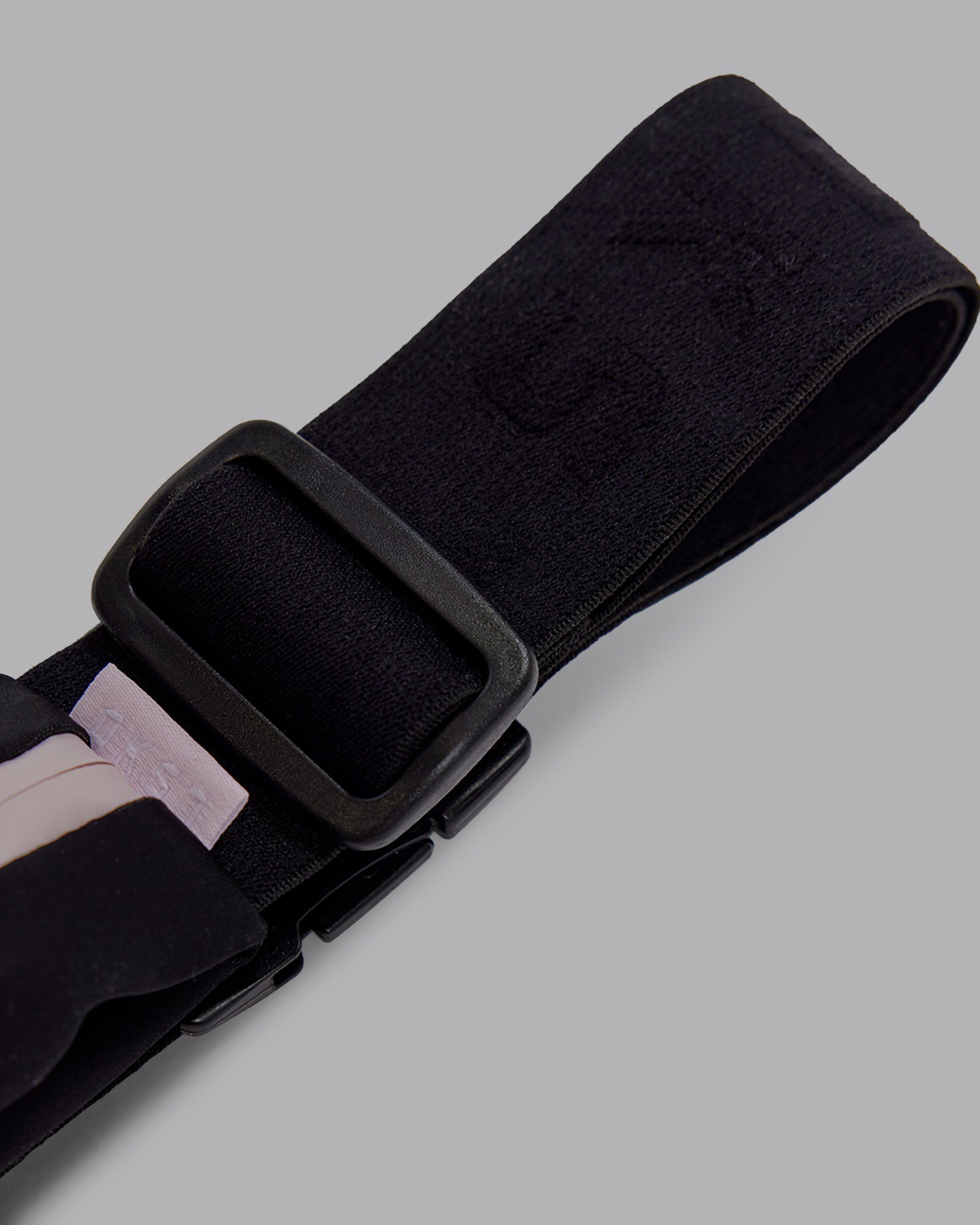
Adjustable straps are frequently left at whatever length a bra arrives in from the box. That habit ignores the fact that strap tension shares the support load with the band and any internal mesh, so leaving straps loose can shift pressure unevenly across the shoulders. This is a quiet but common contributor to sports bra fit mistakes that only show up mid-workout.
The Momentum Sports Bra, listed in D/DD/E, includes adjustable back straps along with internal power mesh for added support. The Movember x LSKD Accelerate Sports Bra takes a related approach, combining a wide elasticated underband with a hook-and-eye closure for a customisable fit, plus cross back straps with sliders to adjust strap length.
The Fabric Myth: Why Recycled Polyester and Spandex Blend Doesn’t Mean What Most People Think

Two garments can share the exact same fabric percentage and still feel completely different against the body. Fiber ratio describes raw material, not how a fabric is knitted, lined, or paired with mesh panels. Treating a percentage as a full performance spec is one of the more overlooked sizing myths buyers carry from one brand to another.
Several bras from LSKD, including the Stamina and Accelerate styles, list a blend of 74% Recycled Polyester and 26% Spandex. The Momentum Sports Bra uses a related 74% Recycled Polyester and 26% Elastane blend, paired with a breathable, lightly-lined moulded fabric described as suited to encapsulating larger busts. The shared percentage does not describe the finished garment on its own.
Support Levels Across Rep, Zephyr, and Glide Fabrics: Debunking the One-Size-Fits-All Narrative
Support level is not a fixed property of a single fabric name. Two garments made from the same base material can land at different support levels depending on panel placement, seam structure, and how tightly the fabric is knitted. Expecting one fabric to always mean one support outcome is a frequent source of fit disappointment across the category.
The bras guide published by LSKD lists multiple fabric and support combinations rather than one standard. The Aspire style is made with Zephyr fabric at light support, while the Agile style uses Rep fabric also at light support. Galvanise and Accelerate both use Rep fabric but sit at medium support, and Stamina uses Rep fabric at light support with a different neckline and strap design.
- Assuming a wide hemband is purely cosmetic ignores its role in anchoring a bra during movement.
- Believing removable padding has no connection to support level overlooks how padding and coverage are paired in specific designs.
- Leaving adjustable straps at factory length wastes a feature built into the design.
- Treating identical fabric blend percentages as a guarantee of identical performance ignores differences in lining, mesh, and panel construction.
- Expecting every bra made from the same base fabric to offer the same support level contradicts how support classifications actually work.
- Assuming a single size will fit the same way across different styles ignores each design’s own construction choices.
Size Guide Mistakes: Why LSKD’s Intentional Fit Differences Aren’t a Problem
A size label is not a fixed guarantee across every style in a range. Neckline depth, strap style, and band construction all shift how the same letter or number feels once it is worn. Relying on size labels alone, without reading the construction details behind each style, is one of the clearest sports bra fit mistakes behind mismatched expectations and returns.
The Momentum Sports Bra is listed with D/DD/E sizing, a different labeling approach than the general sizing used for styles like Unleash or Stamina. That difference reflects construction choices, from moulded lining to internal mesh, built around a distinct fit outcome rather than a uniform one.
Fit problems rarely trace back to a flawed garment. More often, they trace back to a detail the design was built around all along.
