
Share This Article
Choosing between electric and wood-burning heat is one of the first practical decisions anyone faces when comparing outdoor sauna heating options for a garden or terrace build. Across its range of outdoor saunas, RecoSauna configures nearly every model with either heating method, which means the decision often comes down to layout, local rules on chimneys, and how a space gets used week to week. The sections below look at how that choice plays out across the Lumi, Square, Havu Eco, and Mini Square lines, each of which pairs natural timber construction with a compatible heat source.
Understanding Electric Heating in RecoSauna Saunas
Electric heating is built around a heater unit that reaches working temperature without any venting through a roof. An electric heater is convenient and easy to control, and in some configurations it can be switched on remotely through a compatible controller. That remote-start feature matters for anyone fitting a sauna into a busy household routine rather than a dedicated weekend ritual.
Because no chimney is required, electric models tend to suit smaller gardens, terraces close to boundary walls, or installations where roof penetrations are impractical. A product finder on the site asks about space, sauna style, and planned use before narrowing down suitable models, which reflects how much the heating choice depends on the plot itself rather than personal taste alone.
The Traditional Wood-Burning Sauna Experience with RecoSauna
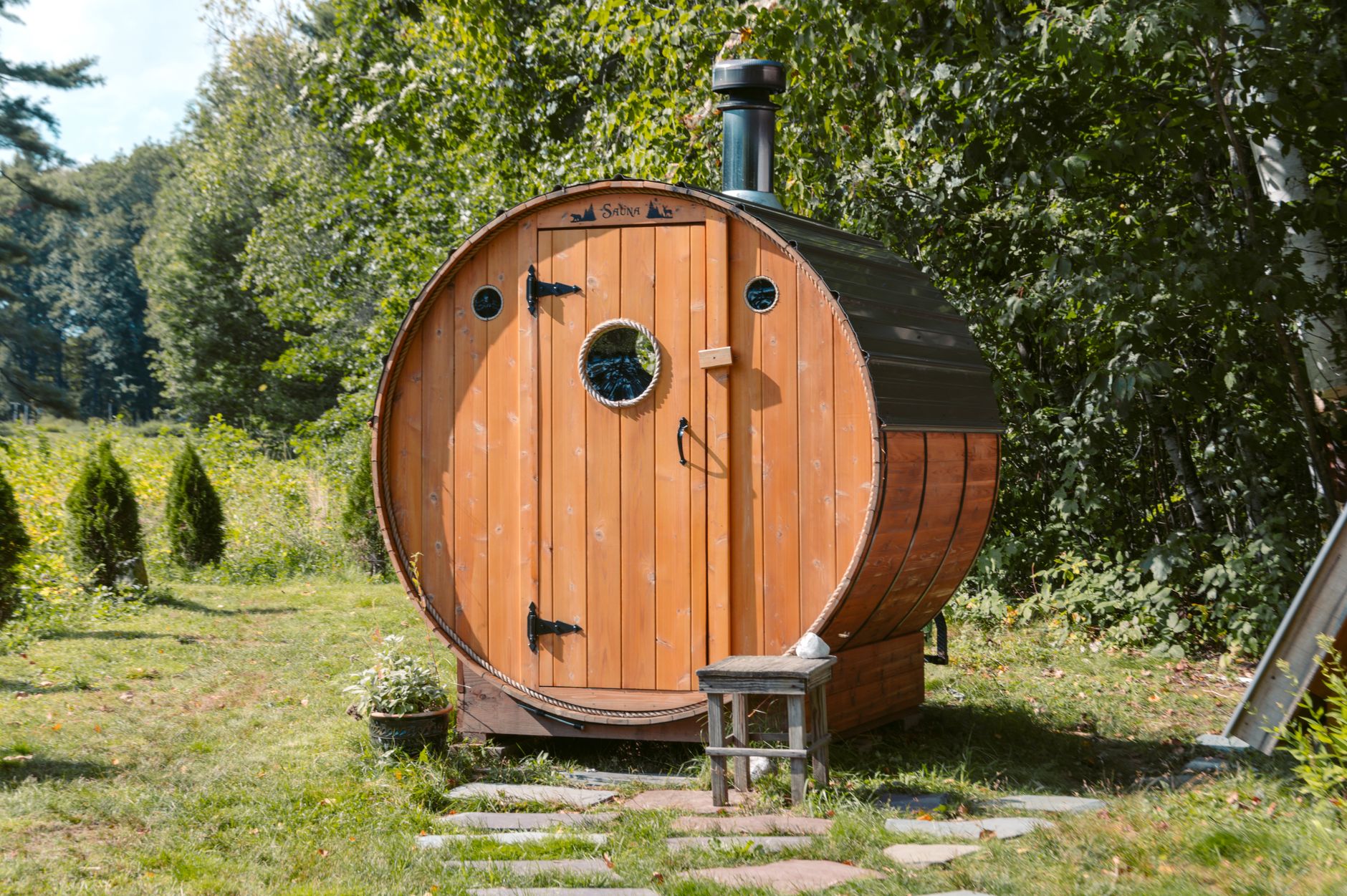
Wood-burning heat is the other configuration offered across most of the range, including Lumi, Sisu, Comfort, Havu Eco, and Mini Square, and it needs a chimney passing through the roof structure. That requirement immediately changes what a build plan has to account for before installation begins. The brand’s own FAQ describes the result plainly as the traditional crackle and soft heat of a classic Finnish sauna.
That description points to a genuine difference in how the two systems are experienced, not just how they are installed. A chimney also means an exterior roofline needs to accommodate the flue, so wood-burning suits detached garden placements more easily than a sauna tucked against a house wall. Anyone weighing outdoor sauna heating options against an existing garden layout will usually hit this chimney question early in the process.
Lumi Luxury Modern Sauna: Premium Glazing and Heating Integration
The Lumi collection spans twelve models, ranging from 2.3 × 2.3 m up to 2.3 × 5.9 m, with capacity for up to six people. Built with a heavily insulated structure, expansive glazing, and a warm alder interior, Lumi is available in Thermowood or pinewood and can be configured with either electric or wood-burning heat. Some versions also come with or without a covered terrace, which affects where a chimney outlet, if chosen, would sit relative to that covered area.
RecoSauna delivers Lumi models fully assembled in the EU and UK, while delivery to the USA is confirmed individually. That assembled delivery method means the heating configuration is locked in before the unit leaves production, so the electric-versus-wood decision has to happen at the ordering stage rather than after delivery.
Square Saunas (Sisu and Comfort): Compact Design with Flexible Heat Options
Sisu and the larger Comfort share the same Square architecture, built around a 46 mm solid-wood wall structure and tempered tinted glass across the front. Sizes run from 2.3 × 2.3 m to 3.0 × 2.3 m, with capacity for up to six people in Nordic pine or Thermowood. Both are offered with electric or wood-burning heating, and the square footprint keeps the heating hardware, whether a wall-mounted electric heater or a stove with flue, within a compact and predictable floor plan.
Delivery differs between the two within this family. Sisu arrives fully assembled in the EU and UK and as a flat-pack kit in the USA, while Comfort generally follows a similar pattern with certain delivery methods needing individual confirmation. For a smaller plot where a free-standing stove and chimney might crowd the layout, the electric configuration keeps the footprint simpler.
Havu Eco and Mini Square: Modular Construction and Heating Considerations
Havu Eco is described as a modular outdoor sauna with a flexible panel-based construction, sized from 2.4 × 2.4 m to 2.4 × 4.8 m across four models, with capacity up to four people in Thermowood or pinewood. It too is offered with electric or wood-burning heat, and RecoSauna ships it as a flat-pack kit in both the EU and the USA. That flat-pack format is worth noting because it means the chimney components, where wood-burning is selected, arrive as part of the same kit rather than a separate shipment.
Mini Square is positioned as a private sauna for two, with a compact 150 × 157.2 cm exterior footprint built around electric heating in the listed configuration. Its smaller scale makes it a fit for gardens and terraces where space is limited, and the shipping policy lists it as available fully assembled or as a flat-pack kit depending on destination. Anyone comparing outdoor sauna heating options purely on footprint will find Mini Square sits at the compact end of the range.
Installation, Maintenance, and Long-Term Differences Between Heating Systems

Beyond the model dimensions, the heating configuration itself carries separate equipment, control, and venting requirements that apply across the whole range. These differences shape what gets installed, what gets inspected, and what gets maintained after the sauna is in place.
- Electric configurations use a wall-mounted heater unit paired with a control panel, and some setups add a WiFi controller for remote operation.
- Wood-burning configurations use a free-standing stove that requires a chimney passing through the roof structure.
- Electric heater specifications and available wattage options are listed individually on each product page.
- Chimney and flue components are specified per model, since Lumi, Square, and Havu Eco each have different roof profiles to route them through.
- Whether a heater is included with a particular model varies, and the product page for each model states what is included.
Across both heating paths, the practical difference comes down to what sits behind the wall rather than what the sauna looks like from outside. The FAQ page points buyers toward each model’s own product page for the exact heater model, wattage, and chimney specification before ordering. That page-by-page detail matters more than a general comparison, since two saunas in the same collection can carry different heating hardware depending on size.
Outdoor sauna heating options ultimately split along a fairly simple line once chimney access and control preferences are weighed against each other. Electric heat removes roof penetration from the planning list, while wood-burning keeps the ritual closer to a traditional Finnish stove.
