
Share This Article
A shopper scrolling through a crowded feed of fast-fashion ads often lands on the same question: why does a plain cotton tee or a pair of straight-leg jeans cost so much more at a mall retailer than it seems like it should? everlane built its catalog around answering that question, selling direct-to-consumer essentials instead of routing goods through traditional wholesale markups. Its site frames the pitch plainly, describing beautiful essentials made at well-regarded factories and sold without the extra cost that usually comes from layers of retail distribution, a claim repeated across both its homepage and its product pages. That pitch shapes a catalog built on a handful of repeated silhouettes rather than constant seasonal churn.
What Everlane Is: Direct-to-Consumer Essentials for Modern Wardrobes
everlane sells apparel and shoes straight from its own site, bypassing traditional wholesale markups. This essentials approach shapes everything from how the brand talks about pricing to how it organizes product pages around categories like sweaters, tees, tops, denim, and shoes.
Rather than chasing seasonal trend cycles, everlane leans into a smaller set of core categories. Shoppers are guided toward sections such as Shop Sweaters, Shop Tees, Shop Denim, and Shop Shoes, alongside a running Best Sellers collection. This structure signals a retailer more interested in refining a few things than multiplying styles endlessly, a hallmark of the broader direct-to-consumer essentials category.
The Boxy Oxford and Box-Cut Tee: Everlane’s Foundational Staples
Two items anchor the brand’s reputation for wardrobe basics. The Boxy Oxford is made of organic cotton and features a classic point collar, dropped shoulders, a clean button front, and oversized patch pockets, all built around a relaxed boxy shape. The product description notes it can be styled with trousers and heels or with jeans and sneakers, offering two distinct looks from one garment.
The Box-Cut Tee in Essential Cotton carries even more weight in the lineup, with the brand noting it has sold over 1M units. It is made of 100% organic cotton, with a crew neck, a relaxed fit, a slightly cropped length, and easy short sleeves. Customer reviews reflect that popularity, with an average rating of 4.46 out of 5 across 1,880 reviews for the tee, citing its color, fit, and fabric feel.
The Utility Barrel Pant and Way-High Sailor Jean: Everlane’s Core Denim and Bottom Silhouettes
On the bottoms side, the Utility Barrel Pant stands out among customer favorites, with the brand’s own product copy quoting customers saying there is no real competition for it. It is made of medium-weight cotton twill with a touch of stretch, featuring a high rise, a curved leg, and a cropped length, along with utilitarian panel detailing. The silhouette aims for a tailored-but-easy shape rather than a strictly fitted cut.
Denim rounds out the bottoms category with styles like the Relaxed Rigid Denim in Dark Indigo and the W Heavyweight Low Rise Relaxed Boot Flare Jean in Black Base. These sit alongside a broader denim offering that spans relaxed, flare, and boot-cut shapes rather than a single fit. Together with the barrel pant, they show an attempt to cover the bottoms category with a short list of recurring shapes instead of a sprawling assortment.
Premium Materials Without Markup: Organic Cotton, Alpaca, and Recycled Fibers

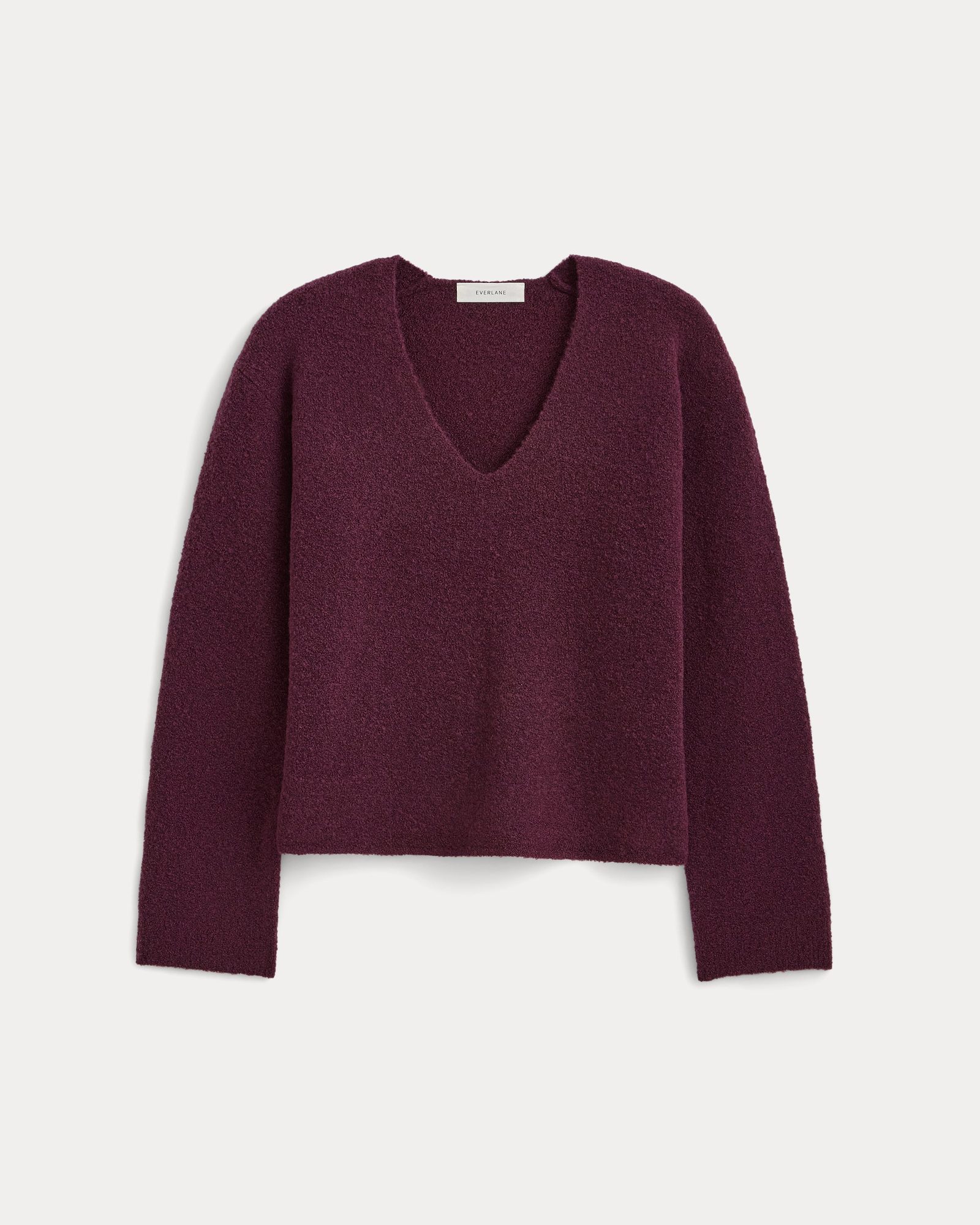
Material choice is where product description language gets specific. The Boxy Turtleneck in Everyday Cotton uses organic cotton in a cropped, ribbed, boxy shape, while the Crew Vest in Alpaca is built from that fiber specifically. The Bouclé Oversized Turtleneck Sweater and its deep V-neck counterpart are made from a blend of wool, recycled nylon, and elastane, chosen for a yarn described as airy but still warm.
Footwear draws on different materials again. The Glove Mule in ReKnit uses a breathable fabric described as made from renewed plastic, while the Day Crossover Sandal uses leather with a flexible footbed. This range of fibers, spanning organic cotton, alpaca, wool blends, recycled nylon, and renewed plastic, underlines how this approach to direct-to-consumer essentials depends on material variety even while silhouettes stay narrow.
Cult Favorites and Best Sellers: Why Everlane’s Products Resonate with Customers
everlane groups certain items under a banner it calls Cult Favorites, sitting alongside the Best Sellers collection on the site. The Box-Cut Tee anchors that group with its over 1M units sold and its 4.46-star average, a track record few basics in the category can claim. That repeat performance, rather than a new drop every season, is what the brand points to as proof its approach works.
Repetition across collections reinforces the pattern. The same handful of items, the Boxy Oxford, the Box-Cut Tee, the Utility Barrel Pant, and the Bouclé sweaters, reappear across New Arrivals, Best Sellers, and seasonal gift guides rather than being replaced by new names each cycle. That consistency is itself part of the pitch, since a shopper who likes a fit or fabric can return to the same product page instead of hunting for a close substitute.
- The Boxy Oxford and the Box-Cut Tee anchor the tops category with organic cotton construction and relaxed, boxy shapes.
- The Utility Barrel Pant leads the bottoms lineup with medium-weight cotton twill, a high rise, and a curved cropped leg.
- Denim styles such as the Relaxed Rigid Denim and the W Heavyweight Low Rise Relaxed Boot Flare Jean extend the bottoms range into flare and boot-cut shapes.
- Sweaters built from alpaca, organic cotton, and wool-nylon-elastane blends, including the Crew Vest in Alpaca and the Bouclé Oversized Turtleneck, round out layering pieces.
- Footwear styles like the Glove Mule in ReKnit and the Day Crossover Sandal apply the same materials-first approach to shoes.
Transparency and Sustainability: How Everlane Justifies Its Model
Beyond individual products, the catalog is framed around a transparency claim, stating that materials, factories, and certifications are verified, traceable, and third-party backed. That language ties directly to sustainability messaging, framing secrecy as incompatible with sustainable production. It also points shoppers toward physical locations, noting 11 stores where items can be examined in person.
That transparency claim functions as the justification for skipping traditional retail markups in the first place. Instead of competing purely on trend turnover, the brand leans on sourcing detail and repeat bestsellers to make its case. Whether that framing fully satisfies a skeptical shopper is a separate question, but it is the argument consistently made across the site, including through the offer at everlane.com.
A narrow set of well-made basics, documented down to fiber and factory, is the bet this direct-to-consumer essentials model keeps making.
