
Share This Article
Wilderness trips, overnight hikes, and backcountry camping all share one requirement: a light source strong enough to cut through real darkness. IMALENT flashlights outdoor use has built a reputation around high-lumen output and long beam throw, and the brand’s M-Series and D-Series lines cover a wide range of outdoor needs. The two ranges differ in size and intended carry style, but both are built around the same goal of serious brightness in the field.
What Makes IMALENT M-Series Flashlights Stand Out
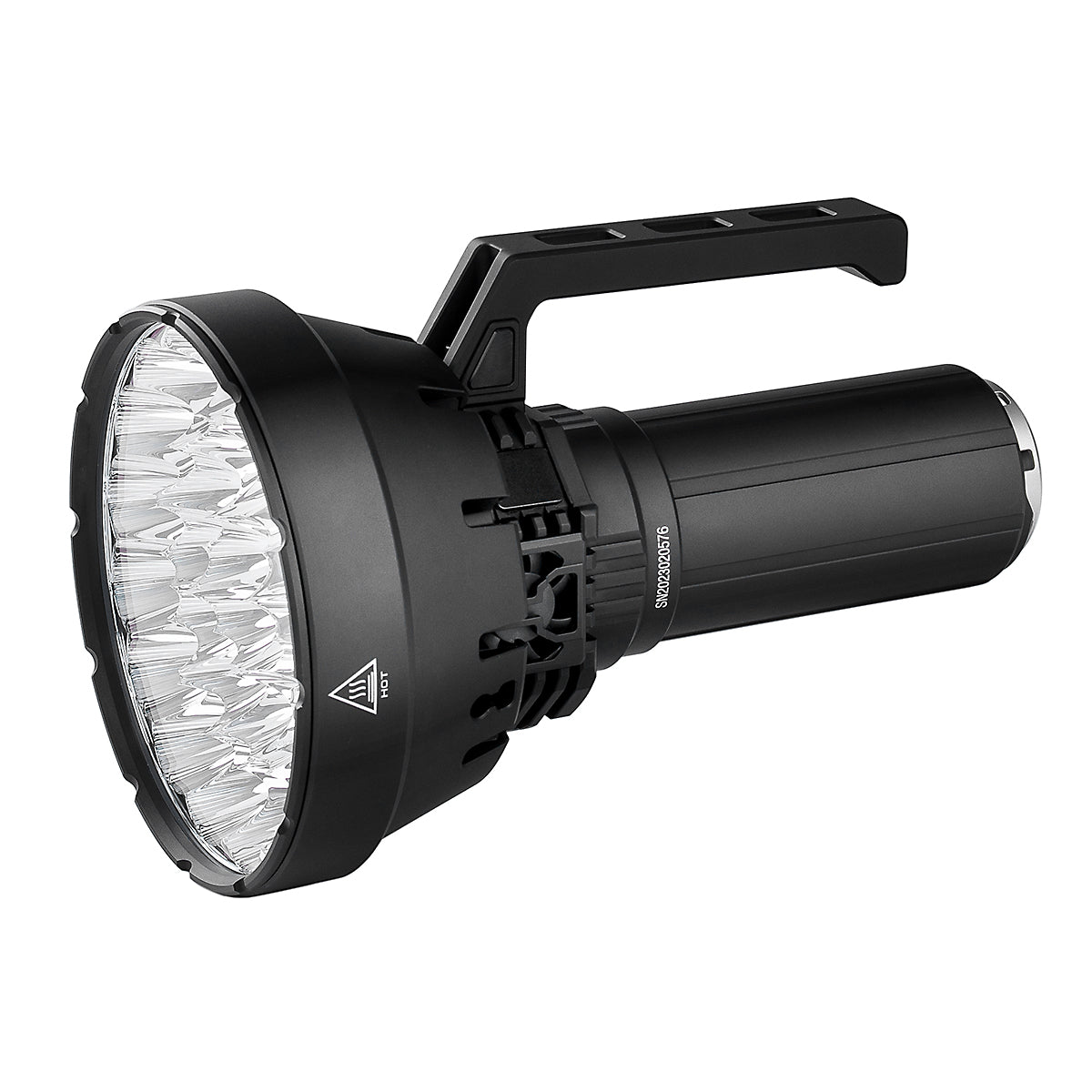
The M-Series line is where IMALENT pushes output to its furthest point. The IMALENT MS32 reaches up to 200,000 lumens, a figure the brand positions as the limit of what current flashlight technology can deliver. Other M-Series models take a more moderate approach while still outperforming typical handheld lights, such as the SR16, which uses 16 American CREE XHP50.3 HI LEDs to produce up to 55,000 lumens from a can-sized body.
Smaller M-Series options exist too, including the MS03, a palm-sized EDC flashlight powered by one high-drain 21700 Li-ion battery with built-in Type-C USB charging and a max output of 13,000 lumens across a beam distance of 324 meters. The GR35, a 4-in-1 EDC flashlight from the same series, produces a 2,800-lumen white beam and is described by IMALENT as suited to camping scenarios where sudden illumination matters.
D-Series Flashlights: Compact Power for Everyday Outdoor Carry
Where the M-Series leans toward maximum brightness, the D-Series focuses on compact, carry-friendly designs without giving up meaningful output. The IMALENT LD35 is an ultra-compact rechargeable EDC flashlight with wireless charging, delivering a maximum output of 1,200 lumens and a beam distance of 328 meters. It is described as built for ultralight outdoor adventures, a category of use that favors low weight over raw brightness.
The BL70, also part of the D-Series, takes a different balance. It produces 6,000 lumens, a notable jump over the LD35, while still being framed as a compact EDC option for everyday carry and emergency use. This spread within a single series shows that D-Series models are not uniform in output, and selecting one depends on how much brightness a given outdoor task actually calls for.
Brightness and Beam Distance: Comparing IMALENT’s Range

Lumen counts and beam distance are the two specifications that matter most when comparing flashlights meant for outdoor use. The catalog’s own figures show a wide spread, from pocket-sized lights in the low thousands of lumens to the MS32’s 200,000-lumen ceiling. Beam distance also varies considerably, with the SR32 reaching a max beam distance of 2,080 meters alongside its 120,000-lumen output.
- The IMALENT MS32 reaches up to 200,000 lumens, described by the brand as the current limit of flashlight performance.
- The IMALENT SR32 delivers 120,000 lumens with a max beam distance of 2,080 meters.
- The IMALENT SR16 produces up to 55,000 lumens using 16 CREE XHP50.3 HI LEDs in a can-sized body.
- The IMALENT MS03 emits a max of 13,000 lumens with a beam distance of 324 meters.
- The IMALENT RT35 delivers 2,350 lumens with a long-distance reach of 1,338 meters.
- The IMALENT LD35 offers 1,200 lumens and a beam distance of 328 meters in a compact rechargeable body.
Runtime and Battery Technology in IMALENT Models
Several models rely on rechargeable lithium-ion cells paired with onboard charging ports, reducing dependence on disposable batteries during extended trips. The LD35 takes this further with wireless charging support, which suits lighter outdoor setups where cable management is a hassle. That kind of built-in charging reflects a broader pattern across the lineup toward reducing reliance on spare cells in the field.
The RT35 model adds another layer of flexibility through five output levels and hidden strobe settings. According to the brand, this allows a choice between lower output for longer run times or higher output when stronger light is briefly needed. That kind of adjustable output is a practical feature for multi-day trips where battery conservation matters as much as peak brightness.
Durability and Weather Resistance for Field Use
Outdoor flashlights face conditions that indoor lights never encounter, including rain, dust, and accidental drops. IMALENT markets its flashlights as tools suited to search and rescue, industrial tasks, and self-driving travel, all settings that imply exposure to rough handling. The RT35, for instance, is described as providing alternate lighting for travel and nighttime outdoor activity, roles that depend on a housing built to survive field conditions.
Accessories in the catalog also point toward field-oriented use, including handles for powerful flashlights, magnetic mounts compatible with 30mm rifle scopes, and adjustable head belts for headlamp models like the HT50 and HT70. These additions suggest that attachment and handling needs extend beyond the flashlight body itself, which matters for anyone planning to mount or carry a light hands-free during a hike or climb.
Matching IMALENT Flashlight Models to Outdoor Conditions
Selecting between the M-Series and D-Series often comes down to the type of outdoor activity involved. A short overnight hike with minimal gear favors a lighter D-Series option such as the LD35, while longer expeditions or search-style tasks may call for the extreme brightness of an M-Series model like the SR32 or MS32. Comparing IMALENT flashlights outdoor specifications usually means weighing beam distance against size, since a longer throw tends to come from a larger body.
For a balance of portability and strength, the BL70 and MS03 sit in a middle ground, offering several thousand lumens without the bulk of the brand’s largest lights. Evaluating IMALENT flashlights outdoor options also means accounting for how a light is carried, whether in a pocket, on a belt, or mounted to gear. The spread across both series gives a basis for matching output and form factor to a specific kind of trip.
Across both series, brightness and beam distance remain the defining measures of this outdoor lighting lineup, giving a clear basis for comparison before heading into the field.
