
Share This Article
Reusable totes promised to replace plastic bags, yet most end up stuffed in a kitchen drawer or left behind in the car. Ultralight packable bags were designed to fix that exact habit gap by staying small enough to carry at all times. This piece looks at what sets the category apart, the fabric behind it, and where Nanobag (US) sits among the options available today.
What Are Ultralight Packable Bags and Why They Solve a Real Problem
Ultralight packable bags are reusable carriers built to fold down into a pouch far smaller than the bag itself. Unlike a standard canvas tote, they are meant to live in a pocket, a purse, or clipped to a keyring rather than stored at home. The core idea is simple: a bag only replaces single-use plastic if it is actually present at the moment of need. That is the practical problem this bag style was built to answer, and it is why the category has grown beyond a niche travel accessory. Most traditional reusable shopping bags fail on this front because their bulky construction means they do not fit comfortably into everyday carrying options, leading shoppers to forget them at home and reach for single-use plastic on an unplanned errand.
The Key Material Innovation: Diamond-Ripstop Nylon Explained
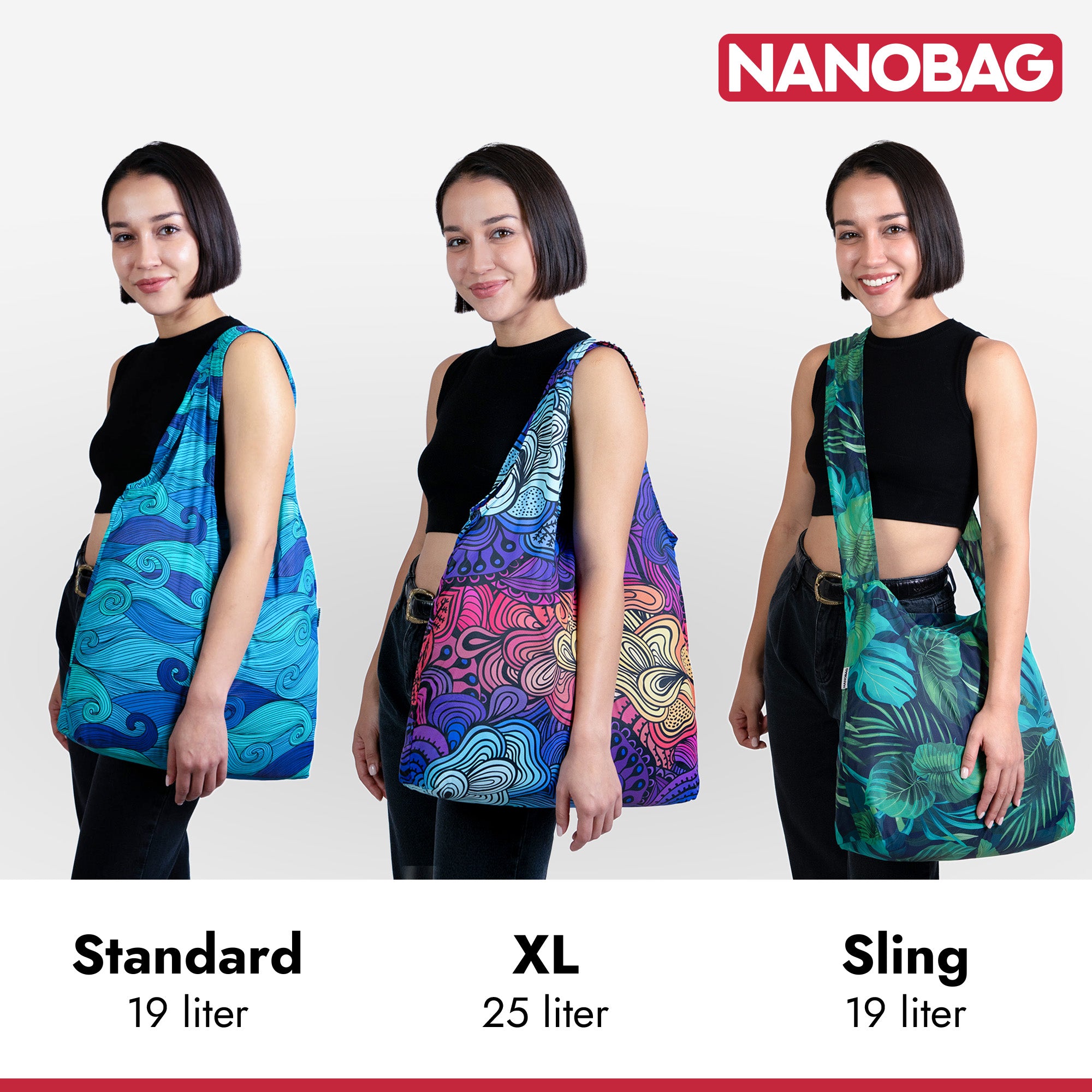
The material driving this shift is diamond-ripstop nylon, a soft, lightweight fabric woven in a grid pattern that resists tearing. Nanobag (US) uses this fabric across its range, describing it as soft enough to compress without trapping air pockets, which allows a tighter fold than a typical tote fabric. The weave is also PFC-free and water-resistant, according to the brand’s own product pages. That combination of softness and structure is central to how ultralight packable bags differ from older reusable designs made of thicker canvas or felt. The ripstop grid pattern itself provides strength without requiring bulk, which is why brands in this category have adopted it as a standard rather than opting for conventional materials.
Nanobag’s Product Range: Standard, XL, Sling, Daypack, and Micro Options

Nanobag’s lineup includes several distinct styles rather than a single bag in different colors. The Standard holds 19 liters and weighs only 25 g, making it suited for everyday grocery shopping or casual outings. The XL expands to 25 liters at roughly 30 g for those who need larger load capacity without sacrificing portability. The Micro trims capacity down to 12 liters for a smaller errand bag, and the Sling offers a 19-liter crossbody format with a tri-layered handle for hands-free carrying. Rounding out the range, the Daypack is a 16-liter zippered backpack designed for organized packing, and the Pack is a 14-liter drawstring backpack offering a simpler closure mechanism. This diverse lineup gives shoppers both tote and backpack formats for different carrying needs, from quick runs to longer trips.
How Nanobag Bags Compress and Carry Capacity Compared to Traditional Reusables
Every Nanobag (US) folds into a sewn-in pouch described by the brand as smaller than a golf ball, a compression level that traditional reusable totes rarely reach. Conventional reusable shopping bags are often sold loose, without any dedicated stuff sack, which is part of why they end up bulky and left behind. It’s packable design instead ties the pouch directly to the bag, so folding it down is part of normal use rather than an extra step. Despite that compact stored size, the range still spans 12 to 25 liters depending on the style chosen, which keeps it usable for anything from a quick grocery run to a larger haul. The contrast is striking when set against canvas totes that require separate storage and take up considerable space even when folded, often discouraging daily carry.
- Folds into a sewn-in pouch rather than requiring a separate storage sack.
- Uses a soft ripstop weave instead of stiffer canvas or cotton fabric.
- Comes in tote, sling, backpack, and drawstring formats rather than one fixed shape.
- Carries a rated weight capacity of up to 30 kg despite a fraction of the fabric thickness of a standard tote.
- Fits a pocket, keyring, or handbag instead of needing a dedicated storage spot at home.
The Durability Question: How 0.05mm Fabric Holds 30kg
A fair question about any ultralight fabric is whether thinness compromises strength. Nanobag (US) states its fabric measures 0.05mm, about half the thickness of a human hair, while still holding up to 30 kg per bag. The brand attributes part of that to construction details rather than the fabric alone, including double-stitched edges and bar-tack stitching at stress points such as handle joints. Those reinforcement details are specific claims from the brand’s own product pages, not a general property of every ultralight packable bag on the market. The construction approach ensures that even the smallest models in the Nanobag lineup, like the 12-liter Micro, maintain structural integrity under heavy loads.
Nanobag’s Sustainability Commitment and Brand Philosophy
Beyond the fabric and stitching, Nanobag (US) frames its mission around reducing single-use plastic bag consumption. The brand states that for every bag sold, a tree is planted, tying each purchase to a broader reforestation effort. Nanobag also notes it has been used by over 350,000 customers worldwide, a figure the brand presents as a measure of adoption rather than a performance claim. The company also offers a 30-day free returns policy, which reflects confidence in the product’s design and durability. That stated customer base, combined with a tree-planting pledge and flexible return terms, forms the philosophy the company builds its product messaging around.
Ultralight packable bags are likely to keep expanding as more shoppers look for a reusable option that actually gets used daily instead of sitting unused at home.
