
Share This Article
January carries a familiar pattern: resolutions form fast, then fade before anything gets built. For anyone sketching a product idea during that window, a no-code app builder offers a way to close the gap between intention and a working app before motivation cools. bubble positions itself for exactly that compressed timeline, pairing AI-assisted generation with a visual editor so a concept can move toward a live product within weeks rather than months.
From New Year Idea to Live App: Bubble’s AI Agent and Visual Editor
bubble lets a builder start from a chat with its AI Agent, describing an idea in plain language and getting back an editable app rather than a rigid template. Every component the Agent produces, including the backend, stays visual, so nothing is locked behind code. That matters for a January timeline because early momentum often gets lost to setup tasks rather than actual product decisions.
Switching to the fully visual editor hands over precise control once the rough shape exists. Reordering workflows, adjusting the database, and tweaking design elements all happen on the same canvas. This back-and-forth between generation and hands-on editing is presented as a way to build the app that was actually imagined, not an approximation of it.
Building Web and Mobile Apps That Share Data and Workflows
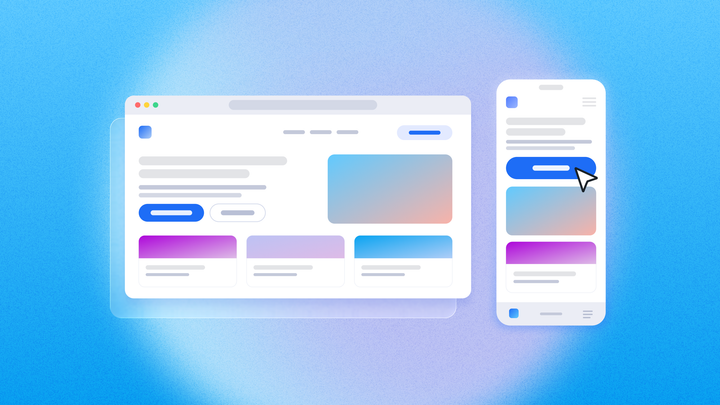
A common bottleneck for new projects is maintaining separate codebases for web and mobile. bubble addresses this by allowing native mobile apps for iOS and Android to share data and workflows with the web version of the same app. As a result, a single build effort can extend across platforms instead of starting a second project from scratch.
For a project launched in January, mobile availability often becomes a second-phase goal that never gets reached. Having the option built into the same no-code app builder removes a structural reason for that delay, since the groundwork already exists on the web app side.
Hosting, Security, and Infrastructure: Bubble’s Built-In Scaling Features
Once an app is live, the underlying infrastructure question usually surfaces fast. Hosting, security, and infrastructure come included as part of the platform itself, so growth does not require migrating to a separate server setup. The service states it is built on a SOC 2 Type II compliant foundation, and it includes built-in privacy rules intended to protect user data.
Vulnerability checks are also part of the workflow, allowing issues to be identified before an app goes public. For a builder moving quickly in January, not having to evaluate a separate hosting provider removes one more decision from the launch checklist.
Monetization and App Store Submission for a January Launch

Turning a new build into something resembling a business is where many resolution projects stall. Direct submission to the App Store and Google Play Store removes a step that often requires external tooling. In-app purchases are also available as a monetization option for apps built on the platform.
Taken together, these pieces mean an app conceived as an idea can be listed in major app marketplaces without switching to an entirely different toolchain. That continuity, from a no-code app builder to a live store listing, is a notable part of what the platform positions as its growth path.
Third-Party Tool Integration for Extending App Capabilities
Few apps function in isolation, and the integration options reflect that. Connections reach a wide range of external tools, including large language models and payment providers. The AI Agent can also be asked to set up these connections directly, reducing manual configuration.
A further option, still in beta, is the bubble MCP, which allows an external agent such as Claude or Codex to be hooked into the build process. For a January launch aiming to add functionality quickly, pulling in outside services rather than building every feature internally can shorten the remaining timeline considerably.
- The AI Agent can generate an initial app from a plain-language description, including backend logic.
- Native mobile apps for iOS and Android can share data and workflows with an existing web app.
- Database design and privacy rules are built into the same visual environment as the rest of the app.
- Direct submission to the App Store and Google Play Store is supported without separate tooling.
- In-app purchases are available as a monetization feature for apps built on the platform.
Joining Bubble’s Community of 6 Million Builders for Support and Inspiration
bubble reports a community of 6 million builders, spread across more than 220 countries and territories. It states that more than 8 million web and mobile apps have been built on it, with annual transactions exceeding $1B+ moving through those apps. Examples publicly cited include marketplace platforms, internal tools, SaaS products, and subscription services.
That scale suggests a sizable body of shared experience for anyone starting a new build, from first-time founders to larger organizations the platform says it works with. A no-code app builder with an active user base often means more examples, templates, and problem-solving patterns already in circulation. For a project started in January, that existing community can be a practical resource even without direct mention of specific support channels.
Looking Past the First Launch
A January deadline is really just a starting point, not an end state. What carries a project forward is the ability to keep adjusting an app without rebuilding it from the ground up.
