
Share This Article
Espresso away from a kitchen counter used to mean instant coffee or a long wait for the nearest café. A newer category of compact machines has changed that equation, letting coffee drinkers pull a real shot from a backpack, a car trunk, or a campsite table. This article looks at how that category works and where OutIn, a Denver, Colorado-based brand, fits among the options.
What Are Portable Espresso Machines and Why They Matter for Travel
Portable espresso machines are small, self-contained brewers designed to produce espresso-style coffee without a countertop unit or a wall outlet. They typically rely on manual pressure, a battery-driven pump, or both, and they are built to travel in a bag rather than sit permanently in a kitchen. For people who move between offices, cars, and outdoor settings, this matters because it removes the dependency on finding a café or carrying pre-made coffee that has gone cold.
The appeal is not only convenience. Portable espresso machines also let users keep control over grind, dose, and water temperature in settings where that control is normally lost, such as a hotel room or a trailhead. That flexibility is part of why the category has grown beyond a niche for coffee enthusiasts and into something closer to everyday travel gear.
How Portable Espresso Machines Brew: Battery Power and Heating Systems
Brewing espresso means forcing hot water through finely ground coffee at pressure, and portable versions have to recreate that process without a standard power supply. Many rely on rechargeable battery packs to run a small pump and heating element, while others use manual hand pumps that need no electricity at all. The tradeoff is usually between convenience and simplicity, since battery-powered units add weight and a charging requirement but remove the physical effort of manual pumping.
Heating is the other half of the equation. A machine has to bring water up to a temperature suitable for extraction, hold it there long enough to pull a shot, and then be ready to repeat the process for a second or third cup. How quickly a unit can do this, and how many brews it can manage before needing a recharge, are the practical specifications that separate one portable espresso machine from another.
The OutIn Nano 2: Battery Endurance and Fast Charging for All-Day Brewing
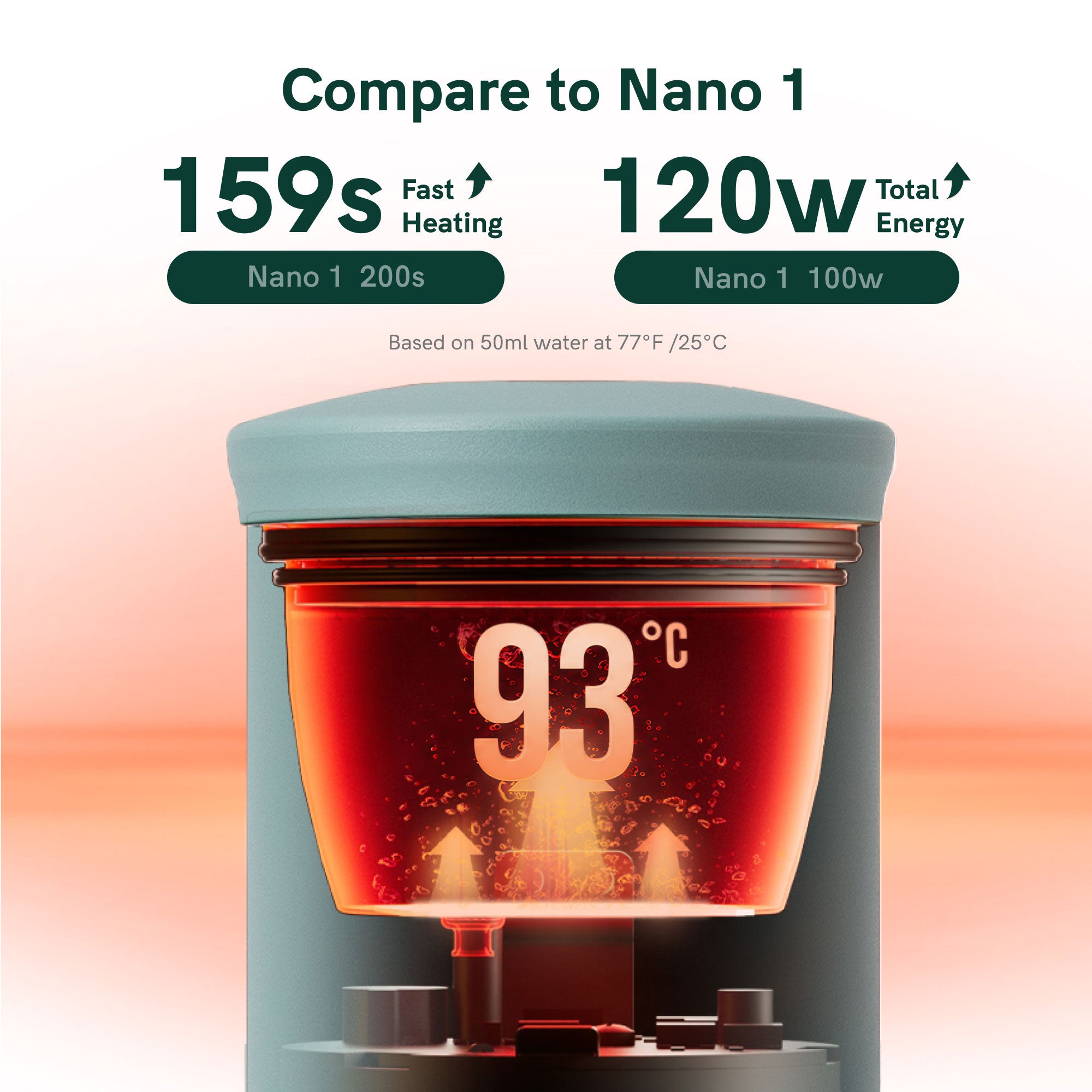
The OutIn Nano 2 is built around a 5,000mAh 3S battery system, which the brand states delivers twice the endurance of the previous generation. According to It’s own figures, that battery can heat 50 ml of water from 25°C to 93°C per brew and brew up to nine cups on a single charge. For anyone planning a full day away from an outlet, that cup count is the figure that matters most when comparing portable espresso machines against one another.
Charging speed is the second half of the Nano 2 story. It uses 45W USB-C PD fast charging, which shortens the time spent plugged in between uses rather than leaving the machine out of action for hours. OutIn currently lists an exclusive launch offer tied to the Nano 2, positioning it as the newest entry in the lineup.
The OutIn Mino and Mino Traveler: Compact Design and Filter Flexibility

Where the Nano 2 leans on battery performance, the OutIn Mino and Mino Traveler focus on compact sizing and flexible brewing formats. The Mino Traveler Gift Set is described on the brand’s site as fully equipped for light travel, built around a 67mm compact design intended to pair with a smaller footprint than a standard home machine. OutIn also sells a Mino Adapter Kit 4-in-1, which bundles a ground coffee filter basket, a capsule adapter, a dosing funnel, and a foldable spoon into one set designed specifically for the Mino.
For anyone who wants to prep multiple shots ahead of time, the Mino Filter Basket Kit 3-in-1 adds three independent filter baskets, so a finished cup can be followed by a fresh basket without stopping to empty and rinse between brews. Together, these accessories show that the Mino line is less about a single fixed format and more about letting ground coffee, capsules, or pre-dosed baskets all work with the same base unit.
Essential OutIn Accessories: From the LattoGo Frother to Protective Carrying Cases
Beyond the machines themselves, OutIn sells a range of accessories that extend what the base units can do or how they travel. The The brand LattoGo is a frothing whisk built with a dense mesh screen and reinforced ribs instead of a traditional spring, intended to produce stable, barista-quality foam suited to latte art. A Titanium Coffee Cup, made from pure titanium with double-wall insulation, is offered as a companion drinking vessel rather than a brewing accessory.
Carrying and protection are covered by separate products rather than built into the machines. The Flex Messenger bag includes two dedicated slots sized to hold OutIn machines such as the Nano, Fino, or Mino, while the Gift Tyvek Tote is made from a waterproof, paper-textured Tyvek material with a soft canvas lining for scratch-free storage. The following list summarizes the main accessories in the current OutIn lineup.
- The OutIn LattoGo is a frothing whisk priced at $49.99 that creates dense foam for latte art.
- The OutIn Mino Adapter Kit 4-in-1, priced at $18.95, bundles a filter basket, capsule adapter, dosing funnel, and foldable spoon for the Mino.
- The OutIn Mino Filter Basket Kit 3-in-1, priced at $27.95, provides three swappable baskets for back-to-back brewing on the Mino.
- The OutIn Rebrew Cup Stand weighs just 33g, measures 110×128×5mm, and is built with a 66mm inner diameter to fit the entire OutIn lineup of portable coffee makers.
- The Flex Messenger, priced at $89.99, holds OutIn machines like the Nano, Fino, or Mino in two dedicated slots and adapts to cross-body carry, car seat-back use, or bike-front hanging.
- The Titanium Coffee Cup, priced at $49.99, offers double-wall insulation and a pure titanium construction.
- The Gift Tyvek Tote, priced at $29.99, is a waterproof carrying bag with a soft canvas lining and a durable nylon shoulder strap.
Seen together, these accessories indicate that the brand treats the brewing unit as one part of a broader kit rather than a standalone product. A carrying case, a frother, and a set of filter baskets each address a different part of making coffee away from home, from transport to foam texture to batch brewing.
Where This Leaves the Category
Portable espresso machines have moved from a novelty to a practical travel tool, and the differences between brands now come down to battery figures, accessory ecosystems, and how each unit handles grounds versus capsules. The lineup, from the Nano 2’s battery specifications to the Mino’s filter flexibility, reflects where that category currently stands.
