
Share This Article
The traditional desktop PC has not changed much in decades. It sits on the floor or takes up half a desk, draws significant power, and for most users delivers far more physical bulk than the workload ever demands. GMKtec has built its entire product line around the recognition that this trade-off is no longer necessary. Its NucBox range of mini PCs packs legitimate processing power into palm-sized enclosures, covering everything from budget home computing to AI workstation performance, at price points that consistently undercut what a full-sized equivalent would cost.
A Brand Built Around Compact Computing
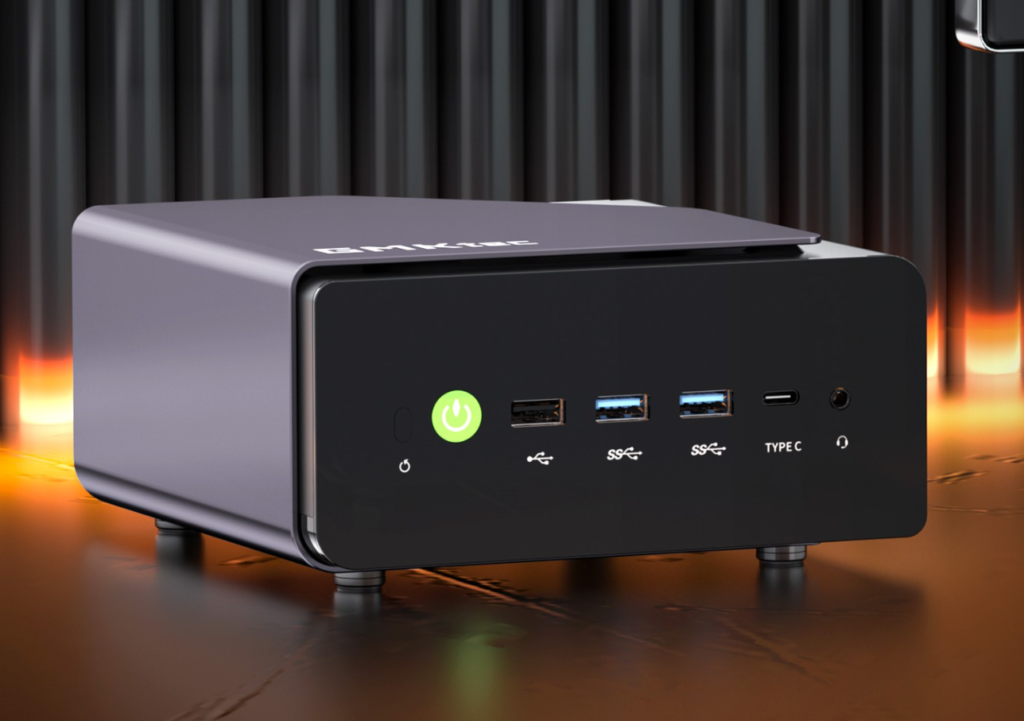
GMKtec specialises entirely in mini PCs, which is a meaningful distinction. Unlike larger PC brands that treat small form factor machines as a side product, the NucBox range represents the full focus of the company’s engineering and development effort. That focus shows in the range structure, the build quality, and the consistency with which independent reviewers across outlets like TechRadar have praised the performance-to-price ratio across multiple generations of hardware.
The brand works in close collaboration with Intel and AMD, using current-generation processors across its lineup, and holds a one-year limited warranty on all products. The UK store at gmktec.uk offers the full NucBox range with GBP pricing, making it a direct destination for British buyers rather than requiring import from overseas.
The Range: Something for Every Use Case

The NucBox lineup is structured around several distinct series, each targeting a different type of user and budget. Rather than selling a handful of models, the range covers genuine breadth from entry-level daily computing through to AI-accelerated workstation performance. The G Series covers the most accessible end of the range. The NucBox G3, powered by Intel’s 12th Gen Alder Lake N100 chip, is the brand’s best-selling model and is designed around price-to-performance, suited to light working, digital signage, online video, software routing, server applications, and monitoring tasks. Sheds It is the model that makes the most sense for a secondary machine, a home media server, or a low-footprint office PC that handles documents and browsing without fuss.
The M Series steps up to full-performance processors. The NucBox M6 features an AMD Ryzen 5 processor paired with AMD Radeon integrated graphics, and handles all standard office tasks, light multimedia production including image editing and HD video work, with an upgradeable RAM and SSD configuration that allows the machine to grow with the user’s needs.
TechRadar’s review noted that straight-out-of-the-box performance was impressive for the price, and that the dual 2.5G network ports and WiFi 6E support made it well-suited to both home office and more demanding networking scenarios.
The K Series targets the more demanding end of the market. The NucBox K12 features an AMD Ryzen 7 H 255 processor with 8 cores, 16 threads, and boost speeds up to 4.9GHz, paired with AMD Radeon 780M graphics and DDR5 dual-channel memory upgradeable to 96GB.
The NucBox K11 goes further with an AMD Ryzen 9 processor reaching 5.4GHz boost speeds, supporting simultaneous 4K output across four displays via HDMI 2.1, DisplayPort 2.1, and USB4, alongside dual Intel 2.5G LAN ports and GMKtec’s Hyper Ice Chamber 2.0 cooling system with dual fans and copper heat pipe design.
At the premium end, the EVO series brings AI computing into a compact form factor. The EVO-X2 is powered by AMD Ryzen AI Max and represents GMKtec’s most powerful consumer offering, designed for users who need workstation-level performance in a desk-friendly footprint.
Why Mini PCs Make Sense
The practical case for a mini PC is stronger than it has ever been. Modern processors, particularly AMD’s Ryzen H-series and Intel’s Core Ultra lineup, deliver performance that would have required a full desktop tower just a few years ago. In a NucBox chassis measuring roughly the size of a thick hardback book, that performance now comes with a fraction of the power draw, near-silent operation in most workloads, and the flexibility of VESA mounting directly behind a monitor, turning any display into an all-in-one setup without the premium cost.
For home offices, the footprint reduction is immediately practical. For businesses deploying multiple workstations, the energy efficiency compounds across every machine. For IT enthusiasts, the dual SSD slots, expandable RAM, and dual network ports on many models open up use cases from homelab servers to soft routing configurations that a conventional compact PC simply cannot match.
Connectivity That Punches Above the Size
One area where the NucBox range consistently receives praise from reviewers is connectivity. Most models include dual 2.5Gbps Ethernet ports, which is unusual even in full-sized desktops and opens up network aggregation and high-speed wired setups without additional hardware. Wi-Fi 6 and Wi-Fi 6E are standard across the mid and high-end models. USB4 with 40Gbps throughput features on the K and EVO series, enabling external GPU connectivity via compatible enclosures and high-bandwidth peripherals. The NucBox M8 supports connection to up to three displays simultaneously, with HDMI 2.0 and DisplayPort 1.4 both capable of 8K output alongside a USB4 4K display, making a triple-monitor setup possible from a machine measuring roughly 127 x 127 x 48mm. Buy Sheds Direct
Upgradeability Built In
A common criticism of compact PCs is that they lock users into the hardware they ship with. GMKtec has addressed this directly. Most models in the M and K series feature two SO-DIMM slots for RAM upgrades and two M.2 NVMe SSD slots for storage expansion. On the K11, maximum storage reaches 8TB across both slots. RAM on many models is upgradeable to 64GB or 96GB, meaning a machine purchased today can be meaningfully upgraded as needs grow rather than replaced entirely.
For anyone currently running a full tower that spends most of its time browsing, handling documents, and occasionally streaming video, a NucBox represents a practical and cost-effective consolidation that frees up desk space, reduces electricity use, and delivers the same or better performance in a form factor that genuinely fits the workload.